
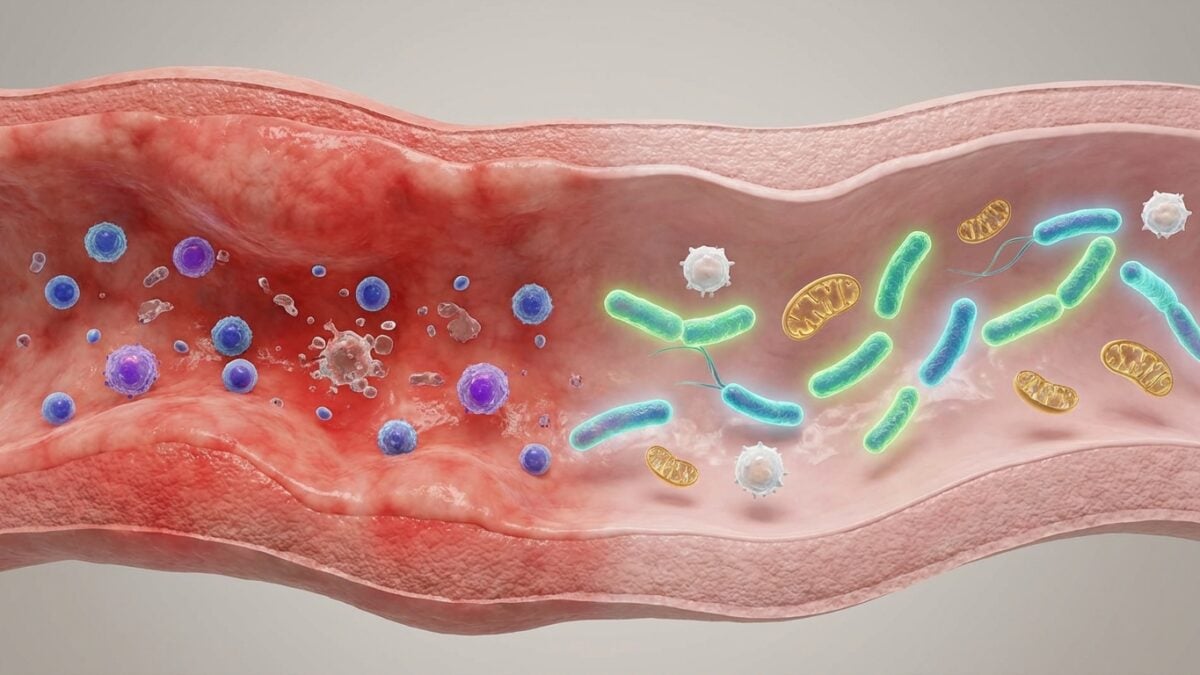
What if a bacteria almost invisible to the naked eye weighed heavily in the future of treatments for inflammatory bowel diseases (IBD)? In many patients with
Crohn’s diseasethe balance of the intestinal microbiota is disrupted, and with it the capacity of the intestine to contain lasting and painful inflammation.
At the heart of this ecosystem, the bacteria
Faecalibacterium prausnitzii usually occupies a major place. A recent French study, involving Sorbonne University, Inserm, INRAE, AP-HP and the biotech Exeliom Biosciences, shows that this bacteria can calm inflammation by acting directly on certain immune cells and their energy metabolism. A new mechanism that changes the way we think about future therapies.
Faecalibacterium prausnitzii, largely absent from the microbiota in Crohn’s disease
The intestinal microbiota brings together billions of microbes that help digest, nourish the intestinal wall and regulate immunity. Among them, Faecalibacterium prausnitzii is one of the most abundant bacteria in healthy adults and its high presence is associated with good health, while low levels have been linked to IBD and certain cancers.
In patients suffering from Crohn’s diseasestudies frequently find a sharp decline in this species. Its anti-inflammatory properties had already been demonstrated in models of colitis: stimulation of the production of interleukin-10 (IL-10), a soothing cytokine, and support for defense mechanisms of intestinal wall cells such as autophagy.
It remained to understand, in detail, how it interacts with human immune cells.
How a bacteria reprograms monocytes in IBD
Researchers isolated immune cells from the blood and intestinal lining of patients with
IBD and non-ill controls. These cells were brought into contact with the EXL01 strain of Faecalibacterium prausnitziiwith other intestinal bacteria or with a very inflammatory bacterial molecule called LPS.
The results show that, in the blood as in the intestine, Faecalibacterium prausnitzii directly induces the production, by human monocytes, of IL-10, a key cytokine with anti-inflammatory properties. This protective response is clearly distinct from that caused by other bacteria. Beyond the induction of IL-10 production, a true complete reprogramming of the energy metabolism of monocytes is induced by the bacteria.
Towards living biotherapies in Crohn’s disease
These data support the idea of using Faecalibacterium prausnitzii as a living biotherapeutic for IBD, or even for other inflammatory diseases. The EXL01 strain is in development in intestinal inflammation, and a human trial has evaluated its effect on maintaining remission of Crohn’s disease. The first results are announced for 2026, prior to possible availability.