
Millions of people live with major depressive disorder associated with high anxiety, while traditional treatments such as SSRI-type antidepressants can cause weight gain, digestive or sexual problems. In this context, the idea that a simple kitchen herb can help soothe anxiety intrigues both patients and caregivers.
This is precisely what an Iranian team tested with the
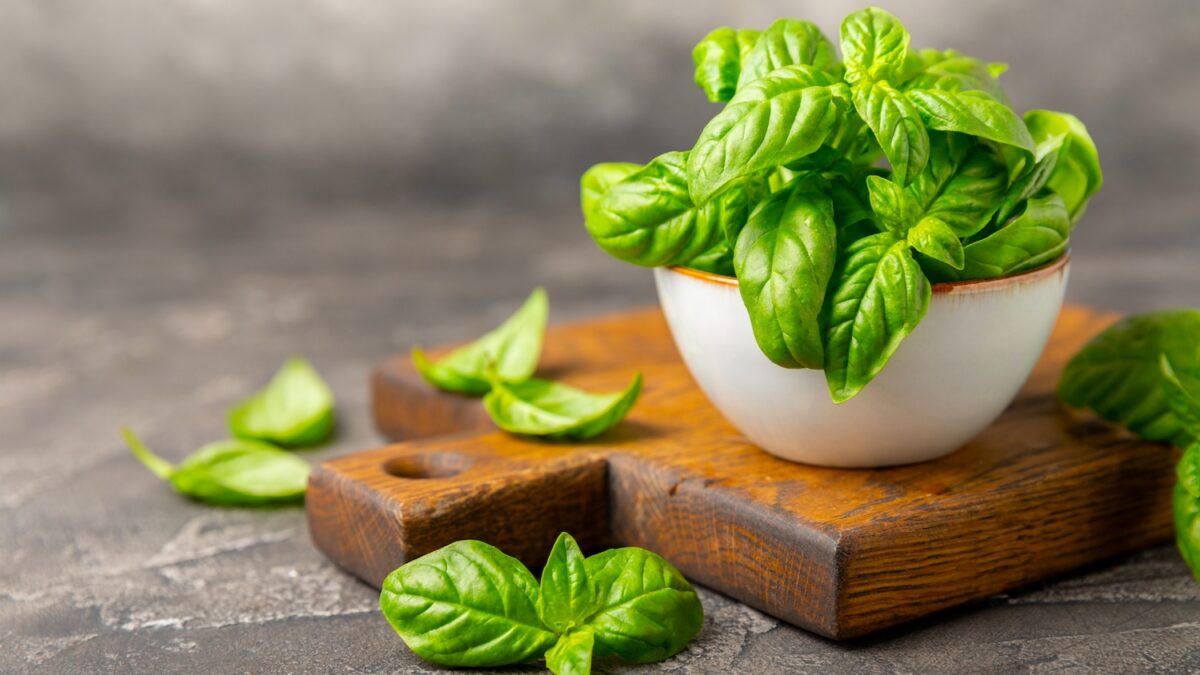
basilOr Ocimum basilicumin a clinical trial. The essay makes the link between the traditional use of basil in Persian medicine and modern numerical data.
How basil was tested in these depressed patients
The study, conducted at the Dastgheib Psychiatric Clinic at Fasa University of Medical Sciences, was based on a randomized, single-blind, placebo-controlled trial. Sixty adults aged 18 to 65, all diagnosed with major depressive disorder and
anxiety important, received sertraline (50 to 100 mg per day) for four weeks, so as not to deprive them of standard treatment, plus either a standardized basil syrup or a placebo syrup. The basil syrup was obtained from dried leaves then extracted with a hydroalcoholic solution, to guarantee a constant dose of 1100 mg per 5 mL spoon. The treatment was taken in the evening for four weeks.
Their depression and anxiety were assessed with standardized scales: the Beck Depression Inventory (BDI) for depression and the Hamilton Anxiety Rating Scale (HAM-A) for anxiety. Both groups had comparable initial scores corresponding to a depression
and anxiety classified as severe.
Significantly lower anxiety scores with basil syrup
After four weeks, the differences between groups are clear:
- In the basil group, the HAM-A score dropped from 33.19 ± 4.68 to 12.81 ± 4.48, an average drop of 20.37 points;
- In the placebo group, it fell from 34.53 ± 6.44 to 24.8 ± 5.82, a drop of 9.73 points.
The authors point out that a HAM-A score greater than or equal to 25 corresponds to severe anxiety, while a score less than or equal to 17 indicates mild anxiety: basil therefore moves patients, on average, from the severe zone to the mild zone.
Depression follows the same trend:
- The BDI score dropped from 39.44 ± 5.67 to 21.04 ± 6.34 in the basil group;
- In the placebo group, it went from 40.3 ± 6.6 to 29.57 ± 4.62.
In terms of tolerance, no serious adverse effects have been reported; only transient digestive discomfort and a few mild headaches were noted in the basil group, without specific treatment.
What this medicinal plant changes…and what it doesn’t prove
The researchers summarize their results by explaining that “Basil syrup may reduce anxiety in patients with major depressive disorder. However, additional studies with a larger sample and longer follow-up are needed.“. The trial remains short, involving only 27 patients in the active arm, and is single-blind: the typical smell and taste of basil may have revealed to certain participants that they were receiving the active product, which may influence the way they report their symptoms.
Another key point: basil has been used as a supplement, never in place of sertraline. We cannot therefore deduce that a homemade basil syrup or herbal tea can replace an antidepressant, especially since the study is based on a standardized extract rich in linalool, eugenol and rosmarinic acid, likely to act on the GABA and BDNF systems.
For anyone already on treatment, the authors point out that antidepressants can interact with many substances: the addition of a herbal supplement should always be discussed with a healthcare professional.