
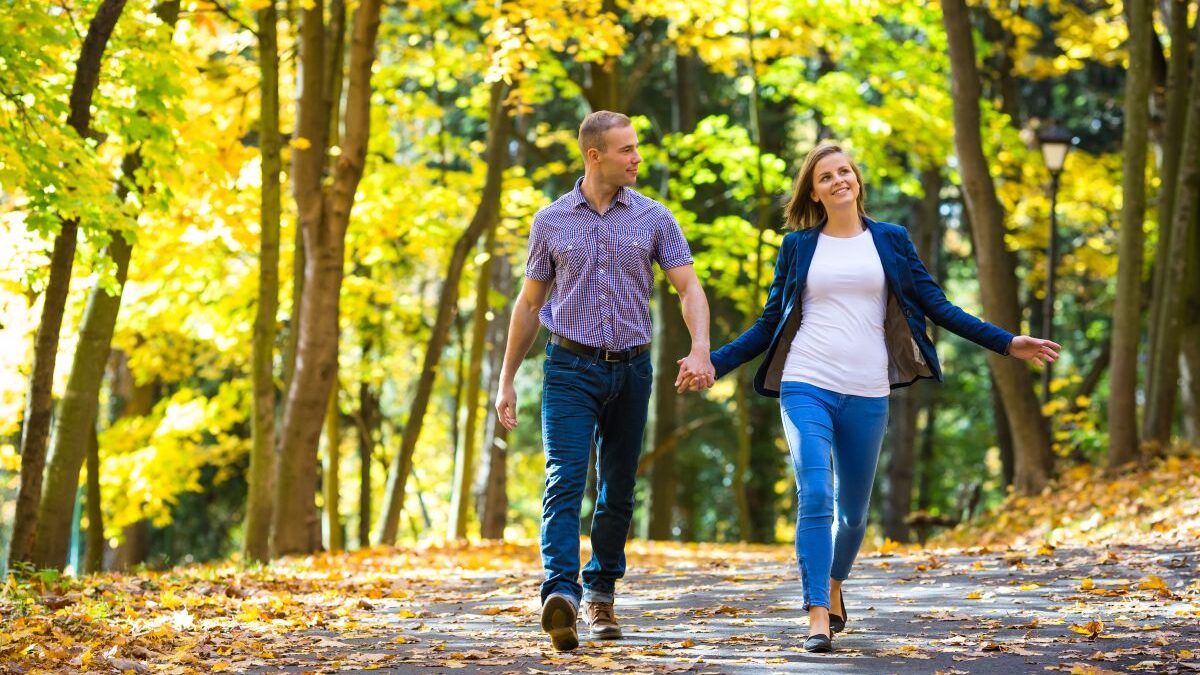
Who has never tried to “digest” a hearty meal by taking a healthy walk? If this reflex seems engraved in the stone of our family habits, science and medicine provide a significant nuance.
The moment you lace up your sneakers can radically change the benefits for your body. Between blood sugar regulation and intestinal comfort, here’s how to best time your next walk.
The little-known benefit of pre-prandial walking (before a meal)
Moving before eating offers physiological benefits that are distinct from simple digestion. It’s a great way to gently wake the body up and condition it for what’s to come.
“There may also be an interest in walking before a meal (pre-prandial), but it is different: walking before eating helps above all to gently activate circulation, to “start up” the body and sometimes to better regulate appetite or blood sugar if walking is done moderately.” explains Dr. Gérald Kierzek.
The role of postprandial walking for immediate comfort
If the walk before the meal prepares the ground, the walk after the plate remains the undisputed queen of mechanical comfort of the stomach. It acts as a direct boost to the organs at work.
“For immediate digestive comfort, the effect is generally clearer after the meal, because walking accompanies the work of the stomach and intestine instead of preceding it.“, specifies the medical director of True Medical.
By moving, you stimulate peristalsis, this muscular movement that allows food to progress through the digestive tract.
What is the ideal duration so as not to disturb the body?
No need to embark on a hike lasting several hours or adopt a Nordic walking pace. After eating, overzealousness can even prove counterproductive by diverting blood from the digestive organs to the leg muscles.
Dr. Kierzek advises moderation. “After eating, a light walk of 10 to 15 minutes is often the best compromise: it can reduce the feeling of heaviness, limit bloating and promote more fluid transit, without creating jolts or intense effort. It is not necessary to walk for a long time to benefit from it. A short, calm walk is often sufficient, especially after a copious meal. The idea is not to “burn” the calories from the meal, but to avoid digestive inertia by remaining gentle active”.
The secret to a top transit: regularity above all
Beyond the “before or after” dilemma, the real pillar of good intestinal health lies in the consistency of your efforts. The long-term benefits on your microbiota and your transit are not built in one go.
“During the day, what matters most is regularity: accumulating a daily activity, even a simple one, helps transit more than a single occasional outing” calls back the emergency doctor.
Ultimately, there is no single absolute “best” time, but rather a timing to adapt according to your personal goals. To maximize your well-being, try combining these different approaches on a daily basis.
“If your goal is digestion, remember this logic: before the meal to prepare the body, after the meal to help digestive comfort, and overall a little movement each day to support the digestive system over time.concludes Dr. Kierzek. You now know what you need to do to pamper your belly!