
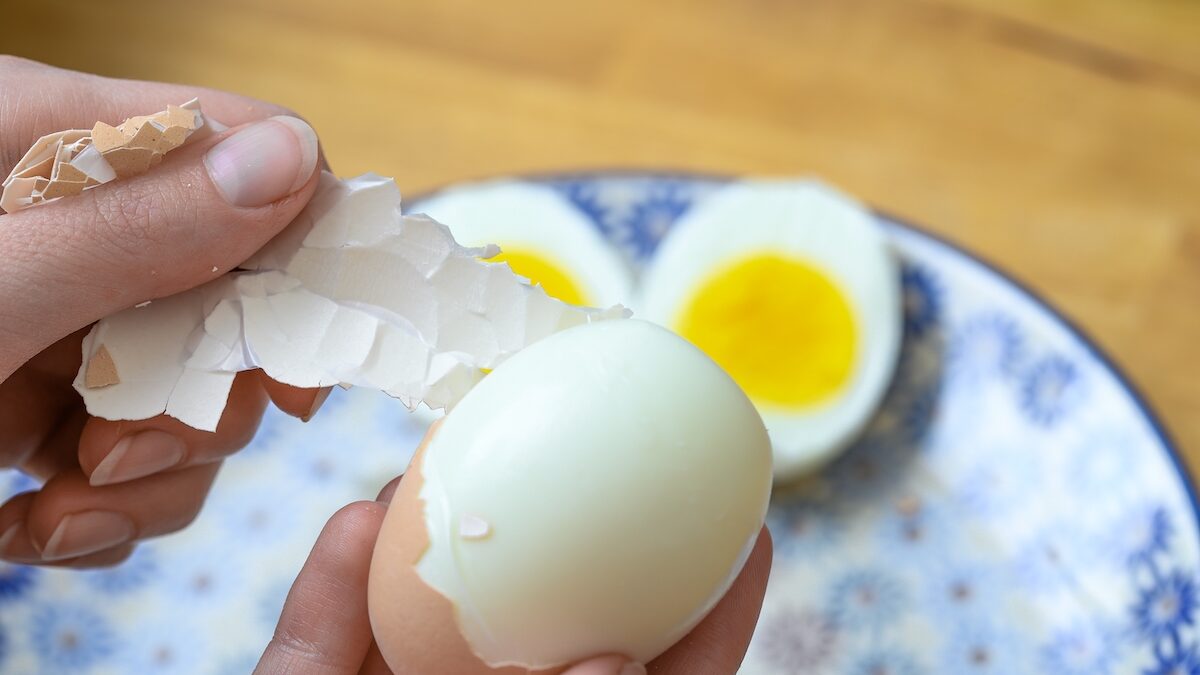
When we prepare batch cooking for the week, we tend to put everything in the freezer to save time and avoid waste. In fact, some foods do not tolerate this treatment very well and become unrecognizable when defrosted.
Asked by Men’s Health Spain
on the food that she never recommends freezing, Núria Arnau, Spanish chef, answers without hesitation: “Hard boiled eggs“. In practice, it is mainly the hard-boiled egg that poses a problem. This warning is similar to that of Food Safety and Inspection Service of the United States Department of Agriculture (USDA)which says about hard-boiled eggs “Do not freeze” and advises keeping them in the refrigerator for a week. This dual perspective, everyday cooking and official standard, changes the way you organize your fridge.
Why hard-boiled eggs cannot be frozen
An egg white is made up of approximately 90% water, recalls the Federation of Quebec Egg Producers. When a hard-boiled egg goes into the freezer, this water forms ice crystals that break down the fine structure of the proteins. When defrosting, the egg loses its hold: the yolk crumbles and the white no longer regains its smooth texture.
According to the USDA, the result is clear: The white becomes hard, almost rubbery, and the egg “weeps” water when thawed. The product is not necessarily dangerous if the cold chain has been respected, but it is unpleasant to eat and difficult to cook. For such a simple food, the freezer’s promise of practicality is therefore missed.
How to store hard-boiled egg without freezing it
The USDA Food Safety and Inspection Service says a hard-boiled egg will last for up to a week in the refrigerator. The ideal is to keep it in its shell, in a closed box, in the middle of the fridge rather than in the door, where the temperature varies more. A date written in felt-tip pen on the box is enough to avoid forgetting.
Núria Arnau, a fan of batch cooking, prefers to focus on organization rather than freezing eggs. His logic: prepare in advance the elements that tolerate the cold well (roasted vegetables, sauces, cereals) and cook the eggs at the last minute, or as close as possible to the day they will be eaten. To limit waste, a hard-boiled egg ready to expire can end up in mixed salad, deviled eggs or crushed in a sandwich.
Freezing eggs, yes… but not hard-boiled eggs
The USDA also reminds that shell eggs should not be frozen, even raw. On the other hand, it is possible to freeze raw eggs without the shell, lightly beaten, in an airtight container, to use them later in an omelette or well-cooked pastry. The whites alone also freeze very well.
The rule to keep in mind is simple: to answer the question “can you freeze hard boiled eggs?“, the answer is no for the texture. It is better to reserve the freezer for preparations based on raw eggs and keep hard-boiled eggs cool for a short time, integrating them quickly into your meals.