
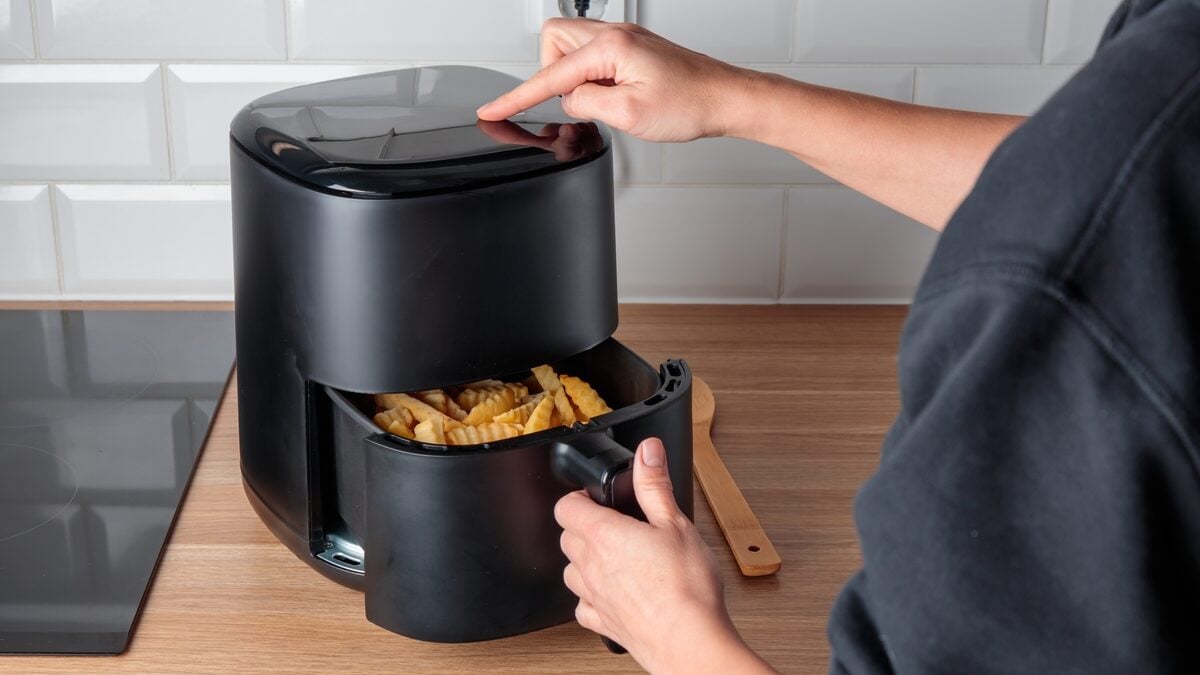
In other words, even when cooking very fatty foods, this appliance would seem to pollute the ambient air in your home much less. A surprising conclusion from work carried out by researchers at the University of Birmingham.
Up to 100 times fewer fine particles in your kitchen!
As part of this study, scientists looked at the emissions of ultrafine particles and of
volatile organic compounds (VOCs) — two types of pollutants recognized as harmful to health.
For their tests, they used an air fryer to cook different types of foods, including:
- frozen products previously fried;
- fresh, low-fat, high-fat ingredients.
Verdict? THE frozen onion rings and the bacon (smoked or not) are among the foods that produce the most VOCs. But good news: even in these cases, the emissions remain 10 to 100 times lower to those generated by traditional frying.
“This study once again shows the potential benefits of using air fryers for indoor air quality”explains Professor Christian Pfrang, lead author of the study.
For his part, Ruijie Tang, first author and doctoral student, specifies:
“These results confirm that while high-fat foods produce more emissions in the air fryer, they are only a fraction of what is seen with methods like shallow frying (pan cooking) or deep frying.”
Airfryer maintenance: a detail that changes everything
Another key point highlighted by the study: maintenance of the device. Researchers have found that prolonged use without thorough cleaning leads to a significant increase in emissions.
An AirFryer used more than 70 times thus showed:
- 23% additional VOCs,
- and more than double of ultrafine particles,
due to the accumulation of residues in difficult to access areas.
However, even under these conditions, emissions remain much lower than those of a conventional fryer.
The study also details the types of VOCs observed:
ketones, aldehydes and alkeneslinked to heated oils and browning of foods.
“Our study shows that repeated use of air fryers, without being able to clean the most difficult to access areas, can reduce certain benefits (…) This highlights the importance of a fryer design allowing deep cleaning to maintain low emissions in the long term”concludes Professor Pfrang.
Yes to the airfryer… but not every day!
Another significant advantage: the airfryer allows you to
significantly reduce the amount of oil used. For homemade fries, for example, one to two tablespoons of oil are enough, compared to a complete oil bath in a traditional fryer.
“It reduces fat intake, which is an advantage for health compared to traditional frying”confirms a dietitian nutritionist interviewed on the subject.
But be careful: this does not mean that it should be abused. “Varying cooking methods is essential to benefit from a diversified nutritional intake.reminds Alexandra Murcier.
Indeed, certain nutrients are sensitive to heat and can be degraded. Gentle cooking at low temperature preserves vitamins and minerals better than cooking in an air fryer. You have been warned!