
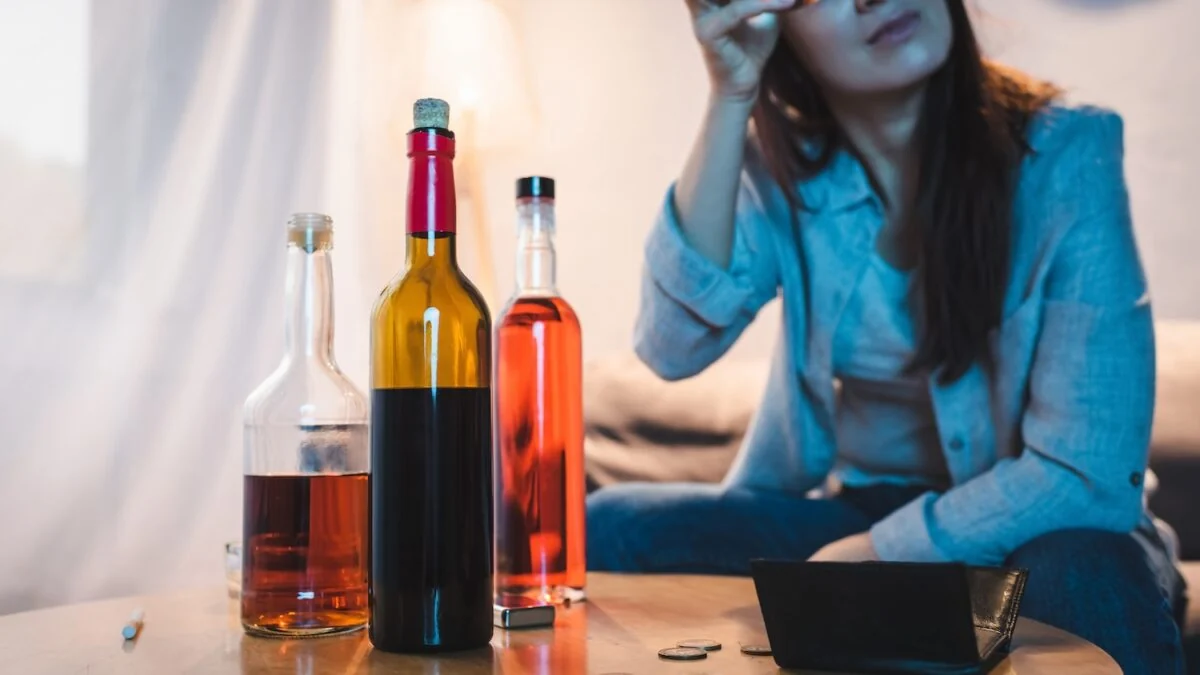
When it’s time to leave for the evening, the idea may seem trivial: eat less, or not at all, because drinks are planned later. For some, this choice aims to feel the effects of alcohol more quickly; in others, to “save” calories for drinks.
The important point is here: intentionally skipping a meal before drinking is not a diagnosisbut it can be a warning signal when the gesture is repeated or is part of a strong preoccupation with weight. In France, risk reduction recommendations also remind us not to start an evening on an empty stomach.
Why not start an evening on an empty stomach?
Drinking without eating can accelerate the rise in blood alcohol levels. Health Insurance indicates that the maximum blood alcohol level occurs approximately 45 minutes after consumption on an empty stomachcompared to around 90 minutes when alcohol is drunk with a meal. This discrepancy does not make alcohol “safer” with a meal, but it explains why drinking on an empty stomach exposes you more quickly to the desired effects… and to loss of control.
The French benchmarks for adults remain the same: maximum 10 standard drinks per week, maximum 2 drinks per day, with alcohol-free days, and no alcohol consumption is without risk. To reduce the risks in a festive context, Public Health France and Ameli recommend in particular drink slowly, while eating, alternating with water. These benchmarks can help distinguish a one-off precaution from a repeated strategy focused on drunkenness.
When does calorie counting become a concern?
This practice is sometimes called “drunkorexia” in the media and some works. The term is not a diagnostic category recognized in the usual classifications; the authors also speak of “food and alcohol disturbance”that is to say behaviors where food and alcohol are linked, for example to intensify the effects of alcohol or compensate for its calories.
In an article published by The Conversation on November 20, 2026, Anna Preece, doctoral student at Bournemouth University, discusses this overlap. It is based in particular on a review of several studies published in the Journal of Eating Disorders : 44 studies published between 1988 and 2026 were identified, in adults treated for an alcohol use disorder or associated difficulties.
Most studies describe associations, without proving that one behavior causes the other. The populations studied were also predominantly female and from high-income countries, including the United States, Canada and the United Kingdom; there is no solid French frequency of behavior based on these data.I skip a meal to drink”.
Despite these limitations, the signal deserves to be taken seriously. Some results suggest an increased risk of eating difficulties in people followed for alcohol problems, up to almost double in one study. The review also describes possible common points: management of emotions through food or alcohol, impulsivity, low self-esteem, negative body image, or associated psychological difficulties.
What signs should prompt you to seek help?
A forgotten meal is not enough to speak of trouble. What should raise alarm is the repetition and the place taken by calculation:
not eating to drink betterplanning your meals according to the planned drinks, feeling very guilty after eating or drinking, alternating between restrictions and loss of control over eating, or using alcohol to support your body, your emotions or your social relationships.
Another cue: when alcohol and food become difficult to think about separately. For example, if the fear of eating pushes you to drink, if stopping alcohol seems impossible without food compensation, or if each outing imposes strict rules around weight. These situations can be part of eating disorders, problematic alcohol consumption, or both.
Talking about it early can prevent the two dimensions from reinforcing each other. A general practitioner, an addictologist, a psychiatrist, a psychologist trained in eating disorders (TCA) or an addiction center can help take stock, without reducing the situation to a lack of willpower. The most useful thing is often to approach together the place of alcohol, the place of food and the emotions that connect them.
In France, Alcool Info Service responds to 0 980 980 930from 8 a.m. to 11 p.m., 7 days a week, anonymously and without surcharge. For EDs, the Anorexia Bulimia Info Listen line can be reached at 09 69 325 900with specialists available on certain days from 4 p.m. to 6 p.m. A good first step can simply consist of describing the mechanism as it is experienced: “I eat less when I know I am going to drink”.