
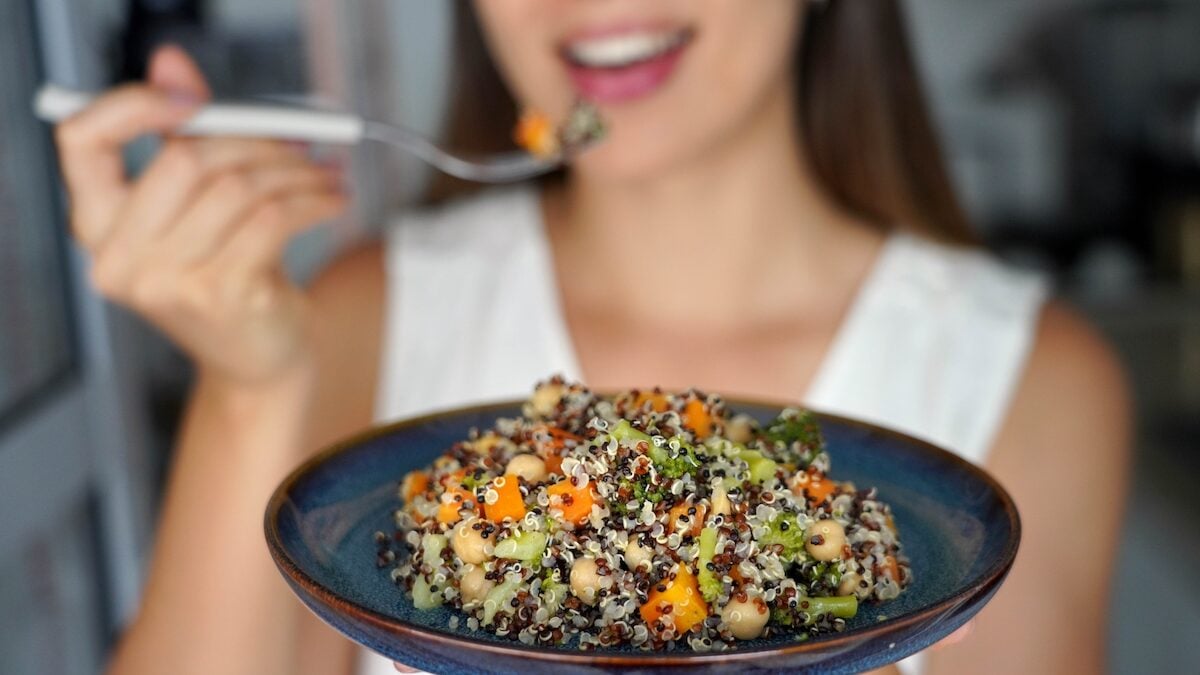
With its reputation as a “boho” food, quinoa is nevertheless an excellent base for simple and balanced meals. Rich in vegetable proteins, fibers and minerals, it allows you to compose complete salads, to accompany meat or to prepare very delicious vegetarian pancakes and meatballs.
Does quinoa make you bloated? An original preparation error
And yet, many say they can’t stand it. Bloating, digestive discomfort, feeling of heaviness… For some, quinoa even ends up being removed from menus. But the problem doesn’t necessarily come from the quinoa itself.
According to Pauline Pied, dietitian, it is often a preparation error that is to blame: forgetting to rinse it before cooking.
This natural substance that can irritate digestion
“Quinoa needs to be rinsed, like rice or lentils,” recalls the specialist. The cause: saponin, a substance naturally present on the surface of grains.
This molecule acts as a natural protection for the plant, a sort of “natural insecticide” which helps quinoa defend itself against insects. The problem is that it can leave a bitter taste… and above all cause some digestive discomfort in certain sensitive people.
There is also a clue that makes it easy to spot poorly rinsed quinoa: a small foam that appears on contact with water.
“When it foams, you forgot to rinse it“, explains Pauline Pied.
Why rinsing changes everything
In her office, the dietitian often finds the same scenario. “Patients tell me, ‘I tried eating quinoa, but I don’t digest it very well.’ And usually they forgot to rinse it.”
The good news is that a simple run under cold water is often enough to solve the problem. After adopting this reflex, many notice a clear improvement in digestion.
To do this properly, it is advisable to place the quinoa in a fine strainer and rinse it thoroughly for about thirty seconds, lightly mixing the grains with your fingers.
A practical ally for balanced meals
Once properly prepared, quinoa remains a very interesting food to include in your diet. It provides plant proteins, satiating fiber and has a more moderate glycemic index than certain refined starchy foods.
And above all, it is very easy to cook. “Quinoa is ideal in salads”, underlines Pauline Pied, who advises combining it with fresh vegetables, feta or even herbs such as chives.
Quinoa also works very well in a hot version, in pans, pancakes or vegetarian meatballs. Practical, quick and easy to personalize, it adapts to many everyday recipes.
The right reflex to remember before cooking it? Never forget to rinse. A simple gesture that can make all the difference on the plate… and for your digestion.