
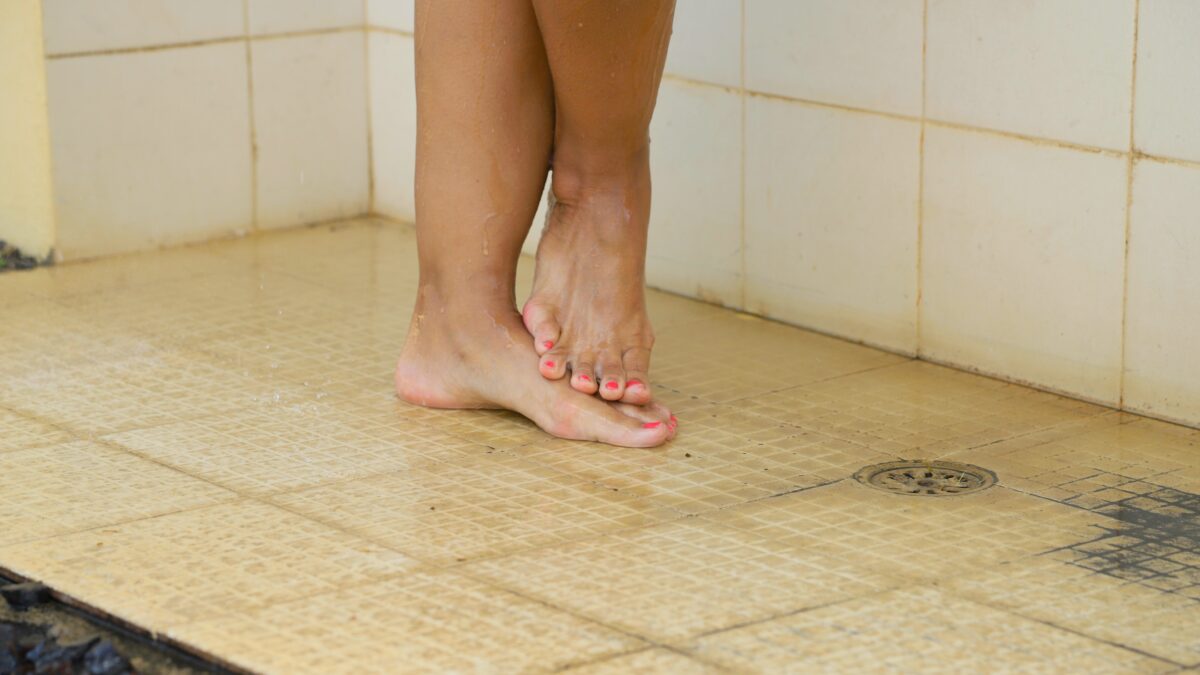
Do you walk barefoot in the locker rooms? This shocking video from a microbiologist will help you
Walking barefoot in a gym locker room? Many do it without thinking much about it. But a viral experience might change your mind. In a TikTok video, American microbiologist Nick Aicher demonstrated live the quantity of bacteria that proliferates on the floor of a collective shower.
Showers and changing rooms: the areas richest in germs
In his video, the analyst takes a sample using a swab, rubs it on the tiles, then in a Petri dish marked “public shower floor.” Once incubated, the result is not long in coming: significant bacterial growth invades the surface.
Faced with this observation, he declares: “This is why you should wear flip flops.” In the comments, reactions oscillate between disgust and resignation, with some even saying they expected “much worse”.
The experience, on the other hand, does not surprise specialists. Dr Primrose Freestone, a microbiologist at the University of Leicester, recalls that “By far, the most germ-rich areas in a gym are hot, humid places.” She cites in particular “saunas, showers, swimming pools or jacuzzis” Or “wherever there is sweat, there are probably germs“.
In addition, perspiration, a mixture of vitamins, mineral salts, amino acids and lipids, constitutes a real buffet for micro-organisms. As the scientist explains: “This means that any sweat that drips from you (or other gym members) can be used by bacteria and germs to help them grow.”
Among the most frequently detected agents, we find
Staphylococcus aureus, even the terrible
Methicillin-resistant Staphylococcus aureus (MRSA).

From salmonella to plantar warts: very real risks
Locker rooms aren’t just a playground for bacteria. Pathogens like salmonella have been found on gym equipment, which can cause diarrhea, fever, vomiting and, in severe cases, sepsis.
And according to expert Jonathan Fletcher, “the risk of viruses is much higher than that of bacteria“. The human papillomavirus, responsible for plantar warts, is very present in humid soils.
He also cites mushrooms, “these fungal infections, especially athlete’s foot“.
How to protect yourself effectively in changing rooms and showers?
Dr. Gérald Kierzek, emergency physician and medical director of True Medical, also warns about skin infections transmitted by contact with wet surfaces.
“The main advice to limit the risk is to always wear flip-flops or suitable shoes in changing rooms and other common areas, and to avoid going barefoot to reduce exposure to germs or viruses.”
Even though gyms are real reservoirs of germs, simple actions can considerably reduce the risks.
For surfaces, experts recommend systematically using an antiseptic wipe before and after use, because germs can persist for several hours or days on plastics, steel and sports materials.
Washing your hands before and after the session remains essential, or using a 70% hydroalcoholic gel. Never walk barefoot in changing rooms, do not share towels, combs or razors, and always cover small wounds with a bandage.
Clothing also plays a role: exercising with exposed skin exposes you to more skin infections. Showering after exercise and putting on clean clothes helps eliminate accumulated germs. And the sports bag, often forgotten, must also be disinfected regularly: damp fabrics, towels and sweated equipment create a perfect environment for microbes.
Swimming pools and aquatic areas: hygiene rules that should never be neglected
Dr. Kierzek’s recommendations extend to swimming pools, where constant humidity further encourages microorganisms. He recalls the importance of:
- Shower carefully before entering the pool;
- Wear a clean swimsuit and tie back long hair;
- Use a specific diaper for toddlers;
- Regularly clean equipment and accessories;
- Monitor water quality (ideal pH between 6.9 and 7.7);
- Maintain appropriate renewal and filtration;
- Maintain good ventilation of the premises;
- Clearly inform users about hygiene rules.
Finally, Dr Kierzek recalls the other risks to avoid, namely “the transmission of microbiological diseases, in particular mycoses, warts, otitis or conjunctivitis, linked to neglect of hygiene or poor water management” ; a “cross contamination between clean and dirty areas“, or even “irritations linked to poor management of pH or disinfectants“.