
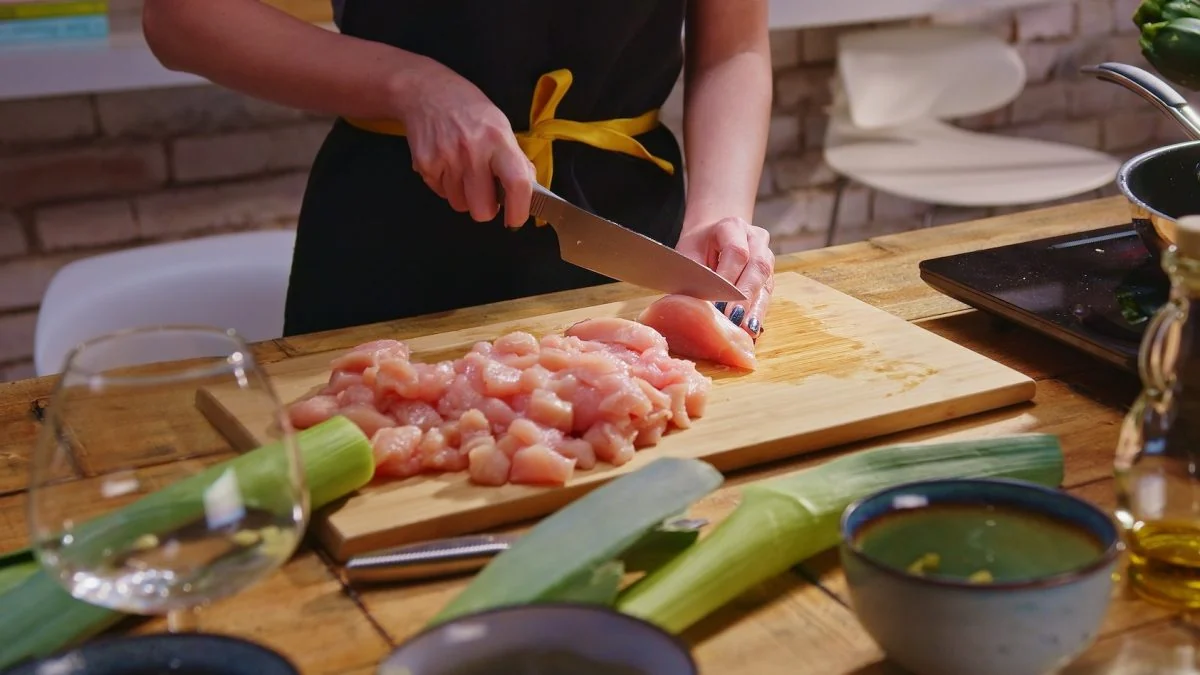
Do you know how to cook chicken? And yet, this common practice among many French people is a real mistake. Océane Sorel, virologist and Thefrenchvirologist account holder, alerts us.
You should not wash your chicken before cooking it
Wanting to wash and rinse your raw chicken to eliminate bacteria, before putting it in the pan, is far from being a good idea. This common gesture in many kitchens, for a good cause, would not have the expected effects, quite the contrary. Because if these bacteria do exist, you risk spreading them.
“When you wash your chicken in the sink the bacteria present on the surface of the chicken are thrown into the sink as well as all around the sink which can potentially create “mini-nests” of bacteria scattered throughout your kitchen and invisible to the naked eye which can contaminate other foods or utensils present around” specifies the scientist. And thus increase the risk of food poisoning.
Good things to know with raw chicken
On the other hand, raw chicken and its juices may indeed contain harmful bacteria like
Campylobacter Or
Salmonellaeven in the heart of the meat (and not just on the surface).
According to a press release on the subject published by the Cleveland Clinic in 2021, other actions would be much more appropriate. If you want to reduce the amount of juice before cooking, however, you can pat raw poultry dry with a paper towel (as long as you dispose of the paper towels properly and wash your hands immediately afterward).
To reduce the risk of spreading harmful bacteria:
- Always store raw poultry on the lowest shelf of your freezer or refrigerator. This way, none of the juices potentially carrying harmful bacteria can leak out of the packaging and end up on other foods;
- Be sure to wash your hands before and after handling raw poultry;
- Use a different cutting board for your raw poultry than for any other food, especially fruits and vegetables, to limit the potential spread of bacteria;
- Be sure to clean and disinfect all surfaces and utensils that may have come into contact with raw poultry before preparing other foods.
Finally, it is necessary to cook or reheat raw foods of animal origin, or ready-to-eat dishes above 65°C, to avoid the risk of bacterial contamination.