
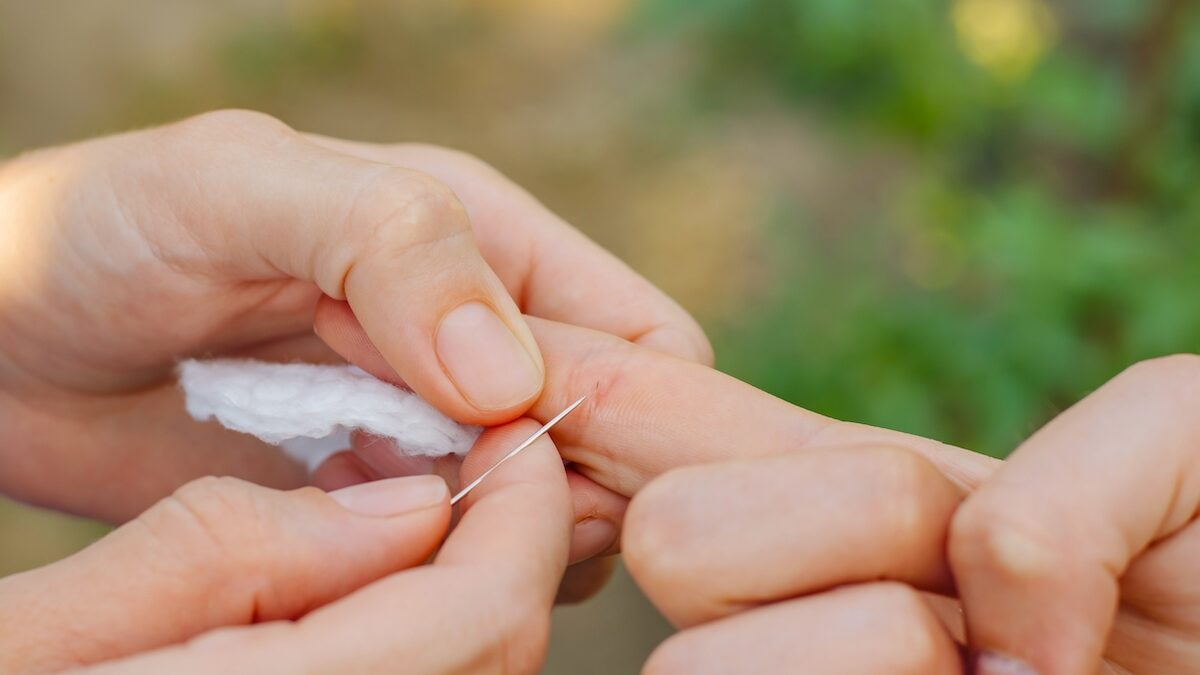
A little DIY, a stair banister, a few barefoot steps on a parquet floor… and there you have a tiny intruder lodged under the skin. It’s happened to all of us, and yet when it happens again, we always figure out how to act.
Yes, the splinter hurts (really)
A splinter is a common injury caused by a small fragment of wood, glass, metal, plastic or a thorn that penetrates the skin. However, the epidermis and especially the dermis are rich in pain receptors. Result: even tiny, the splinter can be very sensitive, even throbbing.
Faced with this, the Internet and TikTok are overflowing with homemade tips: vinegar, glue, adhesive tape, onion rings or banana peels… Problem: scientific evidence is lacking, and certain methods can irritate the skin or cause allergic reactions. But Dr. Gérald Kierzek, medical director of True Medical, is there to remind you: there is no need to resort to improbable recipes. The medical method is often the simplest… and the safest.
The essential preliminary steps
Faced with a splinter, whether on you or a loved one, the first thing before any attempt is to follow precise hygiene rules. “It is even an essential step” insists the doctor.
- Wash your hands thoroughly with soap and water (or with hydroalcoholic gel);
- Clean the area around the splinter with soapy water or a mild antiseptic, then rinse without rubbing;
- If the splinter is shallow, soak the finger or affected area for 5 to 10 minutes in warm, soapy water: this softens the skin and may help the splinter emerge slightly.
Removing a splinter without a sharp tool
In many cases, depending on the depth or size of the splinter, forceps and needles can be avoided. Good news especially when treating a child.
- For a superficial splinter
: apply a piece of adhesive tape or tape to the area, press firmly, then remove it with a sharp movement in the direction opposite to the entrance. This avoids digging into the skin and may be sufficient; - Gentle suction : use a small, clean syringe (like a children’s syrup dispenser). “Place it on the splinter and slowly pull the plunger to create a vacuum effect, which can extract it without pain or incision.”.
If a tool is needed, here is the procedure (with caution)
When the splinter resists, minimal equipment can be used… provided it is well disinfected. Dr. Kierzek reminds us of the right attitude:
- Disinfect fine tweezers (70° alcohol or flame). Grasp the visible end and pull gently, in the opposite direction of penetration;
- If the splinter is hidden, use a sterilized needle (boiled or alcohol) to very lightly lift the skin, without piercing deeply, just to expose the tip.
After extraction: don’t neglect the rest
Finally, once the splinter is out of your skin, be sure to remember the following steps to avoid infection.
- Disinfect the area again with an antiseptic;
- Leave in the open air or protect with a small bandage if the area is subject to friction;
- Watch for redness, swelling, persistent pain, or pus. If in doubt or if there are signs of infection, consult a doctor.
“Also remember to check your tetanus vaccination.”
What if nothing works?
Finally, if the splinter is deeply lodged, invisible, very painful or if the inflammation persists: do not insist. The only thing to do is to consult a doctor without exerting yourself.
And to avoid this painful experience, Dr. Kierzek emphasizes the adoption of good habits that are easy to implement.“Wear gloves when DIYing and avoid walking barefoot on floors or decks.”
A small gesture well done is better than a big improvisation.