
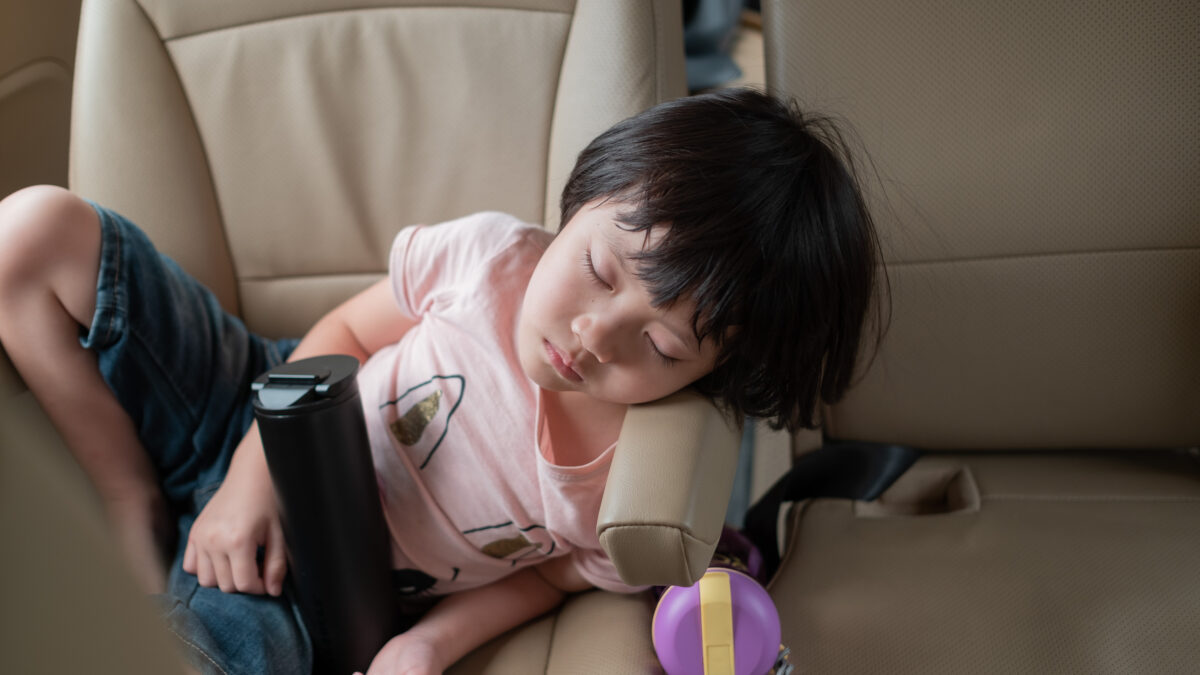
Summer begins in the most tragic of ways. This Wednesday, June 24, a 3-year-old child was found dead in Saint-Gratien (Val-d’Oise), after accidentally locking himself in his parents’ car parked in front of their home. And a few days ago, in Carpentras (Vaucluse), two children aged 2 and 4 also lost their lives in similar conditions.
While France is going through episodes of extreme heat, these tragedies are a reminder that a car in the sun instantly transforms into a death trap for the youngest.
A dramatic series of heat-related accidents
In Saint-Gratien, the drama played out in less than an hour. After asking her child to go take a nap in her room, the family lost track of her for about 45 minutes. It was by not seeing him in his bed that the parents began the search, before discovering him unconscious in the car. Despite the rapid intervention of emergency services around 7 p.m., the child died.
This tragedy sadly echoes that of Carpentras a few days ago, where two children were found unconscious while the mercury was 32.7°C in the shade and was going to rise to 39°C (with a feeling above 42°C).
Whether it is a temporary lack of vigilance, a forgetfulness after returning from shopping or a child’s act of isolating himself, the consequences prove irremediable in such temperatures.
Why a car’s interior becomes a furnace
In summer or during extreme heat, leaving a child alone in a vehicle, even for a very short time, exposes them to rapid death. In direct sunlight, the greenhouse effect causes indoor temperatures to rise exponentially. After just 30 minutes, the air in the cabin can reach 56 degrees.
As Dr. Gérald Kierzek, emergency physician and medical director of True Medical, points out: “Vehicles, with the heat from outside, are real furnaces. In a few minutes, the temperatures are unbearable for the human body, particularly in children, who have a more fragile thermoregulation system.”
The extreme vulnerability of young children to hyperthermia
Indeed, the bodies of infants and young children do not react like those of adults. Their thermal regulation system being still immature, they accumulate heat much more quickly and eliminate it much less well.
The smaller the child, the greater the risk of severe hyperthermia. Faced with this stifling rise in temperature, heat stroke quickly sets in: the heart rate accelerates abnormally, vital organs stop functioning and acute dehydration plunges the victim into unconsciousness.
The urgency is all the greater as the child finds himself trapped, defenseless. Dr Gérald Kierzek specifies that a
“The child will not have the reflex or the possibility of breaking the window. Nor will he honk the horn or speak out. He will fall into a coma and have a cardio-respiratory arrest.”
Essential measures to prevent these tragedies
To prevent such dramas from happening again, parents must adopt strict automatisms on a daily basis.
“The first instinct is to never leave a child alone on board, even for a quick trip, even if the car is parked in the shade or has half-open windows. insists the doctor once again.
It is also essential to secure vehicles to prevent a child from accessing them without adults’ knowledge.
According to the recommendations of Dr. Gérald Kierzek, “as with all domestic accidents, and particularly in these periods of high heat, constant vigilance is required for parents, which means: do not take your eyes off the children. This also involves lock vehicles so that they are not accessible from the outsideeven when they are in a garage or domestic property.
Finally, be sure to keep car keys out of reach and make it a habit to always check the rear seats before locking your vehicle.