
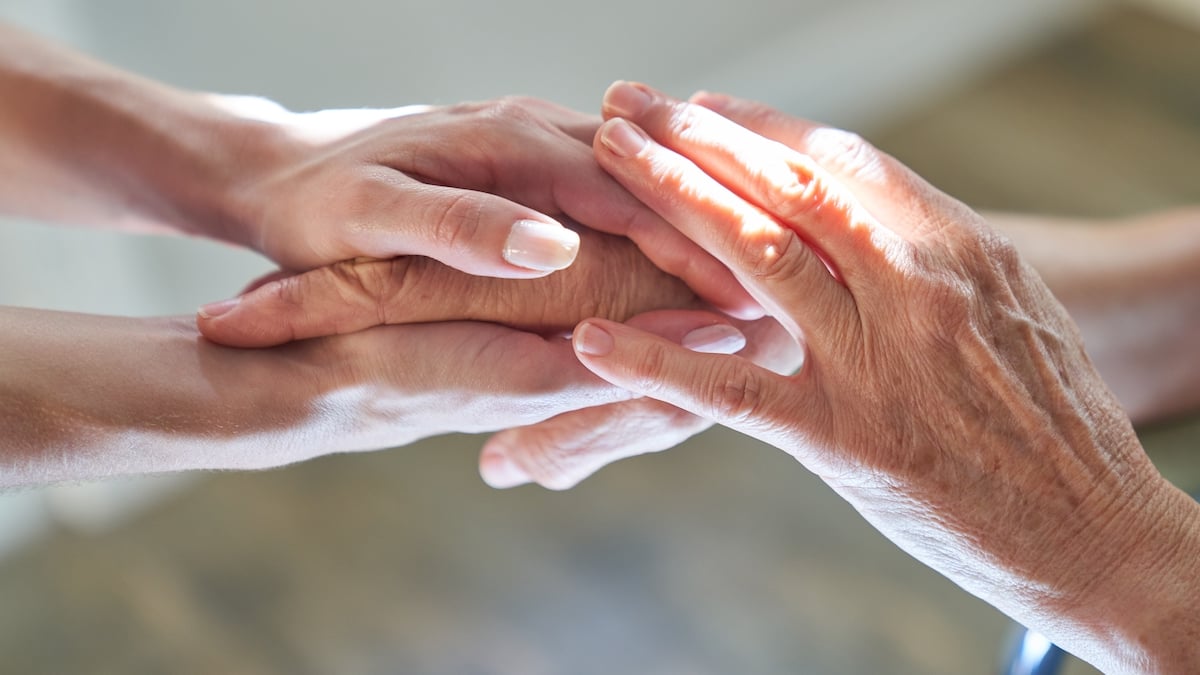
When the end of life approaches, the body begins to send subtle signals, sometimes unknown, but which announce that the ultimate moment is close. These signs, observed for years by palliative care experts, can be physical, respiratory or sensory. The British charitable organization Marie Curie, specializing in end -of -life care, delivered some often confusing events.
When the skin marks the end
One of the most common signs is a temperature change in the extremities of the body. Hands, feet, arms and legs can become colder, a sign of a reduced blood circulation. The skin, too, can give you an indication. It sometimes takes on a particular appearance: spotted or marbled, turning blue or red in light skin, or purple and brown in darker skin. “These brands are not painful and are naturally part of the process of the extinguished body”.
A breathing that changes rhythm
Breathing is another significant indicator. Some people can start breathing in a noisy way, with groans or longer breaks between the breaths. Others can see their breathing slowing down, becoming irregular or shallow. This phenomenon, sometimes impressive for loved ones, does not necessarily mean that the person suffers. In reality, according to professionals, these breaths are often unconscious and do not cause distress.
A fluctuating consciousness
As the end approaches, it is common for people to sleep longer, or even remain unconscious for long periods. However, according to Marie Curie’s team, even in this state, it is possible that the person still perceives sounds or familiar touches. Speak slowly, hold out, stay present – so many simple gestures that can bring comfort, even if the person can no longer answer.
A mysterious and unique moment
The precise moment of death is often difficult to identify. Some relatives report having seen the face of the loved one suddenly relax, the mouth open gently, the skin becomes pale and take a waxy appearance. These visual signs are generally the first indicators that life has just died.
But what about what the person who dies feels or perceives? We know very little about it. Some people who have experienced experiences of imminent death speak of light, memories or meetings with missing beings. These stories, although individuals, feed the reflections on this passage that no one can completely describe.
What to do after a death?
If the death occurs in the hospital, in hospice or in retirement homes, the medical staff are responsible for seeing the death. At home, it is necessary to contact a general practitioner or a nurse to formalize the observation. This moment, often full of sadness and confusion, can also be a time of calm, meditation, and sometimes even peace.
The end of life, despite its emotional charge, can be an experience full of sweetness when it is accompanied with humanity and understanding. Recognizing the signs of departure can allow loved ones to better prepare, to remain present until the end – and to offer, to those who leave, a presence as discreet as they are precious.