
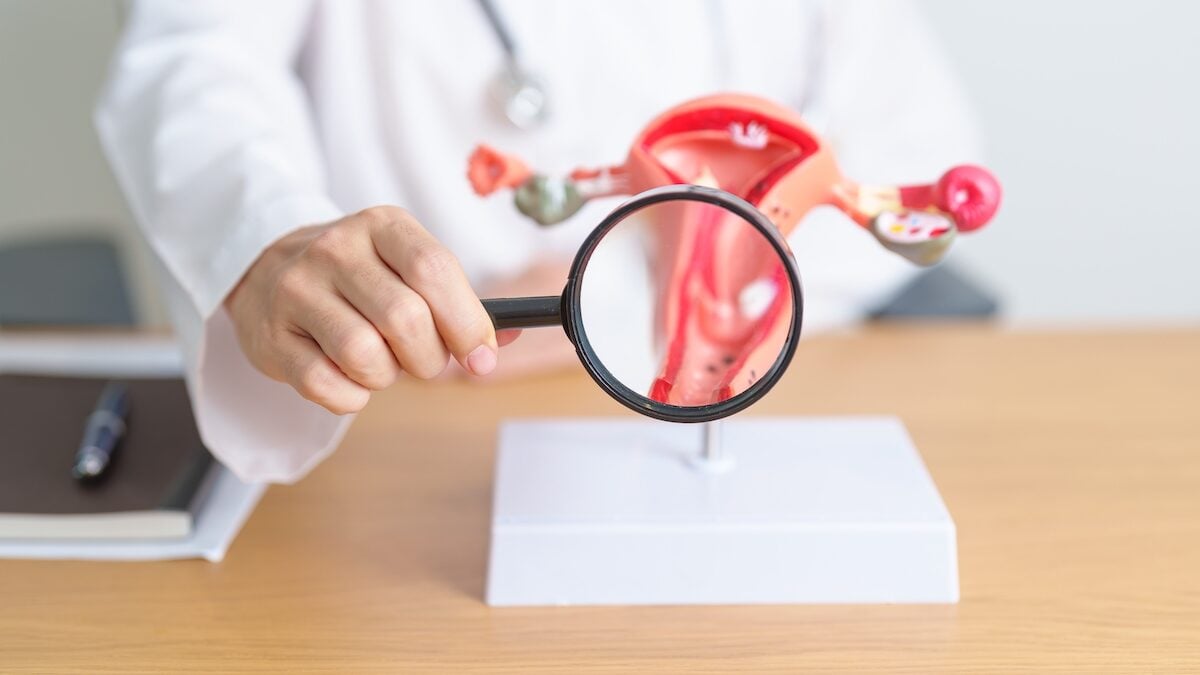
Endometriosis affects nearly one in ten women of childbearing age worldwide. In France, this represents around two million patients, according to the World Health Organization. But this figure could still be underestimated as the disease remains difficult to diagnose.
This chronic condition is characterized by the presence of tissue similar to the endometrium — the lining that lines the uterus — outside it. These cells can attach to the ovaries, intestine, bladder or uterine ligaments. With each menstrual cycle, they react to hormones, causing inflammation and sometimes debilitating pain.
After years of medical wandering for many patients, research is progressing and treatment is evolving. Several innovations could enable faster diagnosis and improve the daily lives of affected women.
A word that is freed and a diagnosis that accelerates
For a long time, severe menstrual pain was downplayed or considered normal. Today, the situation is changing. In the wake of movements to free women’s voices, taboos around periods and gynecological health are receding.
This awareness helps to reduce the average diagnosis time, which still reaches almost ten years after the first symptoms. Adolescent girls now seem to be better cared for, with more attentive listening to their pain.
A major innovation could also change the situation: the Endotest saliva test. Developed by the Ziwig company and available in France since 2025 in a supervised setting, it detects a molecular signature of the disease from micro-RNA present in saliva. Its reliability would be around 95%. A new deployment phase should allow tens of thousands of additional women to access it from 2026.
Clearer care pathways for patients
Another important development: the progressive structuring of care sectors dedicated to endometriosis throughout the country. These regional networks aim to direct patients more quickly to suitable professionals.
General practitioners, midwives, gynecologists, radiologists and pain specialists now work in coordination with specialized hospital centers. The objective is to offer a more understandable path and care adapted to the severity of the illness, whether chronic pain, digestive disorders or difficulty conceiving.
This organization is part of the national strategy to combat endometriosis put in place by the government between 2022 and 2025, the first effects of which are beginning to be felt.
New therapeutic avenues and hope of prevention
Research is also exploring new approaches to providing relief to patients. Among them, transcutaneous electrical nerve stimulation (TENS), which uses weak electrical impulses applied to the lower abdomen to block pain signals sent to the brain. More and more connected devices are available today, even if the models prescribed by specialized centers remain the best studied.
At the same time, scientists are interested in the role of the intestinal and vaginal microbiota, whose imbalances could promote inflammation and pain linked to the disease.
Finally, several research programs are trying to answer a crucial question: can endometriosis be prevented? The Precursor study, launched in 2026, will follow adolescent girls suffering from very painful periods for five years in order to assess whether early treatment can prevent the chronicization of pain and the appearance of lesions.
Although no curative treatment yet exists, these advances open up a new horizon. Between diagnostic innovations, better coordination of care and exploration of new therapies, endometriosis is gradually coming out of the shadows — with the hope of a daily life that is finally less painful for millions of women.