
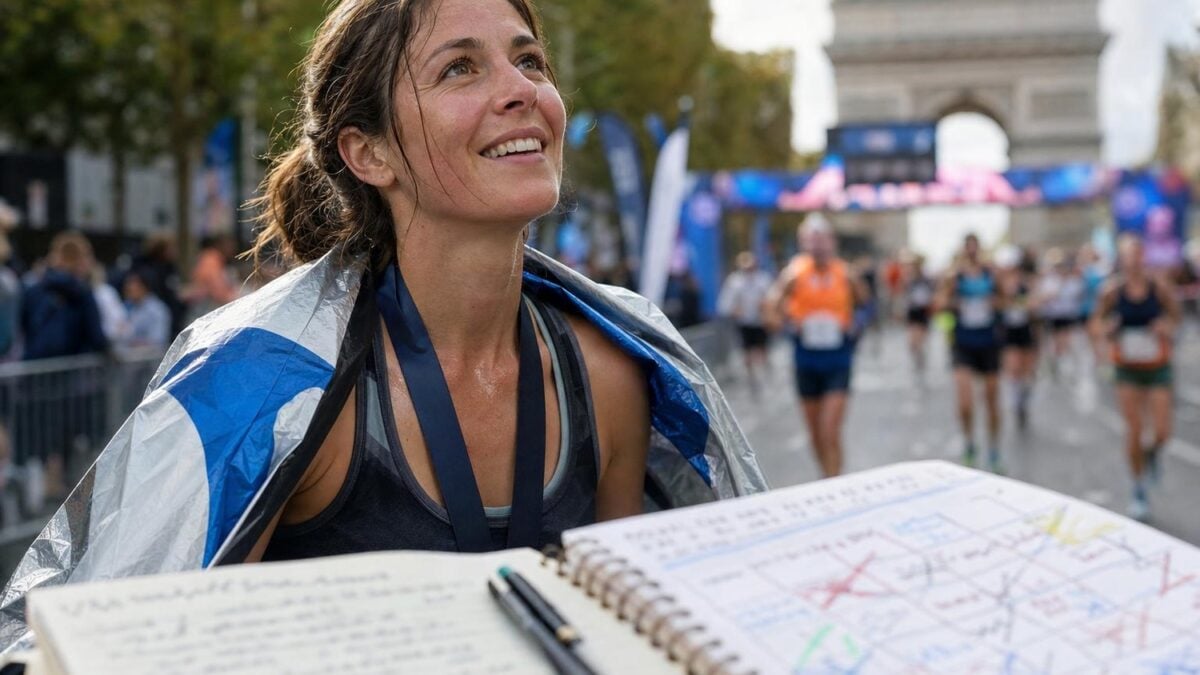
Flu in the middle of a peak week, vacation without sidewalks for running, fall on the last long run: many marathon runners know this scenario where preparation is derailed. A few days before the marathon, doubt sets in, we convince ourselves that the race is lost in advance. However, some set their best time precisely after what looks like a “catastrophic preparation”. This paradox raises the question: what if these training chaos prepared the body and especially the mind better than perfect plans on paper?
A preparation that we believe to be “failed”
doesn’t stop you from running your best marathon. In a testimony published by Women’s Health magazine, a runner recounts having suffered a series of illnesses, sleepless weeks and a fall in training before the 2026 London Marathon, which she nevertheless finished in 3:56, better than her 4:00:38 in New York the previous year. This case, far from being isolated, shows that an imperfect bloc can forge a decisive weapon on D-Day: the capacity to adapt.
When a failed marathon preparation becomes an asset on D-day
Hillary Cauthen, sports psychologist and president of the Association for Applied Sport Psychology, talks about “stress inoculation“. She recalls that “We often think that maximum performance comes from perfect preparation, but it is much better with adaptability, not with perfection“. Sessions moved, shortened or run tired then become mental training: you already know how to continue when everything is not ideal.
Physically, less busy preparation than expected is not necessarily a handicap. The running blog Woza Running reminds us that a
sharpening successful, with a sharp drop in volume in the last weeks while maintaining a little intensity, can improve performance by 2 to 6%. Wanting to catch up at the last minute mainly creates accumulated fatigue and risk of injury.
Adapt your strategy to failed marathon preparation
To know if your block was truly catastrophic, it’s best to look at the facts. The specialized platform Marathons.com recommends recording kilometers, sensations and sleep in a notebook. By rereading it, many notice that they have nevertheless accumulated endurance and a few long outings. From there, we adjust the objective and adopt a more cautious pace than in ideal preparation.
Arriving at the line with the idea “we’ll see” is not an admission of weakness, it’s a strategy. Hillary Cauthen explains that, when you accept the imperfection of your preparation and above all aim to experience the race, “the race becomes more of a challenge than a threat“The pressure drops, the stress decreases and we manage difficult passages better.
After a better marathon, prepare for the next one
After the race, respecting this logic of respect for the body is just as important. Doctor Jimmy Mohamed, interviewed by the Top Santé site, recommends drinking plenty of water rich in bicarbonates and salt, temporarily increasing carbohydrates and proteins, sleeping more, taking naps, then taking at least ten days without running, favoring gentle mobility, compression stockings and massages with arnica oil.