
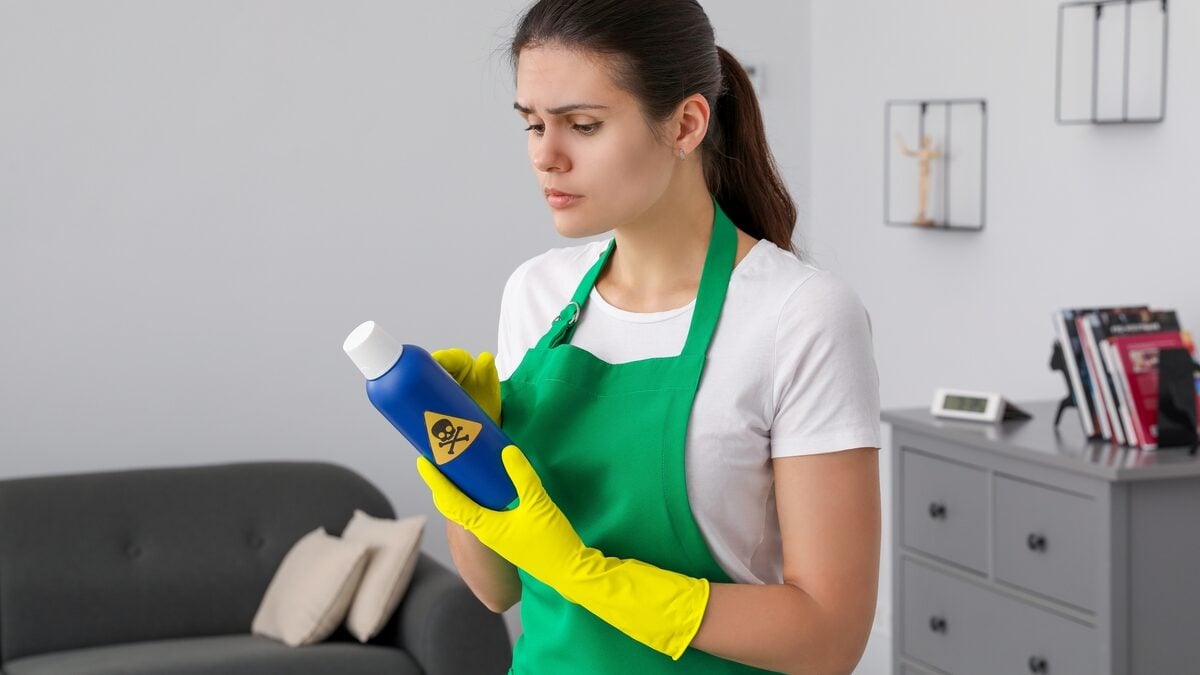
Lemon and vinegar, bicarbonate and black soap… On social networks, many cleaning tips are circulating. But not all of them are effective in making your home shine. Some are even dangerous for your health, warns Dr Gérald Kierzek, medical director of True Medical.
Household products that should no longer be mixed
In the kitchen, as in housekeeping, are you in the habit of making your own “stuff”? Bad idea. Many substances, once combined, see their cleaning active ingredients neutralized, or worse still, increase tenfold – thus threatening your health (poisoning, allergies, burns, etc.). To protect yourself on a daily basis, here are all the compounds to use separately:
- Ammonia and bleach: “this mixture releases toxic gases (chloramines) which can cause irritation of the respiratory tract, coughing, chest pain, or even serious poisoning” ;
- Bleach and vinegar: “this mixture produces chlorine gas, extremely irritating to the eyes, lungs and mucous membranes”;
- Bleach and acidic cleaners (example: acidic toilet products): “this combo generates toxic chlorine gases” ;
- Bleach and rubbing alcohol: “be careful of the chloroform that can be released – a toxic volatile substance” ;
- Hydrogen peroxide and vinegar: “this duo produces peracetic acid, a compound that is corrosive to the skin and irritant to the respiratory tract” ;
- Miscellaneous cleaners containing ammonia and bleach (such as some window or floor cleaners): “They should be avoided together.”
“In summary, mixing a chlorinated agent (such as bleach) with an acid, ammonia, alcohol or even other active products should be avoided,” summarizes Dr Gérald Kierzek.
And in case of doubt about a bottle? It is always recommended to avoid random mixtures: it is better to use your products one after the other.
Housekeeping: what good actions to adopt on a daily basis?
If not swallowing the product, not sniffing it and opening it carefully are basic reflexes, other little tips, often overlooked, can make the difference on a daily basis:
- Favor the use of soap and hot water for most surfaces,”soap being effective in eliminating dirt and microbes without chemical risk” ;
- Use the right tool (microfiber, brush, sponge) adapted to the surface “rather than multiplying chemicals”
; - Read labels carefully so as not to unintentionally mix incompatible products;
- Ventilate the room during and after cleaning “to prevent the accumulation of toxic vapors” ;
- Never mix several cleaning products in the same container;
- Store the products out of the reach of children and in their original packaging;
- Regularly clean heavily touched surfaces (work surfaces, toilets, handles), “with simple and suitable disinfectants.”
- Once these products have been used, remember to throw away the empty, tightly closed packaging.
What if ingested?
Do not make yourself vomit and do not drink anything (no milk!) but immediately contact the Anti-Poison Center in your region, or failing that, the SAMU (15).
“Pregnant women, young children, asthmatics and allergy sufferers should also be extra careful when using these products. concludes Dr Gérald Kierzek.
Some “bonus” tips to protect your lungs
To reduce your exposure to harmful products while still cleaning your home effectively:
- Choose rags, brooms or vacuum cleanersinstead of chemical sprays;
- Ventilate your interior after cleaning to limit inhalation of vapors;
- Wear gloves and a mask when using potentially irritating products.