
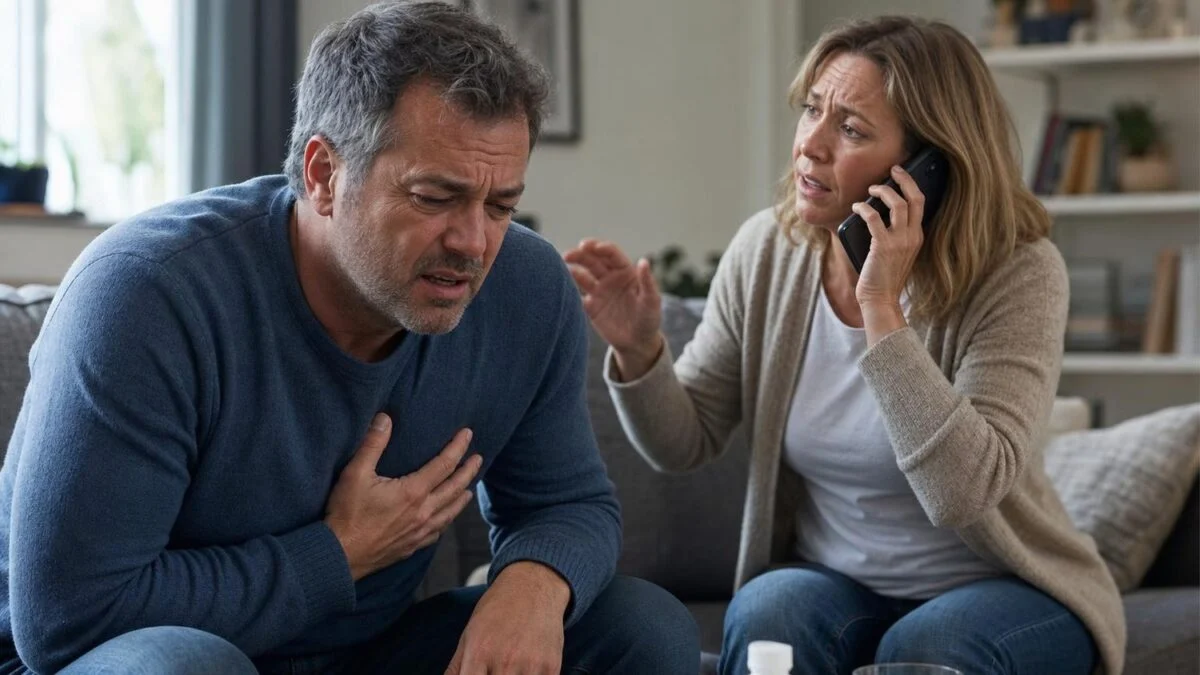
Chest pain, sudden shortness of breath, cold sweats… Faced with these signs, every minute counts. According to Public Health Canada, about half of heart attack-related deaths occur within the first two hours after symptoms appear. The challenge is therefore to quickly recognize a myocardial infarction and call for help without delay.
As Health Insurance and health authorities remind us, chest pain that lasts more than five minutes or returns in waves should alert you. However, some people, particularly women, the elderly or people with diabetes, can have a heart attack with more discreet symptoms, or even without marked chest pain.
Typical heart attack symptoms to spot right away
A heart attack often begins with gripping chest pain in the center or left side of the chest, often described as pressure or tightness that persists. This pain may radiate to one or both arms, shoulders, back, neck or jaw. Many also experience sudden shortness of breath, nausea, vomiting, cold sweats and feeling unwell with dizziness.
The Centers for Disease Control and Prevention notes that this discomfort can also come and go, leading many people to wait. The pain may go down to the stomach and feel like burning, there may be palpitations, strong anxiety or the feeling of a panic attack. When these signs occur at rest or during light exercise, they should be considered an emergency.
Myocardial infarction: atypical symptoms in women, seniors and diabetics
Heart attacks without pain are more common in women, the elderly and people with diabetes. The signs then become unusual fatigue for several days, sudden shortness of breath, dizziness, discomfort or pain in one or both arms. Diffuse pain in the upper back, neck, jaw or upper abdomen, with nausea or vomiting, which should raise suspicion of a heart attack.
Heart attack: when to call the emergency services and how to react while waiting
Chest pain or discomfort with these signs that lasts more than five minutes requires calling 15 or 112, or 9‑1‑1 in North America, without waiting for it to pass. The American Heart Association points out that every minute saved limits damage to the heart muscle. The Texas Heart Institute advises not to drive yourself, but to call an ambulance. In the event of loss of consciousness or cardiac arrest, alert should be given, cardiac massage should be started and an automated external defibrillator should be used if available.