
A fruit from Africa displays, on paper, figures that make our stars in the fresh section blush: almost 10 times more fiber than a kiwi and more calcium than milk, while also providing plenty of vitamin C and antioxidants.
Something to intrigue all those looking to naturally boost their energy intake.
dietary fiber and minerals.
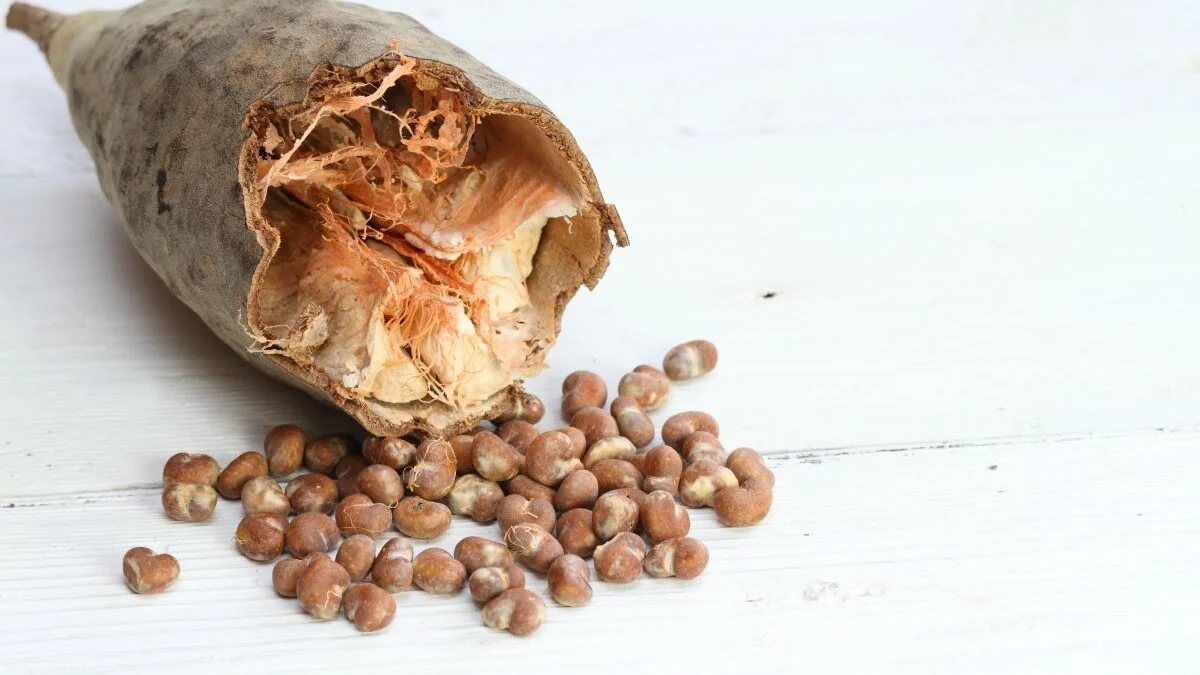
Behind these performances lies mucua, better known as monkey breadthe fruit of the African baobab Adansonia digitata.
It has a thick, elongated shell, which contains a naturally dry and powdery pulp, with a slightly tangy and sweet taste. It’s not the most photogenic fruit, but its nutritional profile rivals the trendiest superfoods while remaining very low in calories.
Monkey bread: the baobab fruit that freaks out the counters
On average, 100 g of baobab pulp contains around 50 g of fiber, 400 mg of vitamin C, 300 mg of calcium2,000 mg of potassium, 200 mg of magnesium and 8 mg of iron. The site also recalls a significant landmark: ten times more fiber than kiwi, seven times more vitamin C than orange and twice as much calcium than milk. All with a high content of polyphenols and flavonoids, these highly sought-after antioxidants.
This combination explains its main health benefits: the baobab fruit promotes transit, helps stabilize blood sugar and supports immunity thanks to its richness in vitamin C. Its antioxidants limit oxidative stress and participate in the production of collagen, which delays premature aging of the skin. Its calcium helps keep bones strong and teeth in good condition, an important point in preventing osteoporosis.
Baobab powder: fiber, calcium and vitamin C in numbers
A useful clarification: these values are given for 100 g of pulp, a very theoretical quantity because we rather consume the
baobab powder by small spoons. In practice, even a small portion already provides a significant amount of fiber and vitamin C, without overloading the plate. This is exactly what appeals to brands who make it a star African superfood of smoothies.
However, the figures vary depending on the sources. The Aroma-Zone sheet, for 100 g of powder, announces 54 g of fiber, 100 mg of vitamin C, 339 mg of calcium, 2.25 g of potassium and 113 kcal.
While an IRD composition table speaks of 256 mg of vitamin C and 284 mg of calcium. This large difference shows that everything depends on the form (fresh, dried pulp, commercial powder), the origin and the degree of maturity of the fruits.
How to consume baobab mucua powder without excess
In France, fresh mucua remains rare, but its powder is easily found in organic stores or online. Specialized sites recommend 5 to 15 g per day, to mix in a glass of water, a juice, a yogurt or a smoothie, without long cooking to preserve vitamin C.
It is better to start with small quantities if the transit is sensitive, because excess fiber can cause bloating or discomfort. People who must limit potassium on medical advice should also seek advice before making it a daily routine. For the rest, a spoon in the morning muesli is already enough to bring a very nourishing African touch.