
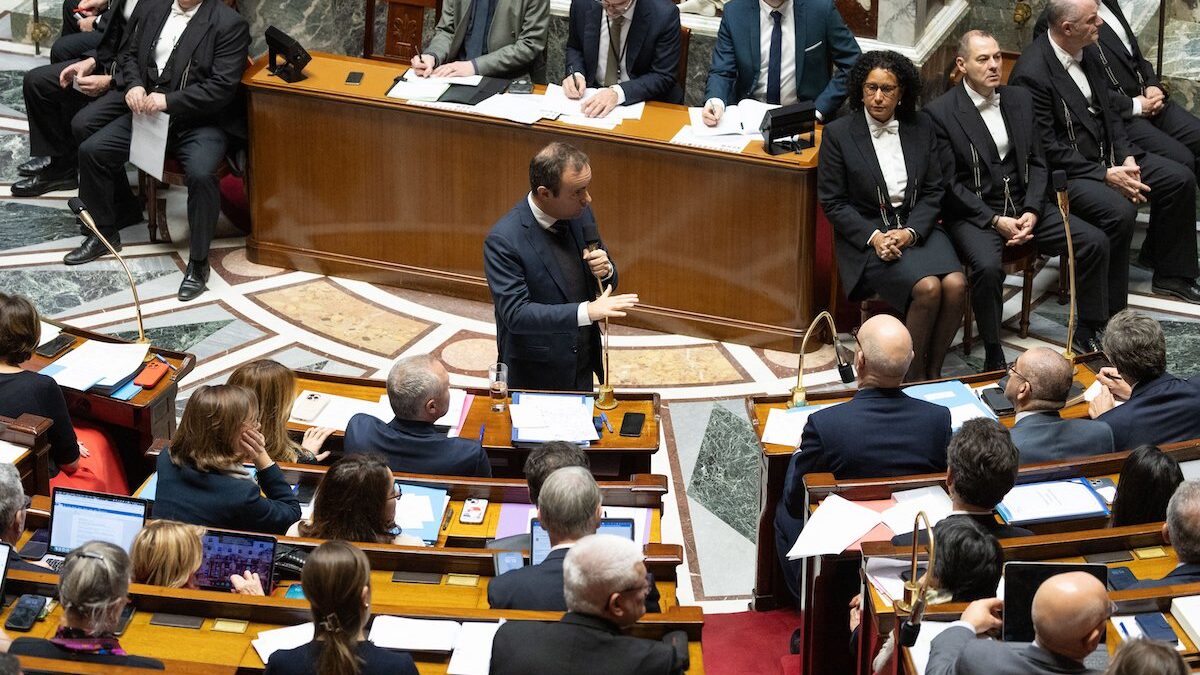
This December 9, the National Assembly adopted the Social Security Financing Bill (PLFSS) for 2026 following a particularly close vote: 247 votes for, 234 against and no less than 93 abstentions.
The most contested measures buried
This result, obtained thanks to a massive abstention from several political groups (Les Républicains, Horizons, ecologists) allows the government to narrowly save a text that has been largely revised throughout the debates. Even if the PLFSS must still go back to the Senate, the Assembly will have ultimately the last word, which gives this vote decisive importance.
This compromise budget buries several highly contested measures, such as the doubling of medical deductibles or the freezing of social benefits, while maintaining strict budgetary priorities in a context of a still high deficit, estimated at 19.4 billion euros for 2026. But above all, it introduces concrete developments for the French, whether they are active, parents, retirees or patients.
Pensions: a partial suspension which benefits the 1964 to 1968 generations
One of the flagship measures of this budget concerns the 2023 pension reform, the application of which is temporarily suspended. This is not a complete step backwards, but a shift in the calendar which benefits around 3.5 million people born between 1964 and 1968. For these generations, the legal departure age will not increase as planned, allowing them to leave up to three months earlier, while the contribution period remains frozen at 170 quarters instead of the 172 planned.
Long career devices are also integrated into this suspension. People who started working before the age of 20 will see their starting age readjusted, removing a vagueness which persisted in particular for the 1965 generation. The increase in the legal age will resume, barring any further political change, from 2028.
A pension calculation finally more favorable for mothers
The text also marks progress for women, whose pensions remain on average 27% lower than those of men. From now on, their retirement will no longer be calculated on the best 25 years but on 24 if they have had one child, and on 23 if they have had two or more. This measure applies to private sector employees, the self-employed, agricultural employees as well as non-agricultural employees, and will allow a slight increase in the amount of pensions for hundreds of thousands of future retirees.
Another notable improvement: two quarters granted for the birth, education or adoption of a child can now count towards early departure for a long career, which was not the case before.
Revaluation of pensions and social benefits: a “blank year” avoided
One of the major concerns linked to the initial text, that of a generalized freeze on pensions and social benefits, was finally lifted. General system pensions, as well as Aspa, will be revalued on January 1 according to inflation observed over the last twelve months, currently estimated at around 0.9%. As for social benefits – RSA, APL, family allowances – they will follow the usual schedule and will be increased in April. The risk of loss of purchasing power for millions of households is thus avoided.
Sick leave: much stricter supervision
Employees, on the other hand, will be faced with a tightening of the work stoppage regime. From January 1, a first stop cannot exceed one month, and a renewal cannot exceed two months. These limitations, reestablished by the deputies despite the initial opposition of the Senate, aim to fight against the continued increase in the cost of daily allowances. Exceptions will remain possible, but they must be precisely justified by the doctor. This measure should particularly affect employees suffering from pathologies requiring long and regular monitoring.
More generous birth leave: the big step forward in the text
The PLFSS also introduces new birth leave, intended to support parents when a child arrives. Initially planned for 2027, it will finally come into force on January 1, 2026. Each parent will be able to benefit from one to two months of leave, taken all at once or in split periods. The compensation will be significantly higher than that for parental leave: 70% of net salary for the first month, then 60% for the second. This new right will be added to existing maternity, paternity and adoption leave, and is part of the government’s strategy to boost the birth rate.
CSG: an increase targeted on income from assets
The debates also resulted in a compromise on the increase in the CSG applied to property income. The tax will increase from 9.2% to 10.6%, but this increase will not affect popular savings products or income from rentals or life insurance. The basis for the increase is therefore limited, which reduces expected revenues from 2.8 to 1.5 billion euros. This measure aims to strengthen the financing of Social Security without affecting household savings.
Mutual insurance: a surcharge that could be passed on to policyholders
At the same time, the government managed to pass an exceptional tax of one billion euros on complementary health insurance. Several MPs have warned of the risk that this surcharge will be ultimately passed on to member contributions. The mutual sector, already under pressure for several years, will probably try to avoid this increase, but no guarantee has been provided.
Medical deserts: the birth of the France Santé network
To respond to the difficulties of access to care, the government is setting up the “France Santé” network, supposed to guarantee each citizen the possibility of consulting a doctor within thirty minutes of their home. This network will rely on already existing structures – health homes, health centers, pharmacies – which will be able to obtain a label and aid of 50,000 euros on condition of respecting several criteria, including the absence of excess fees and a minimum opening of five days per week. It remains to be seen to what extent this system will actually succeed in reducing territorial inequalities in terms of care.
ONDAM: a revised increase, but still insufficient
The Health Insurance budget, which was initially expected to increase by only 1.6%, was increased to 3% after intense negotiations. If this increase constitutes a gesture towards health professionals and left-wing parliamentary groups, it remains lower than the natural evolution of needs, estimated at around 4% per year. The hospital world therefore remains faced with significant budgetary constraints.