
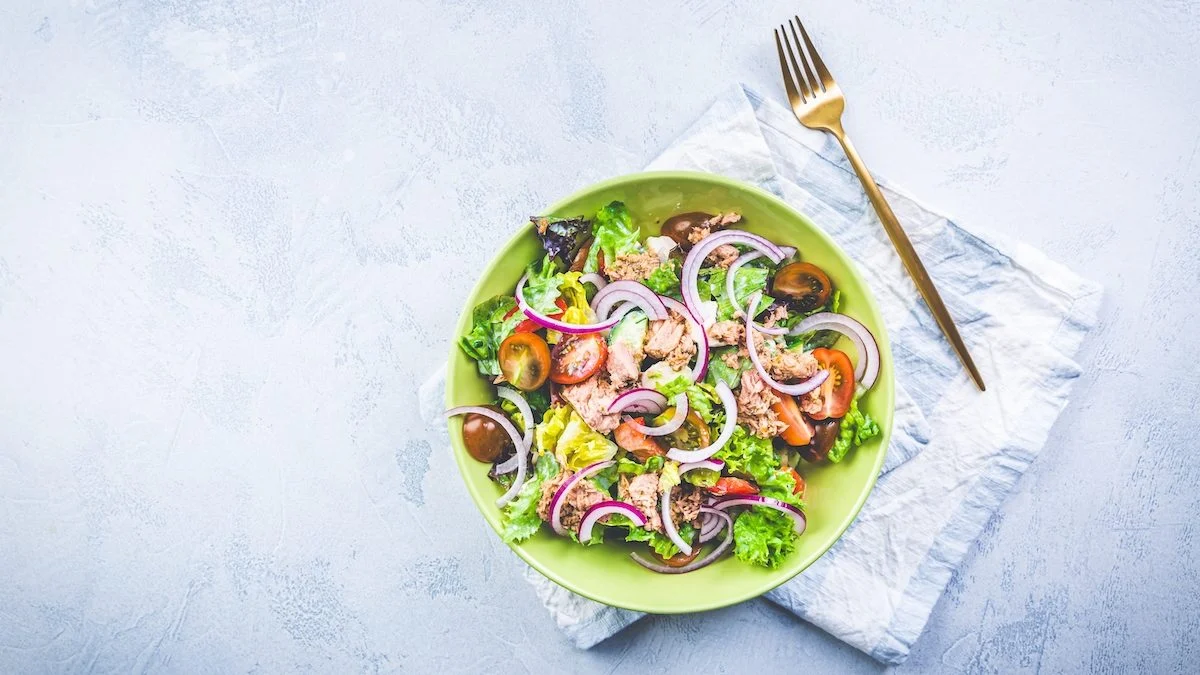
Tuna salad, a great summer classic, seems to have many qualities: it is filling, tasty and quick to prepare. However, one of its compounds is debated. In the Real Simple media, an expert even claims to have “replaced” him.
Tuna salad, a great classic
Tuna salad is a cold dish composed of canned tuna (usually natural or in oil), mixed with other tasty ingredients (celery, onion, chopped gherkins, mustard, lemon juice, etc.). In the United States, it is called “tuna salad” and often contains mayonnaise as a binder.
This way, it can be enjoyed as a sandwich, on toast, with crackers, as a garnish for a wrap or a green salad.
Its biggest assets? It is easy to prepare (and take away), is rich in protein… and is eaten cold. However, despite these qualities, it is not perfect from a health point of view either… one ingredient is in fact regularly criticized.
Changing this simple ingredient in the salad could make a difference
According to Ariel Klein, author of the article “This One Simple Swap Made My Tuna Salad Healthier—and So Much Tastier”it would be enough… to change the avocado into mayonnaise to make your salad healthier and tastier. But is this tip really a game changer? Before answering it, Julie Boët wants to compare the two ingredients.
“Traditional mayonnaise is essentially composed of oil and eggs. Result: it is very rich in fats, often saturated when industrial, and in calories (nearly 700 kcal per 100 g). It provides very little fiber and its micronutrient content is limited”, confides the dietician.
As for avocado, it is naturally rich in unsaturated fats, known to be beneficial for cardiovascular health.
“It also contains fiber, which promotes satiety and good digestive functioning, as well as a cocktail of vitamins and minerals (vitamin E, potassium, magnesium, folate). In terms of calories, it is also energetic (around 160 kcal per 100 g) but with a much more interesting nutritional profile”, underlines the expert.
Avocado or mayonnaise. Who wins the match?
Unlike mayonnaise, avocado provides quality fats and antioxidants – which protect cells from premature aging.
“The fiber it contains also helps better control appetite and blood sugar, which mayonnaise cannot offer. In addition, avocado provides a creamy and soft texture, perfect for replacing mayonnaise in sandwiches, mixed salads, toasts or even homemade sauces.”
But be careful not to overuse it.
“As it is often perceived as a “healthy” food, we tend to consume it without limits. However, avocado remains a very caloric fruit, and an excess can unbalance your energy intake. In addition, its cultivation in South America has a significant environmental impact, particularly in terms of water consumption and transport”,
warns the nutritionist.
The good idea? “Take advantage of its nutritional benefits by integrating it into your meals 1 to 2 times a week, i.e. 1 whole avocado per week, replacing mayonnaise or other fatty sauces. You will thus benefit from its benefits without excess”, concludes Julie Boët.