
A practice old of several millennia
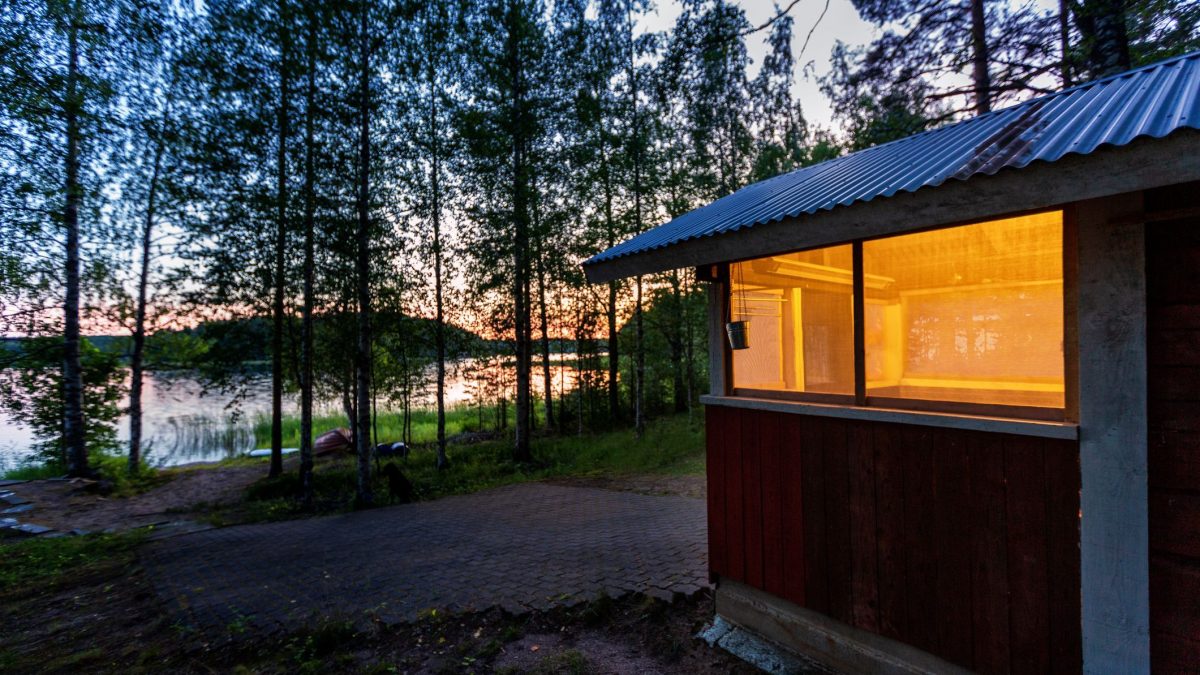
The sauna instantly evokes Nordic culture, and more particularly Finland, where it is a true art of living. With around three million saunas for a little less than six million inhabitants, the “country of the thousand lakes” has made it an essential element, which is found in hotels, retirement homes, buildings and even factories.
However, contrary to popular belief, its origin would be neither Finnish nor even Scandinavian. Its first forms date back to the Bronze Age, when pits dug in the soil served as sweating spaces. Stones heated to the campfire were placed at the bottom, then covered with branches, thatch or peat. The water poured over the burning stones then released an enveloping vapor.
Remains of these ancestral baths were found in Great Britain and Ireland, while similar practices also existed in the ancient Islamic world and among the native peoples of Mexico and North America. As BBC recalls, the sauna far exceeds the borders of Scandinavia and is part of a much more universal tradition.
A ritual recognized by UNESCO
In 2020, UNESCO inscribed the sauna as the intangible heritage of humanity, placing it alongside other cultural treasures such as the Jamaican reggae, the Mediterranean diet or the Hungarian dance Csárdás. “The sauna purifies both the body and the soul, offering a deep feeling of serenity. In the past, it was perceived as a sacred place, a real” temple of nature ‘”, underlines the organization on its site. While UNESCO celebrates this Finnish tradition, Sweden, it even devotes a national day, proof of the importance of this ritual dedicated to well-being.
A real asset for health
Much more than a simple moment of relaxation, the sauna has many virtues for the body. In addition to improving blood circulation and promoting the elimination of toxins, it would play a protective role against certain cardiovascular diseases. An Australian study, published in 2018 in the Evidence-Based Complementary and Alternative Medicine journal, has demonstrated that the regular practice of the sauna is associated with a reduction in the risk of heart disease and cerebral vascular accidents.
The beneficial effects of the sauna do not stop there: according to Canadian researchers, it could also contribute to the prevention of neurodegenerative diseases as Alzheimer, by limiting the accumulation of certain proteins involved in this pathology. However, these benefits vary depending on the frequency and duration of the sessions, and certain precautions remain necessary, especially for people with heart problems.
A diplomatic tool that has proven itself
We know the diplomacy of the panda well, a tradition born under the Tang dynasty which consists in “offering” giant pandas as a gift to seal or strengthen diplomatic relations. But there is also another more unknown form of diplomacy: that of the sauna.
This strategy of “soft power” was initiated by Urho Kekkonen, president of Finland from 1956 to 1982. Beyond his therapeutic benefits, the sauna has always been a place conducive to strategic discussions. Kekkonen had made it a real diplomatic tool, regularly inviting leaders and diplomats, especially Soviets, to share a steam bath with him. Among his illustrious guests would be Nikita Khrushchev and Leonid Brejnev, with whom he would have tackled sensitive subjects sheltered from prying eyes.
Convinced that the heat of the sauna, the absence of clothing and protocol barriers facilitated sincere exchanges, Kekkonen would have led key talks with Soviet officials. This unique approach would have enabled him to strengthen Finnish neutrality while maintaining good relations with Moscow.