
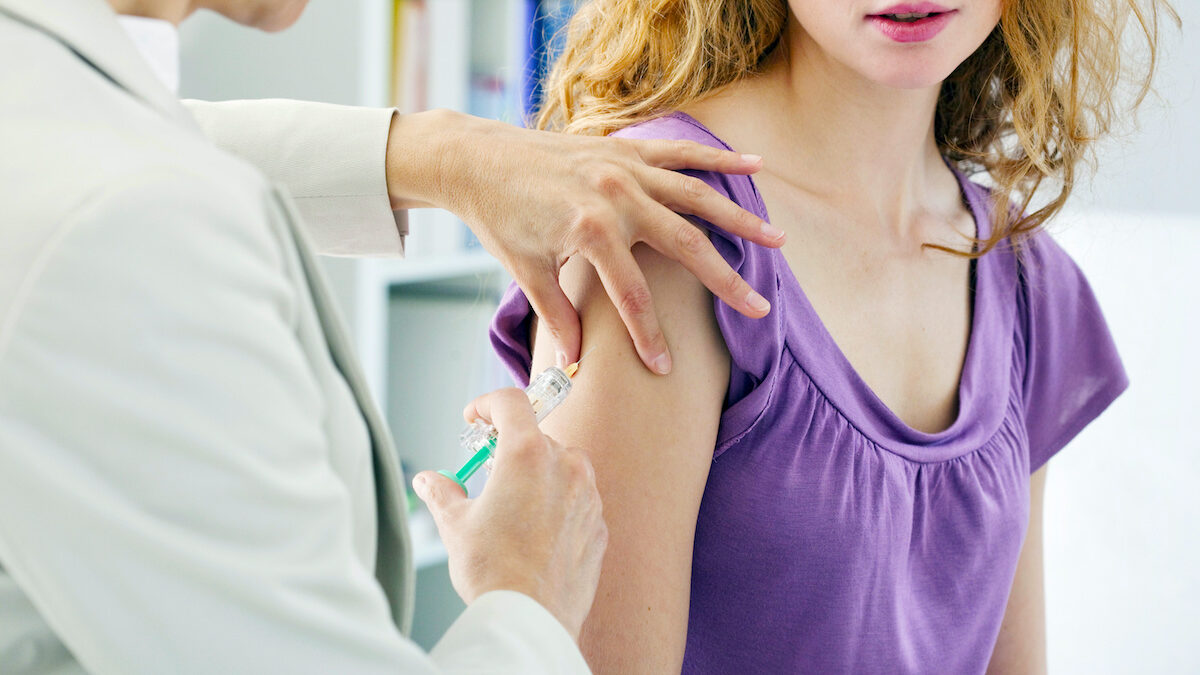
For the third year in a row, the Ministries of Health and National Education are relaunching their vaccination campaign in colleges. In 2025, it will be enriched with a major new feature. Free ACWY meningococcal vaccination, in addition to the human papillomavirus (HPV) vaccine. All students aged 11 to 14, enrolled in public or private colleges under voluntary contract, as well as in certain medico-social establishments, will be able to benefit from it (with parental agreement). The two vaccines can be administered during the same session, thus facilitating logistics and monitoring.
Effective vaccines for enhanced prevention
According to Dr. Gérald Kierzek, emergency physician and medical director of True Medical, the announcement is positive: “CVaccines are already widely proven and effective. He recalls that vaccinating adolescents from the start of the school year allows immunization before any exposure, thus optimizing protection.
“For HPV, vaccination prevents up to 90% of infections that cause cancer, including cervical cancer and other HPV-related cancers. For ACWY meningococci, vaccination protects against serious invasive infections, sometimes fatal, with an effectiveness greater than 90%,” he explains.
In addition, the introduction of the ACWY meningococcal vaccine responds to a growing concern: these bacteria cause between 500 and 600 serious infections and around 60 deaths in France each year. These illnesses, often sudden, can cause serious after-effects (deafness, cognitive delay, amputation).
Encouraging results, but progress still awaited
However, for the most effective coverage, there is still much progress to be made. Since the launch of the campaign in 2023, HPV vaccination coverage has significantly improved. In 2024, nearly 58.4% of 15-year-old girls and 36.9% of boys had received at least one dose, i.e. respective increases of more than ten and twenty points compared to 2022.
These figures reflect a positive dynamic, but still insufficient. The objective set by the health authorities is to reach 80% coverage by 2030, as part of the ten-year strategy to fight cancer.
For Dr. Kierzek, these campaigns have a double impact and not only protect your child: “Mass vaccination promotes collective immunity: by increasing coverage in an age group, we reduce the circulation of viruses and even protect the unvaccinated.”
A system designed to be accessible and fair
Another strong point highlighted by the doctor: free and logistical simplicity.
“Vaccination in schools facilitates access and reduces health inequalities. All students, regardless of their social conditions, can benefit from it without advance payment or trip to a medical office.”
This organization also makes it possible to improve overall coverage, which is often lower when vaccination is based on an individual approach.
Concretely, if you are the parents of a schoolboy, parental authorizations have been requested since the start of All Saints’ Day or will be until the winter holidays. Vaccination sessions, carried out by public medical teams, will take place between January and June 2026.
But limits and precautions to keep in mind
While the campaign looks promising, it is not without challenges.
- Some parents or adolescents express concerns in particular regarding the safety or necessity of these vaccines. “This reluctance can slow down vaccination coverage and compromise the success of the campaign.recognizes Dr. Kierzek;
- Practical organization also requires significant coordination between establishments, health authorities and medical teams. Collecting parental consent can sometimes slow down implementation;
- Finally, even if the side effects are rare and mild (pain at the injection site, mild fever), reinforced medical supervision is maintained to guarantee the safety of students;
- Another limitation: campaigns targeting a specific age group, certain young people not vaccinated in time risk remaining exposed due to a lack of sufficient catch-up measures.
Towards a better protected generation?
Despite these constraints, the benefits of the campaign are considerable. Thanks to vaccination in schools, France not only hopes to slow the progression of serious infections. But also reduce the number of cancers linked to HPV viruses.
For Dr Kierzek, this vaccination policy embodies “a modern, accessible and equitable prevention strategy, which must be accompanied by clear pedagogy to maintain the confidence of families”.
Undisguised objective: better protected youth.