
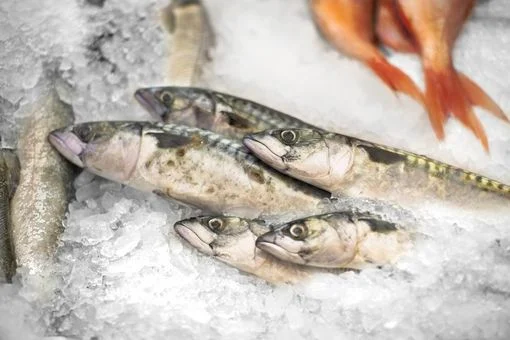
In front of the fishmonger’s stall, it’s difficult to know at first glance whether a sea bass or a mackerel is really fresh. However, a few simple signs allow you to sort things out. Eyes, skin, gills, flesh or even stomach: professionals recommend looking at several clues before choosing.
Fresh fish: 7 signs to check
Start with the skin first. She must be “uniform, shiny, moist and give the impression that it is covered with a sort of light transparent film”, explains a fishmonger in Ouest-France. Blood stains or skin that is a little too thick should, however, alert you.
Then look at the eyes. They should be clear, shiny and rounded. Conversely, the eyes of a fish that is not very fresh have a
“cloudy, yellow and glassy appearance”. Smell is also a good indicator. Fresh fish gives off a slight iodine smell, not an ammonia or carbon dioxide smell. “rotten fish”.
Finally, take a look at the gills. The fishmonger advises “read between the gills” : they should be bright red, shiny and moist. If they are brown, black or slimy, it is better to choose another fish.
For the flesh, the test is very simple: press lightly with your finger. It must immediately return to its form. The fish must also remain firm and hold up well on the ice.
Last check: the stomach and anus. The belly should be intact, not swollen or stained, while the anus should remain closed.
Fish: how do professionals judge its freshness?
A single criterion is not enough, several indices must be cross-referenced.
A fish rated E, for “excellent”, notably has bright eyes, shiny skin, bright red gills and firm flesh. Conversely, a fish close to category C has more signs of loss of freshness: dull eyes, stronger smell or damaged belly.
Please note: some rays may naturally have a more pronounced odor, without being unfit for consumption.
Pay attention to the cold chain
Conservation matters too. Fishmongers recommend a temperature between 0 and +2°C to maintain the cold chain. The fish should therefore be transported quickly and placed in the refrigerator as soon as possible.