
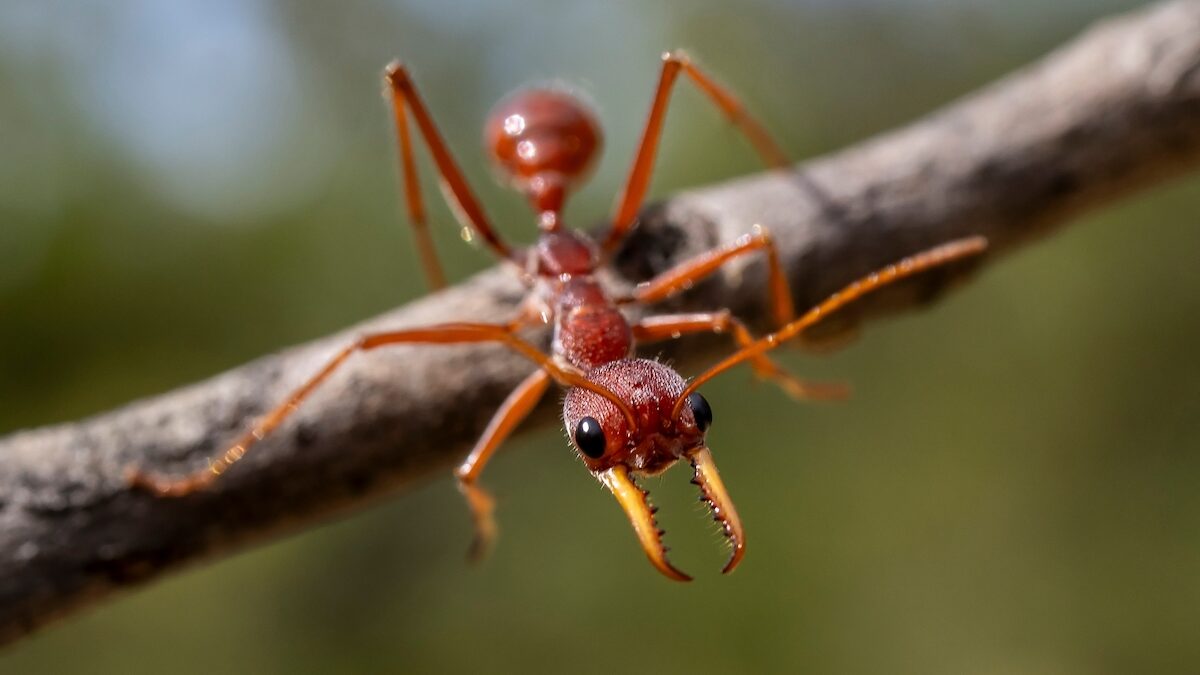
To choose, would you prefer to feel an intense electric shock, or a shooting pain that will knock you unconscious? On many continents, we live alongside venomous animals who use formidable cocktails, stings or hooks to neutralize those who threaten them. But what is the most painful technique for humans? Scientists have themselves tried to prioritize pain.
When science prides itself on knowledge
Among these explorers of suffering, one name keeps coming up: Justin Schmidt. This American entomologist literally transformed his body into a laboratory, by being bitten voluntarily by nearly a hundred species of insects. His goal? Establish a pain scale, now famous, ranging from 1 to 4.
At the low end of the scale, some stings are almost harmless, barely more unpleasant than a small burn. But very quickly, the sensations become more intense: acute burning, throbbing, feeling of extreme heat… Until they reach almost hallucinatory descriptions.
At the top, level 4 brings together the worst experiences known to insects.
- The bullet ant, for example, inflicts pain described as “pure and excruciating”, lasting up to 24 hours.
- The hawk waspfor its part, causes a sharp but brief pain, compared to an uncontrollable electric shock.
- There warrior wasp pushes the experience even further, with a sensation of prolonged “torture” that is difficult to compare to anything known.
Ever more daring volunteers
After Schmidt, other enthusiasts took up the torch, such as videographer Coyote Peterson. Less academic but just as determined, he exposed himself to numerous injections to complete this strange map of pain.
- Among his most notable experiences is that of
japanese giant hornetwhose sting is described as a sudden and immediate shock, to the point of causing loss of consciousness. - But for him, the worst remains that of the executioner waspwhose effects last for hours and can leave visible after-effects on the skin.
And underwater, another dimension of pain
If land insects impress, sea creatures play in a whole different category. Jellyfish, in particular, use microscopic cells capable of injecting extremely powerful venom in a fraction of a second.
The tiny jellyfish Irukandji is the most formidable example. Its sting is almost imperceptible at first… but the symptoms appear quickly: intense pain, spasms, vomiting, and above all a terrifying feeling of imminent death. Suffering so extreme that some patients beg for their pain to be reduced.
Other marine species are not left out. The Australian box jellyfish can cause burns comparable to boiling oil, while the stonefish injects a venom capable of causing excruciating pain for hours or even days.
Pain and severity: two different realities
As Dr. Gérald Kierzek, emergency physician, reminds us, it is essential not to confuse pain with real danger. “Scales like Schmidt’s classify stings according to subjective pain intensity, from 0 to 4, but they do not reflect medical severity.”
In other words, an extremely painful sting — like that of the gunshot ant or the hawk wasp — is not necessarily the most dangerous. Conversely, a sometimes moderately painful sting can become critical if it triggers a severe allergic reaction.
The severity actually depends on several factors: the nature of the venom (neurotoxic, hemolytic, etc.), the sensitivity of the person, but also the associated symptoms. “A simple bee sting can cause anaphylactic shock in certain individuals, without particularly intense pain.
How to react in the event of a sting?
When faced with an injection, a few simple actions can make the difference:
- For insects: remove the stinger if it is visible (by scratching rather than pinching), clean the area with soap and water, then apply cold to limit pain and inflammation. An analgesic can be used if necessary;
- For the jellyfish : rinse with sea water (never fresh water), or vinegar if available, carefully remove the tentacles (tweezers, sand) and apply heat to relieve the pain.
When should you worry?
Certain situations require an emergency consultation. Emergency services must be called in the event of:
- Difficulty breathing;
- Swelling of the face or throat;
- Generalized urticaria;
- Discomfort or loss of consciousness;
- Repeated vomiting;
- Inability to move a limb.
People with a history of severe allergies should be particularly vigilant.
Other signs should also alert you in the following hours or days: fever, appearance of red lines on the skin (lymphangitis), abscesses, neurological disorders or persistent symptoms. They can reflect an infection or a serious reaction.
So what is the worst sting?
The question, however, remains open. The most painful insects inflict intense but generally brief and rarely fatal suffering. Marine creatures can cause more complex, prolonged and sometimes life-threatening pain.
Comparing these experiences remains difficult: should we measure the intensity, duration, or even the psychological impact? Maybe a little of all three.
In the end, the true “champion” of pain is not necessarily the most dangerous. But one thing is certain: in nature, certain stings push the limits of what the human body can tolerate… and remind us that a simple contact can sometimes be enough to unleash real hell.