
In France, hundreds of thousands of people live with glaucoma without knowing it. A situation that is all the more worrying as the disease progresses without symptoms for many years. Faced with a rapid aging of the world population, prevention and screening are becoming a major public health issue.
When sight fades without warning
Glaucoma is nothing spectacular. It causes neither pain nor frank alert. Yet, over the years, it can silently chip away at vision.
This chronic disease gradually affects the optic nerve, the essential structure that transmits visual information from the eye to the brain. The nerve fibers slowly deteriorate, leading to a reduction in the visual field. Initially imperceptible, this loss becomes visible when the damage has already taken place.
Worldwide, glaucoma is the second leading cause of blindness after cataracts – but above all the leading cause of irreversible blindness. A reality which explains his nickname in the medical community: the “silent thief of sight”.
Today, nearly 75 million people are affected worldwide. And the demographic dynamics suggest a significant increase: by 2040, this figure could reach 111 million patients.
In France, around 800,000 people are currently being treated for glaucoma. But behind this figure lies another, more worrying reality: between 400,000 and 500,000 people are affected without being aware of it. In other words, almost one in two patients are unaware of their illness, exposed to an increasing risk of poor vision or blindness.
Detect early to preserve vision
Faced with this silent progression, specialists insist on a fundamental point: the disease can be stabilized if it is detected in time.
Advances in ocular imaging and intraocular pressure measurement techniques have significantly improved diagnostic capabilities. Ophthalmologists now have tools to identify the first damage to the optic nerve well before the patient feels any discomfort.
But these technologies can only act on one condition: that the patient consults.
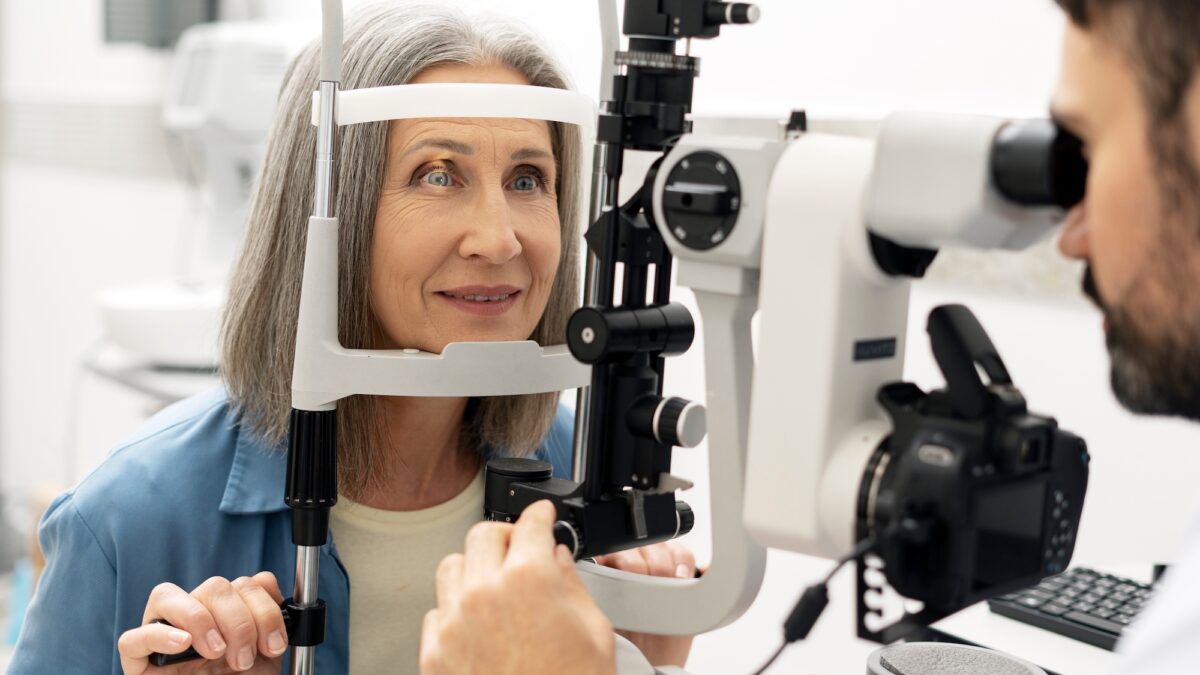
The diagnosis of glaucoma is in fact based on a set of additional tests – measurement of eye pressure, analysis of the visual field, observation of the optic nerve – which must be carried out in consultation by an ophthalmologist.
“Glaucoma is a pernicious and silent disease often detected too late because it progresses without noticeable symptoms. With the aging of the population, the number of visually impaired people could increase considerably if we do not take prevention. This is why regular ophthalmological follow-up, especially from the age of 40 or in the event of risk factors, is essential to preserve not only vision, but also the autonomy and quality of life of patients.declares Dr Esther Blumen-Ohana, ophthalmologist and vice-president of the National Union of Ophthalmologists of France (SNOF).
Beyond visual function alone, the consequences can be profound: loss of autonomy, difficulty moving around, social isolation, etc. For many patients, vision conditions all daily activities.
From the age of 40, essential vigilance
The risk of glaucoma increases markedly with age. This is why ophthalmologists recommend a regular screening from age 40even in the absence of visual symptoms.
However, some people need to be particularly careful. One of the most important risk factors is family history. High myopia, high intraocular pressure or certain anatomical features of the eye can also contribute to the onset of the disease.
In these situations, specialists recommend closer checks in order to detect the slightest development and initiate treatment as soon as possible. Current treatments — mainly eye drops intended to reduce pressure in the eye, sometimes supplemented by laser or surgical treatments — can in many cases slow down or even stabilize the progression of glaucoma.
The goal is not to cure, because already destroyed nerve fibers cannot be restored. The challenge is to prevent progression.
In this context, professionals point out that access to visual care has improved in recent years in France, in particular thanks to better organization of the sector and increased cooperation between ophthalmologists, orthoptists and opticians. Delays in accessing consultations have generally decreased, facilitating care pathways.
An encouraging development, but which does not replace an essential reflex: consult regularly.
Protect eyesight, preserve daily life
Glaucoma reminds us how fragile visual health remains. Long invisible, the disease can profoundly transform lives when it is not detected in time.
Each year, World Glaucoma Week aims to remind people of a simple but essential reality: an ophthalmological examination can change the course of a life.
Because behind the numbers and the studies, there are everyday gestures – reading, driving, recognizing a face – that medicine today strives to protect. And in this silent battle to preserve vision, prevention remains, more than ever, the most precious ally.