
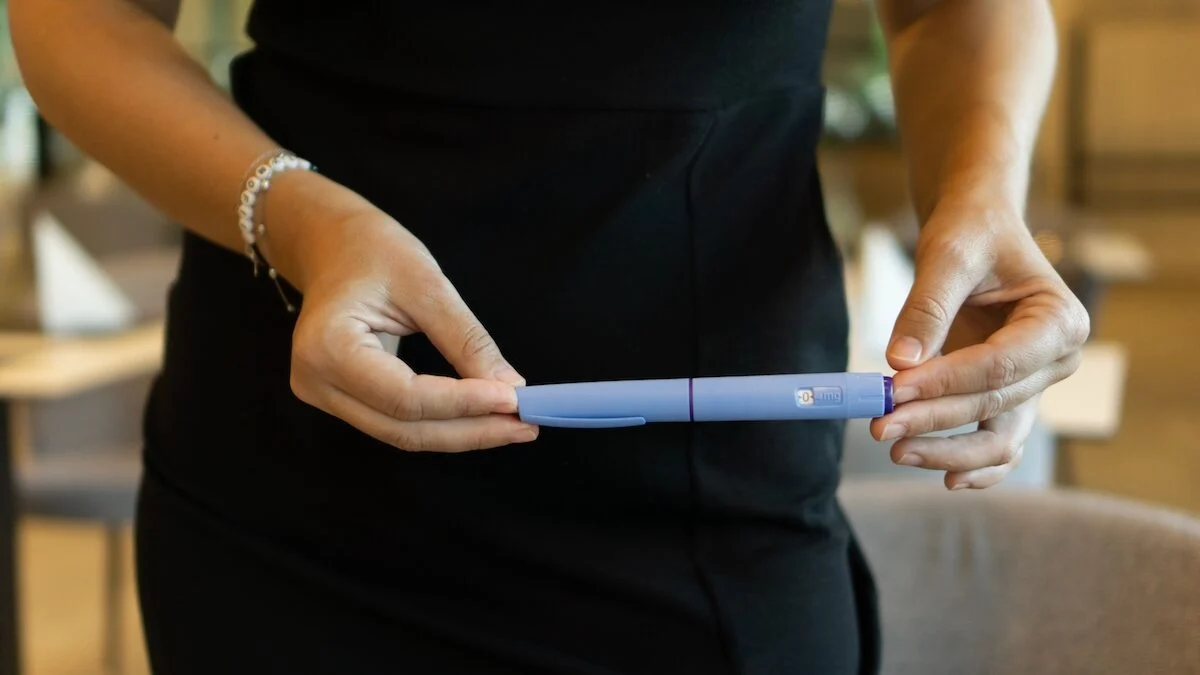
Weight loss injections have not yet swept through France as they have in the United States. But the figures from the new Ifop study for Darwin Nutrition, carried out among 3,004 people, show that the temptation is already well established. While Wegovy and Mounjaro have been reimbursed since June 15, 2026 for certain adults suffering from obesity, nearly one in five French people could consider taking a GLP-1 drug to lose weight.
For the moment, only 4% of French people have already tried to lose weight with anti-obesity drugs such as Ozempic or Wegovy, and 2% are currently taking them. The contrast with the United States remains striking, since 15% of American adults say they have already used this type of treatment and 11% are taking it at the time of the survey. However, behind this still limited consumption, the study reveals a much greater potential, with nearly ten million adults likely to one day switch to the injection.
Ozempic, Wegovy, Mounjaro: GLP-1 drugs still appeal to few French people
The use of anti-obesity drugs remains marginal in France for the time being. The 4% of people who say they have already tried to lose weight with treatments such as Ozempic or Wegovy place this solution far behind other weight loss methods. The consumption of products or medications to lose weight, all categories combined, also concerns 12% of French people over the course of their lives, compared to 11% in 1979.
One figure stands out in the world of slimming solutions: these medications attract men more than women among users. 6% of men say they have already taken it, compared to 4% of women. The proportion even rises to 10% among men under 35.
Since June 15, 2026, Wegovy and Mounjaro can be reimbursed by Health Insurance under specific conditions for certain adults suffering from obesity. Coverage does not concern all prescriptions: it depends on eligibility criteria, including an initial BMI of at least 40 kg/m², or at least 35 kg/m² accompanied by severe comorbidity under the conditions provided.
François Kraus, director of the “Gender, Sexualities and Sexual Health” division at Ifop, summarizes this gap between the two countries: “Despite a marked difference in the use of these drugs between the United States and France, the base of potential users remains similar. The figures initially seem to confirm this differentiated use: only 4% of our fellow citizens have already tried to lose weight with these treatments, compared to almost four times more in the United States.“
Nearly ten million French people could be tempted
This is where the results change scale. 18% of French people believe that they could take GLP-1 drugs to lose weight, including 5% who answer “definitely” and 13% “probably”. The proportion reaches 20% among women, compared to 16% among men.
By adding people who already use these treatments, potential consumption reaches 19% of the population, or nearly ten million adults. This pool is close to the level measured in the United States among people who do not yet use one, with 22% of potential consumers.
François Kraus insists on the scale of this reservoir: “But the reservoir is already there. Nearly one in five French people say they are ready to take the injection, or around ten million adults – a level comparable to that measured by American institutes just before their own takeoff. And this reservoir fills in an unexpected place: not first in obese people, who nevertheless fall under the medical indication, but in those who find themselves too fat. Self-esteem predicts GLP-1 attractiveness better than body mass index. It is indeed an aesthetic demand, shaped by social networks, which comes knocking on the door of the pharmacy.“
Who are those attracted?
The most attracted profiles therefore do not only correspond to people likely to be eligible for reimbursement.
Half of the candidates are of “normal” build, with 50% of women and 54% of men, compared to more than a third of obese people, with 38% of women and 34% of men. It even reaches 85% among women who consider themselves thin.
The profile of this potential clientele is also very marked by age, place of living and professional category. 62% of women aged 25 to 34 affected by the potential request would consider this recourse, as would 60% of employees, 62% of workers and more than half of the inhabitants of the Paris metropolitan area, with 56% of women and 53% of men.
Among women who consume beauty content daily, the proportion reaches 61%, compared to 7% among women aged 65 and over.
Parallel GLP-1 market: 4 million French people would consider purchases without a prescription
The most striking figure concerns how some potential consumers might seek to obtain these drugs. According to the study, 41% of them could consider obtaining GLP-1 without a medical prescription, through foreign pharmacies or unauthorized sites. This represents around 8% of the adult population, or almost four million people.
François Kraus describes the mechanism put forward by the investigation: “Hence the most worrying point of this study. Since reimbursement is reserved for severe obesity, the aesthetic portion of the demand has nowhere to go – except to the parallel market. Four out of ten candidates are already considering it, and it is precisely the least medically “legitimate” who are the most ready for it: half of people of normal build, compared to a third of obese people. The regulatory system, designed to protect, outlines the clientele of unauthorized sites.“
The official framework recalls for its part that Wegovy and Mounjaro must be prescribed and used in defined medical conditions. Health Insurance also specifies that GLP-1 analogue drugs intended for the treatment of obesity should not be used for cosmetic weight loss in people who are not overweight or obese.