
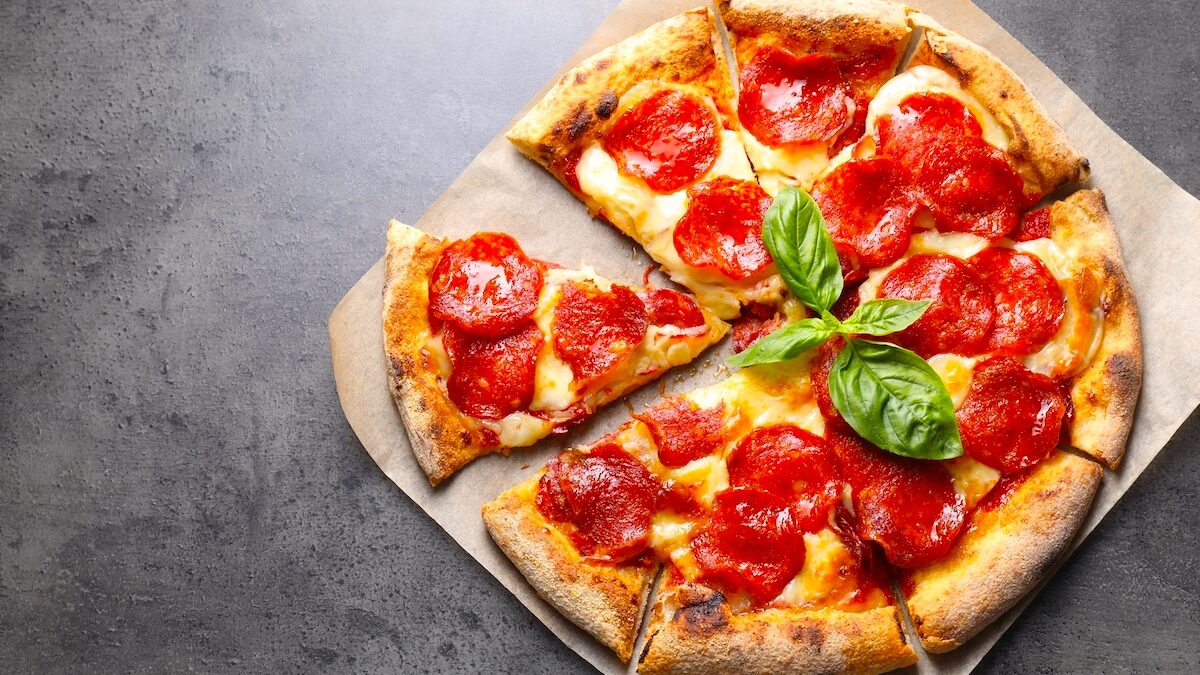
Pizza often gets a bad reputation. If we like its gourmet, simple and friendly side, we readily associate it with “junk food”, or an unbalanced meal (especially when it is bought in the “frozen” section). That’s a mistake!
Some brands are reinventing this Italian classic by focusing on simple, organic and well-measured ingredients. A frozen pizza has just obtained a perfect score of 100/100 on Yuka, an extremely rare score in its category.
The frozen pizza that everyone loves on Yuka
The lucky one? Delhaize’s organic salami pizza, a frozen reference that displays an exemplary nutritional profile. Yuka, the application that deciphers our food labels, gives it the maximum score for its impeccable composition and total transparency.
Where many industrial pizzas combine additives, modified fats and artificial flavors, this one plays the simplicity card:
- A dough made from wheat flour, water, sunflower oil, salt, yeast and cane sugar;
- 22% tomato sauce, 12% mozzarella, 7% salami, 3% tomato and 3% red onion;
- Zero artificial flavors, zero hydrogenated fats, and two risk-free additives: ascorbic acid (E300) and rosemary extract (E392), both natural and used to preserve freshness.
Result: an organic, healthy and balanced pizza, far from the clichés about ready-made meals.
A simple composition… and a controlled nutritional profile
In terms of nutrition, Delhaize pizza stands out with measured and consistent figures:
- 218 kcal per 100 g;
- 3.3 g of saturated fat;
- 0.45 g of salt;
- 1.4 g of sugars;
- 9.4 g of protein and 1.3 g of fiber.
Balanced values which prove that a frozen meal can also be reasonable, provided you focus on quality. At this level, we can definitely take back some of it!
How to choose the right pizza in the supermarket
If you don’t have time to cook a homemade pizza, the oven option remains an attractive idea. But to opt for a healthier pizza, a few reflexes are essential when looking at the frozen food section
- Read the list of ingredients: it should be short, clear and understandable. The simpler it is, the better;
- Favor organic products, which guarantee the absence of synthetic pesticides and limit additives;
- Monitor the level of salt and saturated fat: less than 1 g of salt and 5 g of saturated fat per 100 g is ideal;
- Choose natural toppings (tomatoes, vegetables, simple cheeses) rather than industrial preparations;
- Accompany your slice of pizza with a nice green salad or grilled vegetables for a complete and balanced meal.