
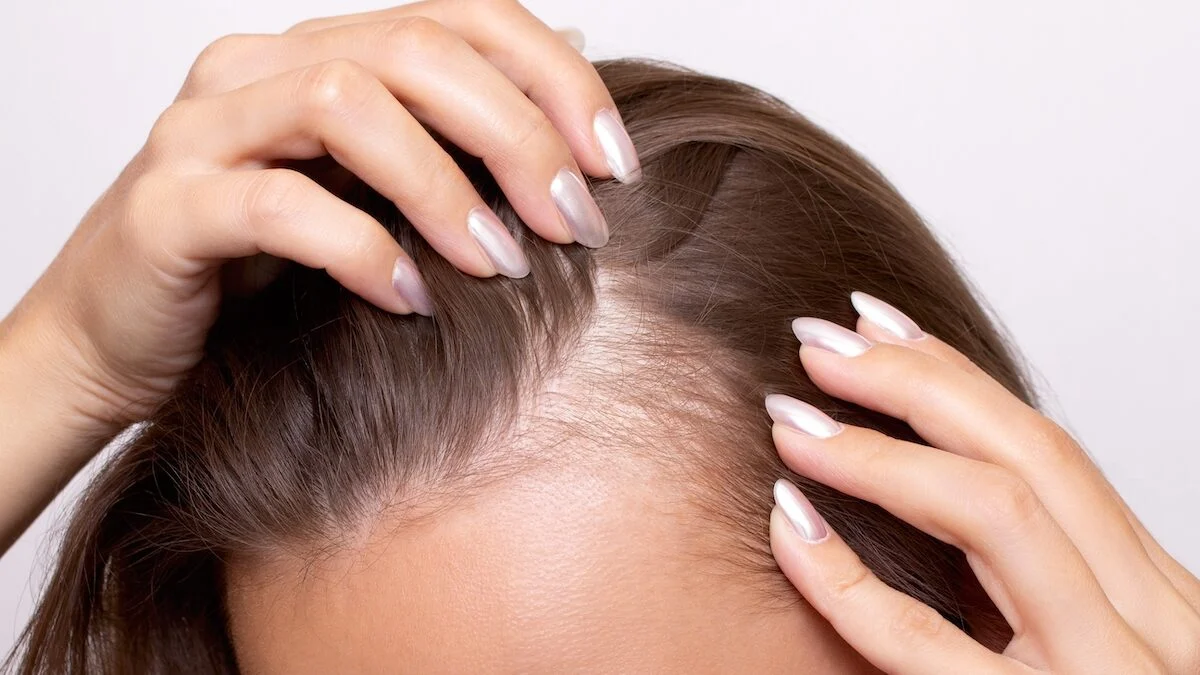
In a video posted on Instagram, Léa Pateras-Pescara, doctor of pharmacy, recalls that certain falls follow a typical path. The useful answer: a widening part or a thinning hairline can suggest androgenetic alopecia, but are not enough to self-diagnose it.
Signs that should suggest this form of fall
Not all hair loss tells the same story. In her video, Léa Pateras-Pescara emphasizes two common situations: in women, it often manifests itself as a diffuse lightening of the top of the scalp, with a more visible central part. In humans, it affects the gulfs, the frontal region and the top of the skull.
These signs correspond well to classic presentations of androgenetic alopecia.
The nuance is important: these signs are evocative, not diagnostic. A diffuse, recent, sudden fall or accompanied by other symptoms may have another origin. In other words, observing this helps you know that you have to take the subject seriously, but does not allow you to conclude alone in front of your mirror.
This evolution is generally gradual. It is therefore distinguished from a very sudden fall, in handfuls, or from a loss in very limited patches, which must lead to the search for other causes. To recognize the signs of baldness, the pace of installation is as important as the affected area.
Why consult, even if the fall seems typical
In the video, Léa Pateras-Pescara also explains the role of dihydrotestosterone, or DHT. The validated formulation is as follows: in predisposed people, certain hair follicles are particularly sensitive to the action of DHT. They gradually miniaturize, the hair becomes finer and shorter, then the density decreases.
This is also why early notice can be useful. It first allows us to confirm, or not, the hypothesis of hair loss of hormonal origin. It then allows, if necessary, to discuss validated medical options. Certain treatments, such as minoxidil in moderate forms of adults, can help stabilize the loss or support regrowth, with variable results. Conversely, “natural solutions” should not be presented as a proven treatment for androgenetic alopecia.
Other explanations are possible
The expert finally reminds that hair loss can have other explanations: nutritional deficiency, stress, postpartum, thyroid disorder or inflammation of the scalp. The assessment therefore depends on the context, the age of the fall and the associated signs.
Medical advice from a doctor or dermatologist is particularly relevant in the event of:
- Gradual fall which persists or worsens despite time;
- Sudden, significant or unusual fall;
- Patches without hair, red, painful or itchy areas;
-
Scales, scabs or signs of inflammation on the scalp;
- Prolonged fall after pregnancy, illness, significant stress or a change in medication;
- Marked fatigue, cycle disorders, chilliness or other associated general signs.
While waiting for this opinion, above all, avoid multiplying products or supplements at random. And if you are already using a hair treatment or medication, do not start, stop or change it without advice from a healthcare professional.