
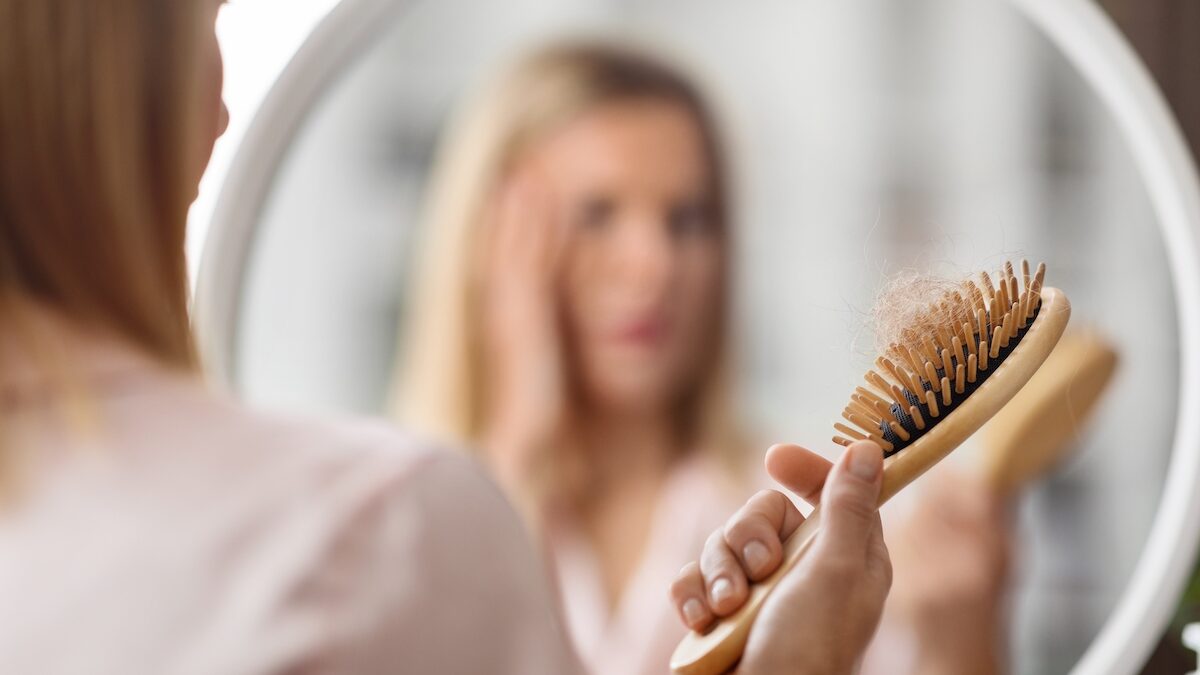
In your shower, hair is accumulating, the brush is filling up faster even though autumn has only just begun? Between September and November, many adults notice this increased loss and fear seeing their weight suddenly disappear. Faced with this anxiety, many are already considering a radical move on their own.
This idea of preventive cutting, which consists of cutting your hair before fall to avoid massive loss, comes back every year in salons. However, specialists mainly describe a confusion between breakage of lengths and real loss linked to the hair cycle. Understanding this difference, and the right timing of care, changes the way you approach the season and helps you decide if you really need to bring out the scissors.
Seasonal Hair Loss in Fall: What’s Really Happening
The so-called seasonal loss corresponds to a natural phase of the hair cycle. Chiara Bruneau, trainer at Luxéol for PasseportSanté, points out that “The hair cycle is slow: the telogen phase lasts around three months. The changes observed today may therefore be the consequence of phenomena that occurred several weeks previously”, which explains why what falls out in October often comes from what your hair suffered in summer.
In autumn, the drop in light and certain hormonal variations weaken the hair follicle, the root of the hair, which promotes greater loss over four to six weeks. Back-to-school stress, accumulated fatigue or an unbalanced diet can further accentuate this seasonal drop.
Cutting your hair before it falls: useful or not?
Cutting your hair does not change the roots, where everything is at stake. Cosmopolitan reminds: “That said, there is no causal link between cutting hair early and being able to limit hair loss.“.
The cut does not stop the fall, but it makes it less visible and often gives more apparent volume, especially with a length above the shoulders.
Cutting, however, remains interesting for another reason: to limit breakage. After summer, sun, salt or chlorine may have sensitized the fiber. Eliminating damaged ends prevents the hair from becoming fragile and breaking. A hair that breaks does not have a white bulb at its end, unlike a hair that falls from the scalp.
Autumn hair loss: useful actions, prevention and warning signs
Chiara Bruneau advises playing the anticipation card:
“We recommend taking preventative action, approximately three months in advance, by combining food supplements and cosmetics, to maximize the effects.” She also states: “The first signs looked for are above all a gradual reduction in the quantity of hair lost, for example when shampooing or brushing. Patience and regularity remain your best allies.
The practices to limit are clear: “Excessive heat, very tight hairstyles, repeated pulling or overly aggressive handling”.
Reducing the use of straighteners, loosening hairstyles, gently massaging the scalp and adapting your care forms a solid foundation. Cosmopolitan advises consulting a dermatologist if the loss exceeds more than a hundred hairs per day for more than three months, to check that another cause is not at play.