
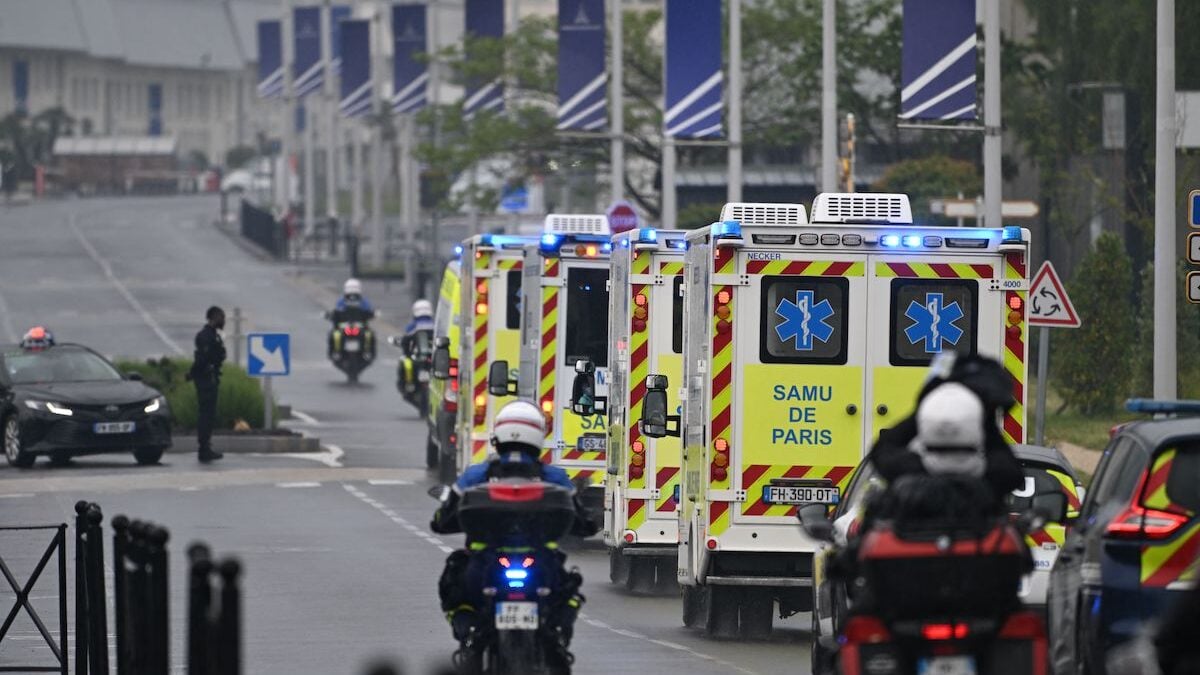
Five French people who stayed on board the expedition ship MV Hondius were repatriated to France after potential exposure to the Andes hantavirus. Among them, a passenger tested positive after developing symptoms during the return flight. The decision of the health authorities raises the question: why not leave the passengers on board? Why did you choose repatriation to France despite the health risk? And is the current protocol really sufficient to protect the territory? Dr Kierzek provides some answers.
A positive case confirmed after repatriation
The five French nationals were received at the Bichat-Claude-Bernard Hospital, to undergo a series of tests and reinforced monitoring.
This Monday, May 11, 2026, Minister of Health Stéphanie Rist confirmed that a French woman had tested positive for hantavirus after showing symptoms during the repatriation flight to France. Health authorities have also identified 22 contact cases in the territory.
According to the currently planned protocol, exposed people must observe an isolation period of up to 42 days, a duration corresponding to the maximum incubation period known for the Andes strain of hantavirus, one of the rare forms that can be transmitted between humans. But is this enough to prevent the virus from spreading?
Why is leaving cases on board the boat not an option?
For Dr. Gérald Kierzek, medical director of True Medical, the decision to disembark the passengers firstly responds to medical and humanitarian logic.
“On board a ship, monitoring compliance with health measures remains complicated,” he explains. The cruise environment does not allow for optimal isolation or heavy medical monitoring in the event of a worsening.
The main problem above all remains the support capacity. “In the event of a severe respiratory complication, there is no resuscitation service on board.”reminds the doctor.
The so-called prodromal phase – the first non-specific symptoms such as fever or muscle pain – is precisely considered to be the period when human-to-human transmission of the Andes virus could be the most important. In this context, the authorities preferred to act quickly on close contacts and remove passengers from the boat.
Why not create an isolation center on site?
Another option would have been to keep the passengers on the landing island, in a dedicated location. But this solution posed several logistical difficulties.
“A real isolation capacity, daily monitoring and immediate care in the event of symptoms should have been guaranteed”emphasizes Dr. Kierzek.
Temporary medical structures, or even a field hospital with international support, could have been considered. This strategy would have made it possible to avoid the movement of patients and limit the risk of international dissemination of the virus.
The doctor also emphasizes that beyond the health question, the decision has an important economic and political dimension.“Tenerife is a tourist island in peak season. Nobody probably wanted to keep contact cases on site for a long time at the risk of penalizing the image of the island and the tourist season” he believes.
The French authorities have therefore favored another logic: repatriating patients in order to immediately integrate them into a controlled health circuit.
In France, exposed people can be monitored by regional health agencies and referred to the REB sector (epidemic and biological risk) in the event of worsening.
The authorities have thus put in place a hospital quarantine passed this Monday from 72 hours to “15 days minimum” according to a new decree published this morning, followed by isolation at home with medical supervision for 42 days.
Is the protocol sufficient to guarantee the security of the country?
For Dr Kierzek, the protocol appears “consistent”, but it is nevertheless based on a significant amount of scientific uncertainty.
Human-to-human transmission of the Andes strain remains rare and international data remains limited. “We work with a level of knowledge that is still incomplete”, he summarizes.
The real challenge now rests on strict compliance with the isolation of contact cases in order to avoid any secondary spread of the virus on French territory.
For the French authorities, the challenge now consists of maintaining sufficiently rigorous health surveillance to prevent any local chain of transmission. Because even if the risk remains low, the appearance of a positive case in the territory requires maximum vigilance.