
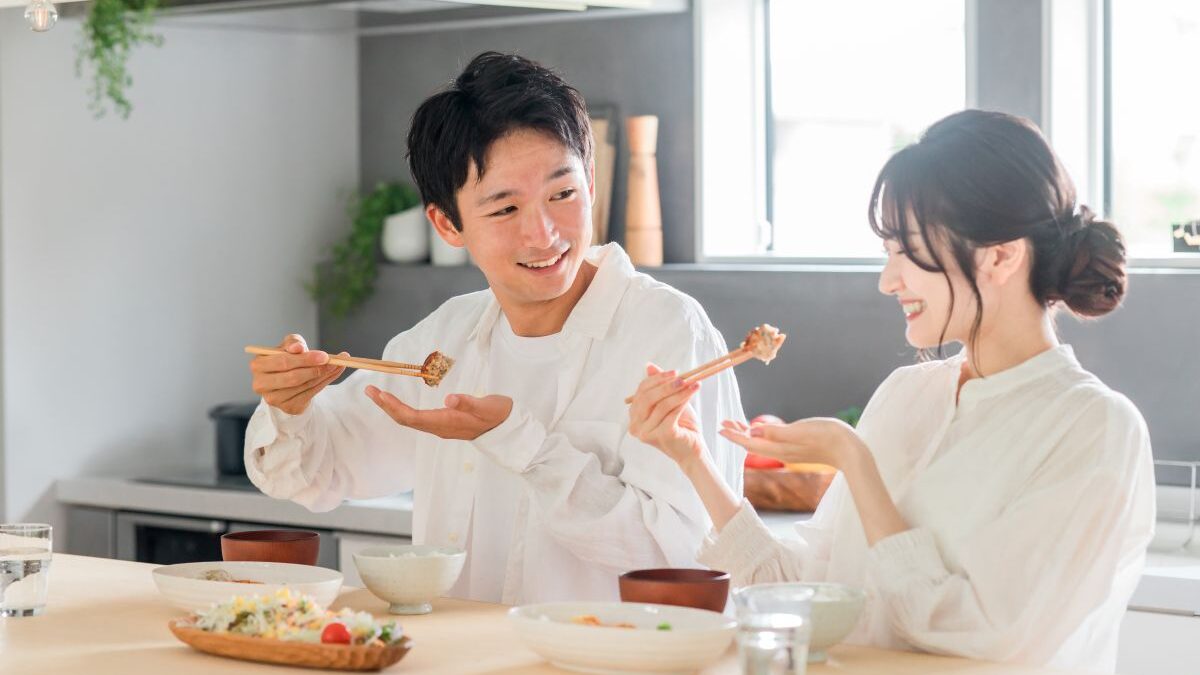
In our busy daily lives, we often have lunch quickly and finish our plate mechanically. However, in Japan, an old habit encourages us to adopt a very different approach. His name? The hara hachi bu. Behind this expression hides a surprisingly simple rule that could well change our relationship with food and help maintain a stable weight in the long term.
What is hara hachi bu, this philosophy that helps you stay in shape?
The principle of hara hachi bu is based on a very simple idea: stop eating when you feel about 80% full. In other words, we are not trying to achieve that feeling of a completely full stomach that often appears at the end of a hearty meal.
Rather, the goal is to stop as soon as hunger subsides and you begin to feel satisfied.
This habit is deeply rooted in Japanese culture, especially in Okinawa. Meals are generally taken more slowly, with reasonable portions and careful attention to bodily signals. We take the time to savor food and listen to our sensations rather than eating until we can’t swallow another mouthful.
This way of doing things can naturally help to maintain a stable weight. By avoiding repeated overeating, we limit unnecessary energy intake without feeling like we are on a diet.
Hara hachi bu is based neither on deprivation nor on calculating calories, but on better listening to one’s real needs. A gentle approach which often helps avoid snacking linked to overly copious meals and feelings of discomfort after eating too much.
Why do we have so much trouble listening to our satiety?
If the Japanese method seems obvious on paper, putting it into practice often clashes with our bad Western habits. To understand this mechanism, we must first define what satiation is.
Dietitian Alexandra Murcier explains to us that “it’s the fact of no longer being hungry, of having eaten enough to feel full without feeling heavy after a meal.
Unfortunately, we frequently miss this essential signal. “We often tend not to respect our satiety because we already eat too quickly, but the satiety signal is sent by our brain after 20 to 25 minutes, so if we eat quickly we don’t have time to feel it.”specifies the expert.
Added to this is tenacious social and family conditioning from childhood. “We have learned to always finish our plate, or that we must not waste, so we tend to listen less to our satiety, even if the portions are sometimes too large..
What are the other daily benefits of this Japanese method?
Beyond its potential impact on the figure, hara hachi bu has several advantages for daily well-being. The first directly concerns digestive comfort. When you avoid overloading the stomach, the body generally has less difficulty processing food, which can reduce feelings of heaviness after meals.
This practice also encourages more mindful eating. By slowing down and paying attention to your sensations, you often rediscover the pleasure of eating without distraction. Meals become more enjoyable and less automatic, which helps develop a more serene relationship with food.
Finally, this philosophy is part of a more global vision of life balance. Rather than looking for quick solutions or restrictive methods, she invites you to adopt a simple and lasting habit. It is this regularity which explains why hara hachi bu has continued to be practiced for generations in Japan, where it is considered a true art of living.
How to apply hara hachi bu and the secret of satiating foods?
To successfully integrate hara hachi bu into your table, some behavioral adjustments are necessary.
“To better listen to your satiety, you can already assess your appetite and serve yourself according to it. Then ask yourself regularly where you are and stop when you are no longer hungry.
explains dietician Alexandra Murcier.
The specialist provides very concrete keys to achieving this on a daily basis.
“To succeed, it is important to eat slowly, to put your fork down between bites, to chew. Ideally, you should avoid eating in front of a screen, because it disrupts our attention and we are less attentive to signals of satiety. You also need to feel free from the guilt of not finishing your plate: you just have to keep the leftovers in the fridge for the next meal, and restaurants have the obligation to provide food containers so that you can take home.”
The contents of the plate also play a major role in the appearance of this 80% signal.
Because not all nutrients are equal. The dietitian emphasizes that “foods rich in fiber create satiety, such as vegetables, fruits, legumes or whole grains, but this is also the case with proteins“.
Conversely, certain products act as disruptors of our internal alarms.
“Very sugary foods and sugary drinks disrupt satiety, particularly because they cause our blood sugar levels to vary a lot, and because they are generally consumed very quickly, with a very high caloric intake without feeling full.”
A pillar for healthy and sustainable weight loss
Ultimately, hara hachi bu stands out as a caring and effective alternative to strict diets. Alexandra Murcier confirms the interest of the approach.
“Yes, this principle helps to lose weight, because the quantities impact our caloric intake: we can eat very balanced but in too large quantities, which is detrimental to weight loss.“. This principle therefore represents a real important pillar for healthy and sustainable weight loss.
One caveat, however: moderation must remain balanced. “Be careful, however, not to eat too little either, on the contrary, because there is a real risk of breaking down afterwards, which will be counterproductive.” she concludes.