
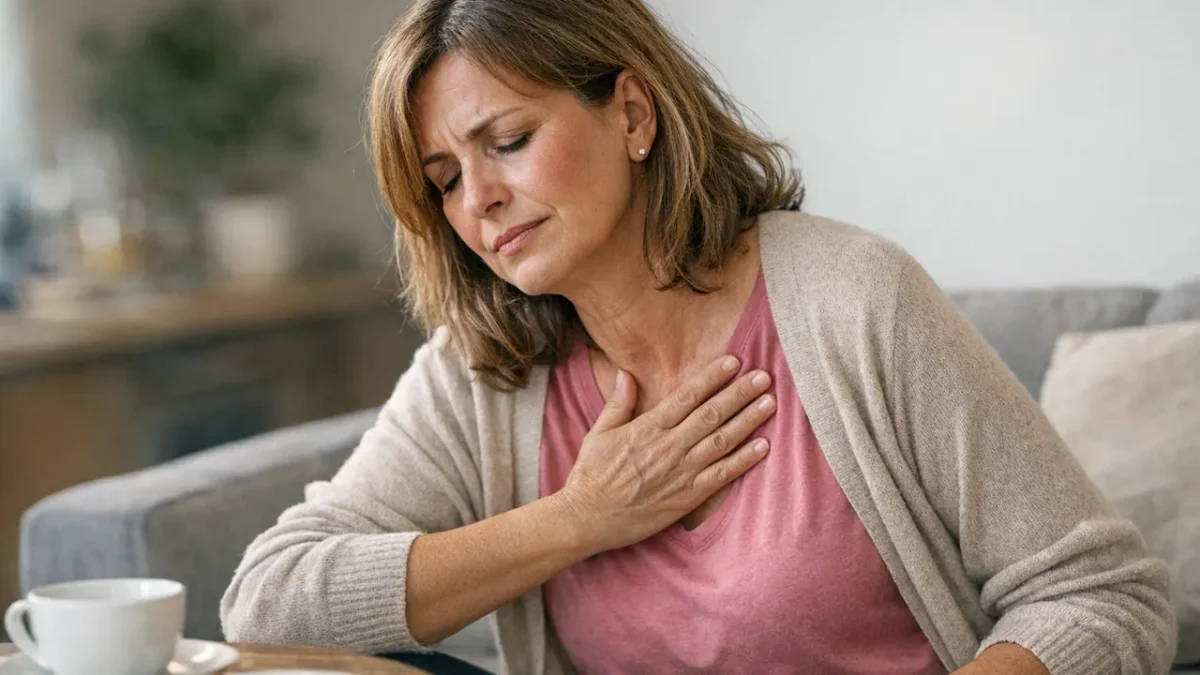
On Instagram, Dr Sermed Mezher reiterates an essential point: in women, a heart attack does not always look like the classic image of sudden pain in the chest radiating into the left arm. Chest pain remains a major signal, but it can be accompanied by more discreet signs.
Chest pain may be there, but not always as we imagine
The first risk is to believe that a heart attack can only be recognized by crushing pain in the middle of the chest. In reality, in women as in men, the chest pain remains common. But it may be described as discomfort, pressure, heaviness or tightness rather than dramatic pain.
In his video, the doctor explains that pain of cardiac origin often has a heaviness, tightness, pressuremore than a sharp, stinging pain. He also recalls that it can radiate towards the left jaw or the arm, and get worse with exercisefor example when going up a gentle slope.
In women, certain signs may attract attention less quickly because they evoke other everyday problems: difficult digestion, stress, fatigue, temporary discomfort, etc. This is precisely what can delay treatment.
The signs to be aware of do not replace urgent medical advice, but they should suggest a possible cardiac cause when they are unusual, intense, persistent or associated with each other:
- Sudden or unusual shortness of breath;
- Intense, unexplained fatigue that does not resemble ordinary fatigue;
- Cold sweats, feeling unwell or feeling dizzy;
- Nausea or vomiting;
- Pain or discomfort in the pit of the stomach, jaw, arm, back, or between the shoulder blades.
The nuance is important: these symptoms are less specific than typical chest pain. They can actually have other causes. But in a woman, especially if they occur suddenly or with chest discomfort, they should not be dismissed too quickly. To learn more, you can also read our article on the less typical signs of heart attack in women.
Reflux, fatigue, pain on pressure: what not to conclude too quickly
The expert highlights a telling example: some women may feel a sensation similar to reflux or a digestive burn that does not go away as usual. It is not a question of saying that reflux necessarily hides a heart attack, nor that an antacid can resolve it. But one unusual digestive symptom that persists or is associated with shortness of breath, sweating, upper body pain, or severe fatigue must be taken seriously.
Another point raised: individual context matters. Age, high blood pressure, high cholesterol, and a personal or family history of heart attacks can help caregivers assess risk. This does not allow you to make a diagnosis yourself, but it explains why two people with similar symptoms will not necessarily be evaluated in the same way.
Dr. Mezher also mentions the pain caused when pressing on the chest. A pain reproduced by pressure on the chest wall rather points towards a muscular or parietal cause. But this alone is not enough to exclude a heart problem if the context is worrying or if other signs are present.
Finally, we must avoid too simple an explanation. The mechanisms of heart attack in women can be varied. It would be unwise to attribute all the less typical signs to damage to the small vessels of the heart. The useful information for the general public is more direct: a heart attack can occur differently than in the most well-known scenarios, and this possibility deserves a rapid reaction.
When to call 15 or 112?
If in doubt about chest pain, sudden shortness of breath, discomfort, sweating, unusual nausea or unexplained intense fatigue in a suggestive context, Health Insurance recommends calling the 15 or 112 without waiting. It is better not to drive yourself to the emergency room and not waste time trying to confirm the hypothesis on your own.
The right reflex is not to self-diagnose, but to clearly describe what is happening: type of pain or discomfort, time of onset, effort or rest, possible irradiation, shortness of breath, sweating, nausea, unusual fatigue, known history. These elements help emergency services assess the situation. Also read: the signs that should make you call 15 or 112.