
After a
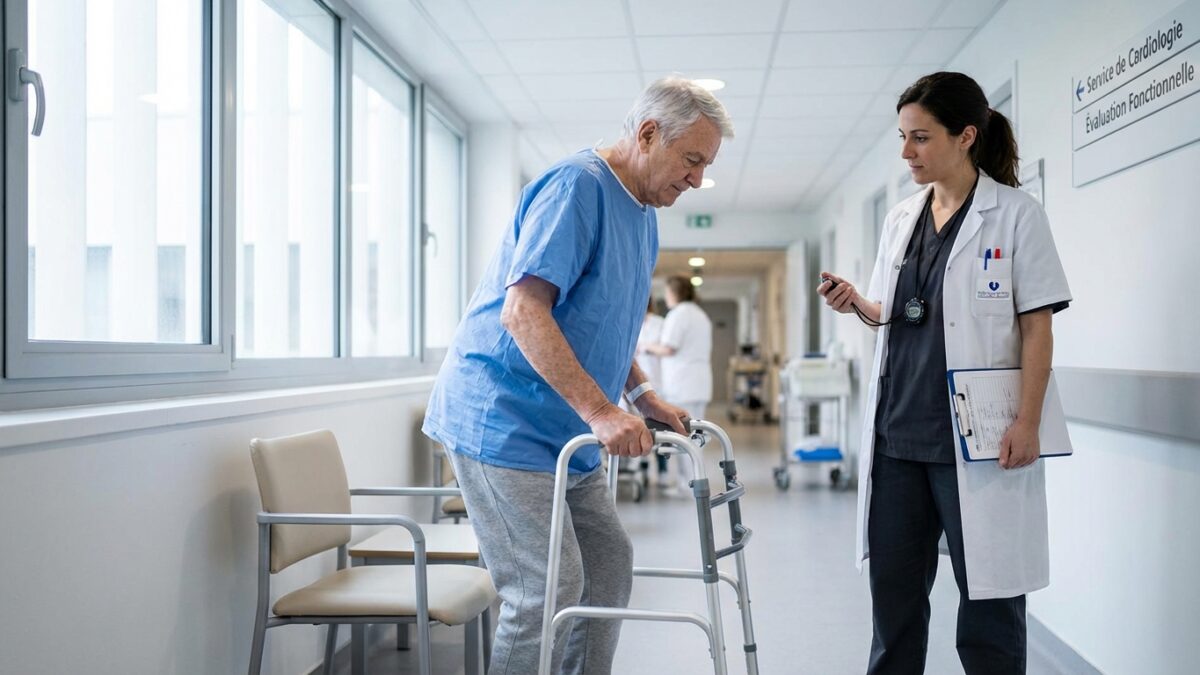
heart failureelderly patients leave the hospital with well-filled prescriptions, but rarely with a precise measure of their physical fitness. However, the ability to walk, stand up or maintain balance would weigh heavily on the future of the heart, according to a major Japanese study.
Heart failure: when physical fragility changes the prognosis
To assess the risk of death after heart failure, risk scores such as AHEAD or BIOSTAT are based mainly on heart function and blood tests. For Dr Kanji Yamada of Juntendo University, current models neglect essential signals in seniors: “These models rely primarily on cardiac-specific and biomedical variables, often underestimating the impact of non-cardiac factors such as physical function, frailty and nutritional status, which are critical determinants of prognosis in older adults and, unlike fixed factors such as age, may represent modifiable targets through rehabilitation and supportive care“.
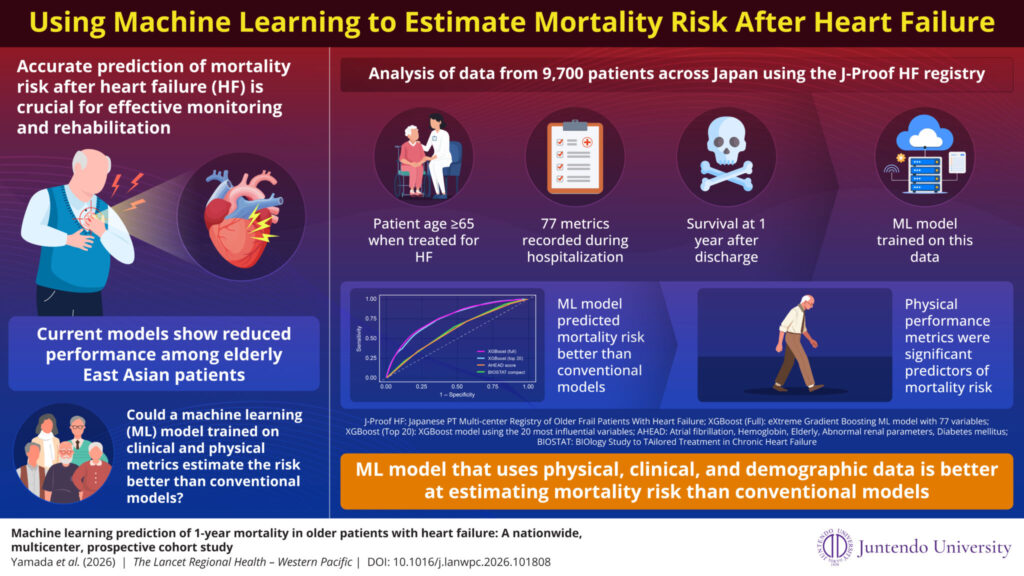
The authors used the J-Proof HF register, which records hospitalizations for heart failure in 96 establishments in Japan between December 2020 and March 2022. They ran machine learning algorithms on 9,700 patients from the national J-Proof HF registry, followed one year after their hospitalization. The eXtreme Gradient Boosting algorithm was used to create a complete model to assess the mortality risk of patients in the year following treatment, then a simplified model, the Top-20 XGBoostretaining only the 20 most predictive variables. Seven of them concerned the physical condition or other non-cardiac factors.
Both algorithms showed comparable accuracy in estimating one-year mortality risk. Adding this information improved risk reclassification by approximately 20% compared to AHEAD and BIOSTAT compact scores.
Barthel index, SPPB: simple tests for a key physical function
Among the 20 variables retained, two tests stand out clearly: theBarthel indexwhich measures autonomy and mobility for everyday activities, and the SPPB, which evaluates balance, walking speed and chair lifting. “The preponderance of the Barthel Index (BI) and the Short Physical Performance Battery (SPPB) in our analysis is clinically consistent“, said Dr. Yamada, adding: “Unlike subjective assessments of activities of daily living included in some scores, performance-based assessments, such as the BI and SPPB, provide greater reproducibility and more directly capture functional limitations“.
 © Kanji Yamada from Juntendo University, Japan
In other words, the difficulty in washing, dressing or walking a few meters is not a simple inconvenience of old age, but a powerful marker of survival after hospitalization. “Our results reveal that physical function at discharge is a critical determinant of survival, rivaling the importance of traditional cardiovascular risk factors. This study highlights the essential value of integrating comprehensive geriatric and functional assessments into routine management and risk stratification of elderly patients with heart failure“, underlines the researcher.
Towards more targeted monitoring and rehabilitation
The team is cautiously optimistic, while recognizing that the model will need to be refined through additional testing, both in Japan and abroad. It nevertheless undertook the development of a tool based on Top-20 XGBoost, allowing doctors and other healthcare professionals to enter information from a patient and in return obtain an accurate estimate of their risk. The objective is to help caregivers target the most fragile elderly patients, by strengthening rehabilitation and implementing close monitoring.