
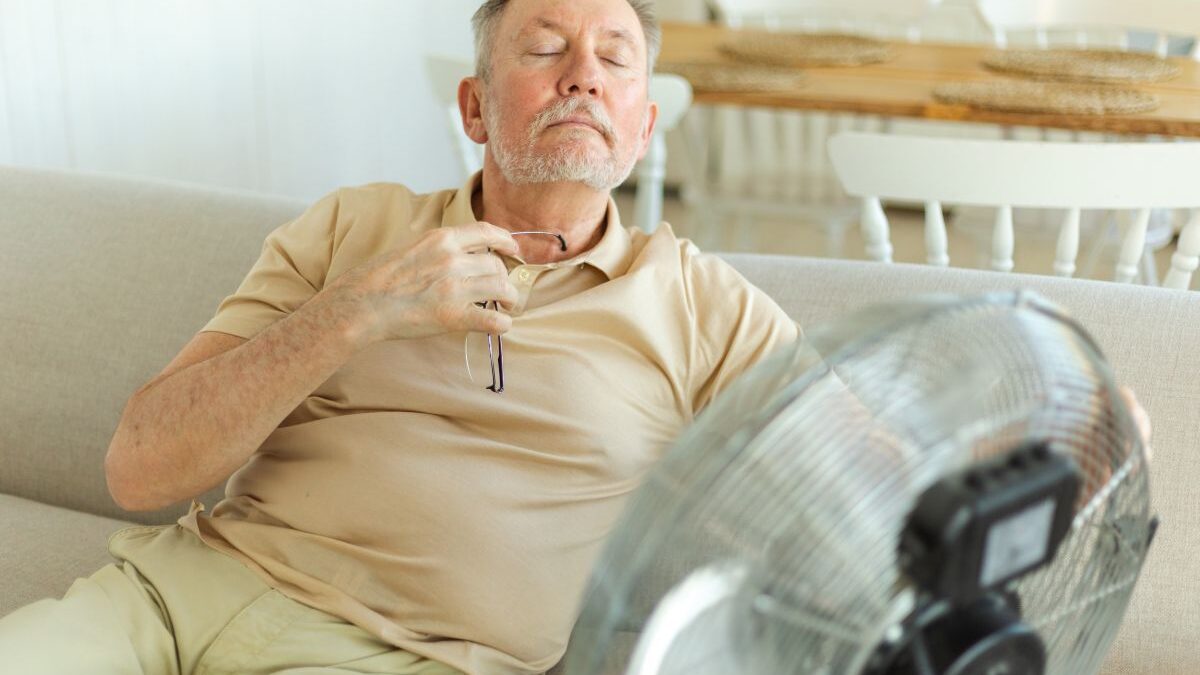
Summer and its high temperatures are not without health risks. Although the human body has sophisticated mechanisms to keep its internal temperature stable, these can be completely overwhelmed.
“Heat becomes dangerous when it exceeds the body’s thermoregulation capabilities”warns Dr Gérald Kierzek, emergency doctor and medical director of True Medical. Understanding this phenomenon and knowing how to react can literally save lives.
What is hyperthermia and how does it occur?
Hyperthermia should not be confused with fever. Unlike the latter, which is a regulated response of the brain to an infection, “in hyperthermia, the body does not “choose” to increase its temperature: it is no longer able to lower it”. This is a thermoregulation disorder.
This phenomenon occurs when the body absorbs or produces more heat than it can dissipate. Several factors favor this disruption:
- A heatwave or prolonged exposure in an overheated room or a closed car;
- Intense physical effort in hot weather;
- Clothing that covers too much or dehydration;
- The key role of humidity: Ambient humidity is a major aggravating factor, as it prevents sweat from evaporating properly, thereby blocking the body’s main cooling mechanism.
Certain populations are also much more vulnerable: infants, the elderly, people who are poorly hydrated or suffering from chronic illnesses, as well as those taking diuretic treatment.
What are the symptoms that should alert you?
The manifestations of hyperthermia progress rapidly. Initially, the signs may seem like simple discomfort, but they will get worse if nothing is done.
The first signs:
- Intense thirst and marked fatigue;
- Hot skin (sometimes very dry or, on the contrary, accompanied by profuse sweating);
- Headaches, dizziness and nausea.
Signs of seriousness (absolute emergency):
when the situation worsens, the nervous system is affected. We then observe confusion, agitation, behavioral problems, difficulty speaking, rapid breathing and pulse, or even convulsions.
Among the most fragile: In children or the elderly, unusual drowsiness, refusal to drink or reduced alertness are major warning signs that should not be ignored.
First aid actions: what are the priorities?
When faced with a person suffering from heat, every minute counts. Dr Gérald Kierzek recalls the two absolute priorities.
Rapid cooling is priority number one. “The person must immediately be placed in the shade or a cool place, remove excess clothing, ventilate them and spray them with cool water. As soon as possible, use more active means of cooling (wet cloths, fan).“Rehydration is also essential,”if and only if the person is fully conscious and able to drink“. On the other hand, “no time should be wasted if neurological signs are present“: call emergency services immediately (15 or 112).
In the event of hospitalization, close monitoring is put in place to control the temperature, neurological state, heart, kidneys and mineral salt balance.
Why can heatstroke be fatal?
This situation should never be minimized. “There is no single “death threshold” valid for everyone, but as soon as the body’s core temperature exceeds around 40°C, we enter a life-threatening emergency.
Death was caused by multiorgan failure. When body temperature remains too high, the body’s proteins and cells stop functioning properly. This results in:
- Serious damage to the brain, heart, muscles and kidneys;
- Shock or acute renal failure;
- Major heart rhythm disturbances.
It is for this reason that it is imperative to remember that a “Heat stroke is not just “heat illness”: it is an absolute medical emergency“.
Ultimately, hyperthermia is an invisible but formidable enemy. As soon as temperatures rise, vigilance must be maximum, particularly for fragile people and during physical exertion. If in doubt, cool the victim and contact emergency services: a quick reflex can prevent irreversible after-effects.