
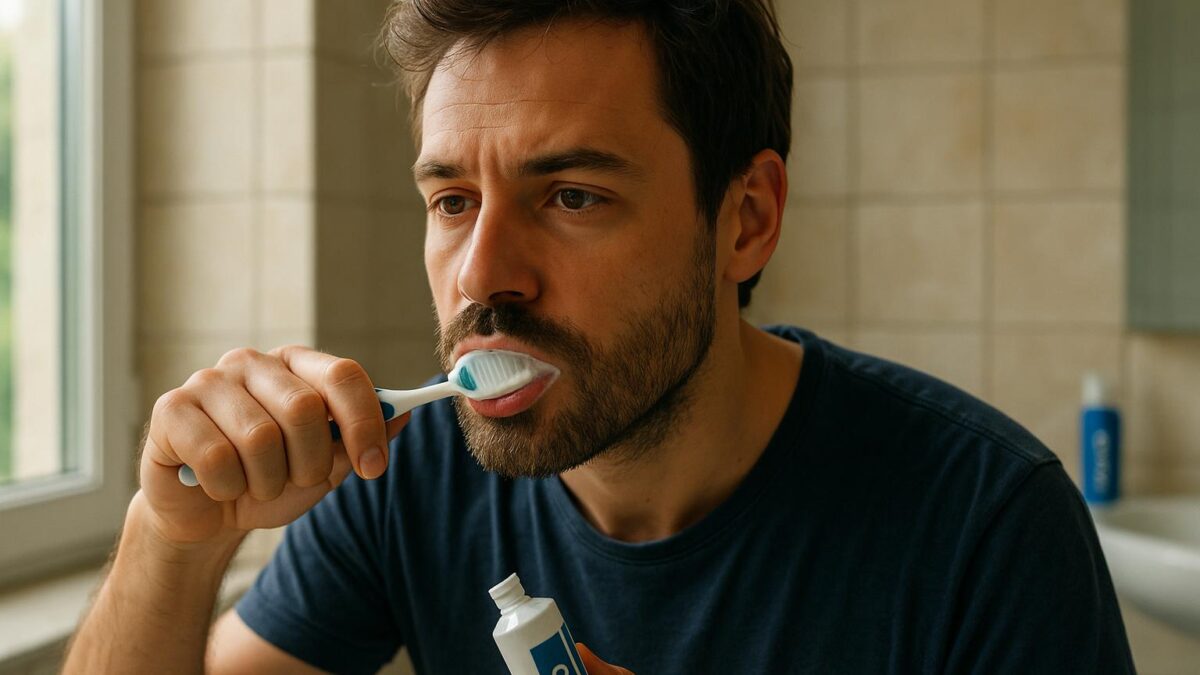
We brush our teeth morning and evening, rinse, a splash of mouthwash and off we go. Perfect routine? Not so sure, several stubborn reflexes can damage enamel or reduce the effectiveness of brushing without us realizing it.
Half of adults will one day suffer from gum disease and the first sign is bleeding. “If your gums are bleeding or swollen, it’s a sign that you need to brush better.”warns Dr Praveen Sharma, dentist and lecturer at the University of Birmingham. On BBC News, he provides concrete advice on actions to correct, first thing in the morning.
Brushing your teeth in the morning: before or after breakfast?
Many people brush their teeth right after eating. But it’s bad timing when the meal is sour. “Ideally, brush before breakfast.”says Dr Praveen Sharma.
“You don’t want to do this after something acidic. If you brush your teeth afterwards, you must leave some time between eating and brushing.”. Acids from foods and drinks, such as fruit juice or coffee, soften the enamel and brushing too early risks increasing wear.
But a practical compromise exists if you prefer to do it after a meal: rinse your mouth with water to flush out some of the acid, and wait at least 30 minutes before brushing. The guideline remains simple for a family in a hurry in the morning: before breakfast when possible, otherwise be patient.
Do not rinse after brushing: let the fluoride act
This gesture seems counterintuitive, yet it changes the effectiveness of the toothpaste. “You spit but you don’t rinse with water“, advises Dr Praveen Sharma. Rinsing with plenty of water dilutes and washes away the concentrated fluoride which persists on the teeth after brushing. However, it is this fluoride which protects the enamel and slows down cavities. In short, we spit out the excess paste and leave this film in place.
Want to rinse anyway? Opt for one mouthwash works better than water. When it comes to toothpaste, the ingredient that counts is the fluorine. “As long as your toothpaste contains fluoride, it doesn’t make much difference“, recalls Dr Praveen Sharma. He himself happily buys the one that is cheaper or on sale, proof that a high price does not necessarily provide more protection.
Brushing quality: in the evening, do it impeccably
General reference, Health Insurance recommends “at least two brushings per day: using a soft-bristled toothbrush with a size appropriate to age, which preserves the gums and tooth enamel (change every 3 months, each season)“.
According to Dr Praveen Sharma, quality comes first. “If you can find the time, then yes, brush properly twice a day. But it is better to do it once a day correctly and once quickly for two minutes“. If you can only carry out one complete cleaning per day, the evening is preferred, with dental floss or, simpler for many,
interdental brushes.
Technique matters as much as frequency. Each tooth has three sides to clean, external, internal and the biting surface. Small circular movements, light pressure, and special attention to the tooth-gum junction where gum disease takes root. In other words, you stay attentive to your brushing, without occasionally scrolling through your phone at the same time.
- Evening brushing priority: all surfaces, gentle and regular movements, with small circles, low pressure, focus on the tooth-gum part;
- Interdental cleaning: wire or brushes, whichever suits you best;
- Do not rinse with water after brushing: spit out and leave the fluoride.
- The morning, before breakfast preferably; otherwise wait 30 minutes after an acidic meal.
- A “quick” passage can last 2 minutesbut the suit remains essential.
One last easy-to-remember pointer: itchy or bleeding gums are not normal, it is a warning signal to be taken seriously. Review your technique brushing your teethemphasizing the gum-tooth area and strengthening interdental hygiene are often enough to reverse the trend. And if doubt persists, an appointment with the dentist allows you to take stock of your dental health and to settle on the best health routine, if necessary.