
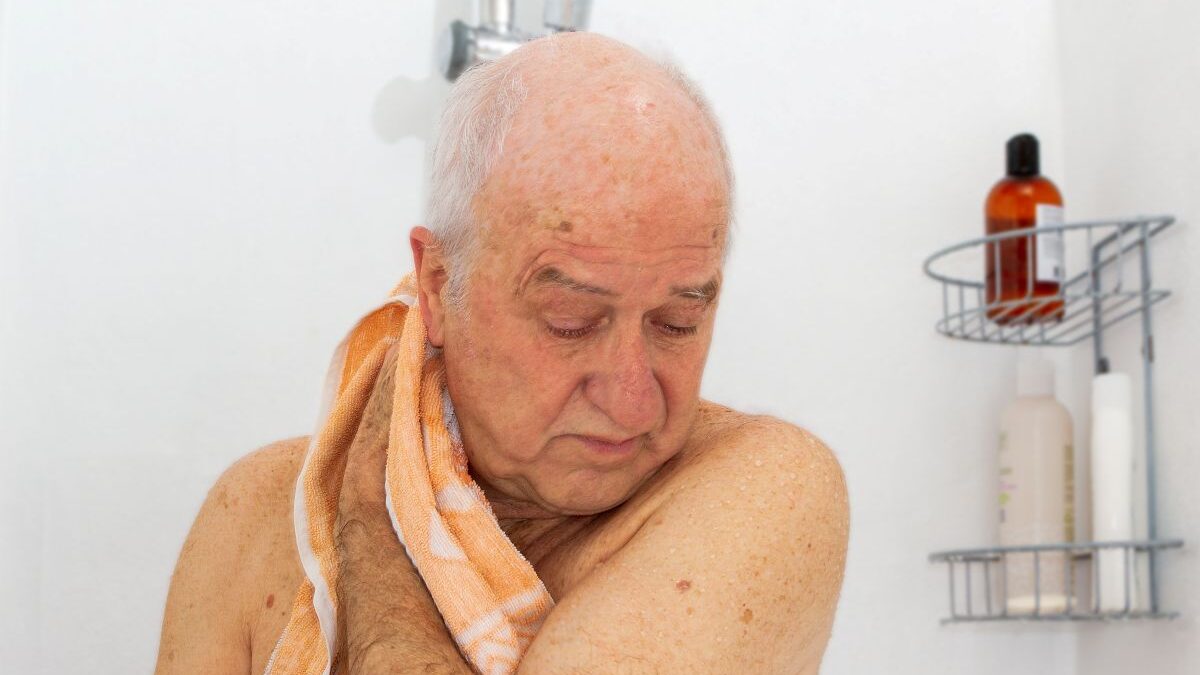
With age, the skin becomes more fragile. Movements are sometimes more difficult and daily showering can become tiring, or even increase the risk of falling.
Many people wonder if they should continue to wash every day like when they were younger.
How often should an older person shower?
The recommendations are rather reassuring. For a healthy elderly person, a shower every two or three days, or two to three times a week, is generally sufficient. The main thing is to complete this routine with daily washing of the most sensitive areas in order to maintain hygiene and limit irritation.
The National Institute on Aging in the United States recommends two to three baths or showers per week. The UK’s NHS estimates that at least two showers a week are enough to stay clean.
For their part, experts relayed by a Spanish health media recommend a minimum of three showers per week, while adapting the pace to each person’s state of health, fatigue and habits.
Experts recommend a short shower, five to ten minutes, every other day. They recommend lukewarm water, a neutral pH cleansing product, then the application of a moisturizing cream.
In fact, too frequent showers can weaken the skin barrier. The skin becomes drier, leading to itching, cracking and sometimes eczema flare-ups.
Days without a shower: washing essential areas
On days without a shower, specialists recommend cleaning the face, hands, private parts and anal area every day.
The NHS also emphasizes the underarms and intimate area, particularly in people with incontinence. Urine and stools can quickly irritate the skin and promote bad odors.
For this daily cleansing, Health Insurance, on ameli.fr, recommends using a superfatted soap or a dermatological bar. Rinse the skin well, then dry it gently by dabbing it with a towel, without rubbing.
Particular attention should be paid to the folds of the skin, under the breasts, in the groin or between the toes. They must remain very dry, because humidity favors the appearance of fungal infections which are sometimes difficult to treat.
Fragile skin, heat and loss of autonomy: adapt the rhythm of showers
The American Academy of Dermatology points out that after age 60, the skin produces less sebum and heals more slowly.
An American hospital center estimates that a shower every two or three days is sufficient in most situations. However, he recommends carefully cleaning the armpits, groin and feet each time you wash, then applying an emollient cream to the entire body.
When the person is very tired, fears showering or suffers from a disease such as Alzheimer’s, the National Institute on Aging recommends not imposing a daily shower. Washing with a glove can then be a good alternative.
In periods of high heat or after physical activity, an additional shower may be useful. Once this episode has passed, it is possible to return to a rate of two to three showers per week.