
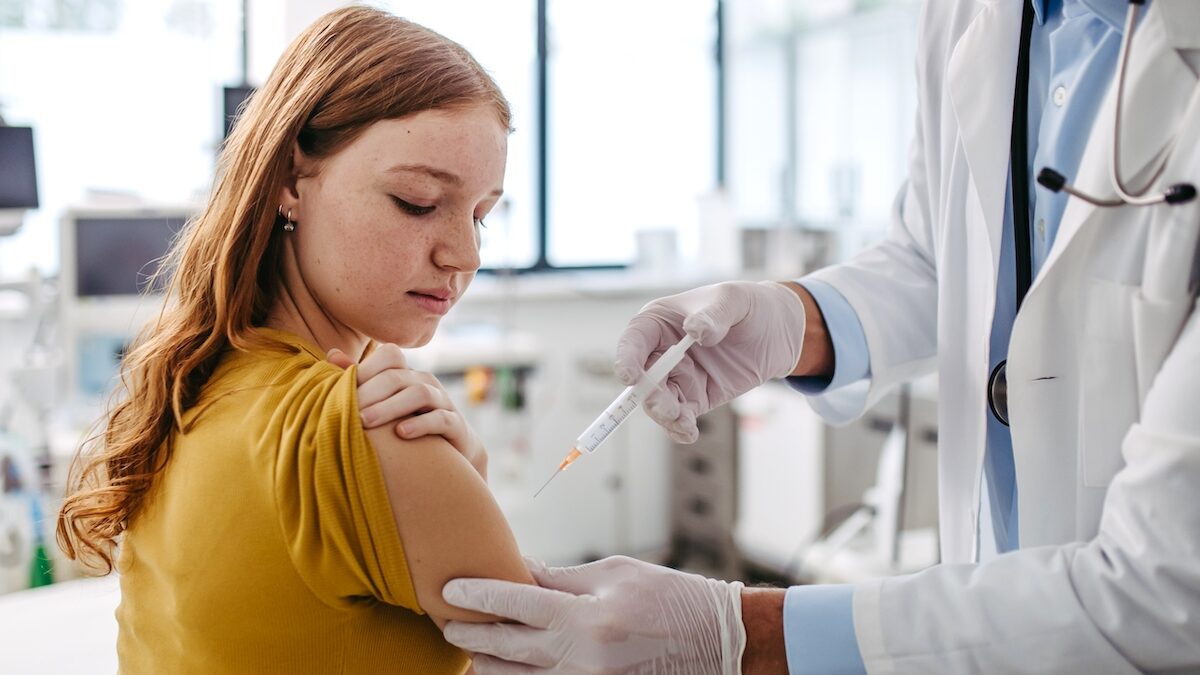
This is what a Swedish national study published in the British Medical Journal (BMJ) in November 2026. Researchers observed an association between HPV vaccination before conception and a reduction in preterm births. An encouraging result, which nevertheless requires interpretation with caution.
Pregnancy complications that vaccination could help avoid
Infection with human papillomaviruses can lead to precancerous lesions on the cervix. When these lesions require treatment, doctors may have to remove part of the cervical tissue, through a procedure known as excision.
However, HPV infection and these treatments are associated with an increase in certain obstetric complications, particularly premature deliveries. These births, which occur before 37 weeks of amenorrhea, can expose the newborn to health difficulties, with risks that are greater the earlier the birth occurs.
Vaccination could therefore act indirectly on this issue: by preventing HPV infections and some precancerous lesions, it could avoid certain cervical treatments and, consequently, contribute to reducing some prematurities.
It is this hypothesis that the study published in the BMJ explored.
More than 624,000 births screened in Sweden
To measure this association, the researchers used Swedish national registers covering the period 2006-2023. Their analysis focused on 624,713 births from singleton pregnanciesin women aged 16 to 35 who had never given birth before.
Among them, 92,620 women, or 14.8%, had received at least one dose of the quadrivalent HPV vaccine before conception.
The results show that vaccination was associated with a 5% reduction in spontaneous prematurity. The association was more marked for extreme prematurities, that is to say births occurring between 28 and less than 32 weeks of amenorrhea: their frequency was associated with a 15% reduction in vaccinated women.
These results are encouraging, but they do not mean that the vaccine directly prevents premature births. The study highlights a statistical association; it does not, on its own, allow a causal link to be established. The prevention of cervical lesions and the interventions they can entail constitutes a possible explanation, put forward by the authors.
Why vaccination before age 17 seems particularly important
The study provides another lesson: the timing of vaccination could matter. In women vaccinated before the age of 17, researchers observed a reduction in the risk of prematurity of around 10 to 15%. On the other hand, after 17 years, no statistically significant decrease was found for the criteria studied.
This difference is consistent with knowledge already established on the prevention of precancerous lesions and cervical cancer: vaccination is more effective when carried out early, before possible exposure to papillomaviruses.
It is therefore not just a question of preventing an infection at a given moment, but of offering protection upstream, before the virus can cause lesions likely to have consequences years later.
Preventing cancers, but also preserving the obstetric future
These results broaden the perspective on HPV vaccination. Its interest is not limited to the prevention of certain cancers: it could also help to reduce complications which affect the progress of pregnancies and the health of newborns.
The French Society of Colposcopy and Cervico-Vaginal Pathology (SFCPCV), which relays this data, underlines the importance of early vaccination. However, through this study, it recalls a potential benefit which must be confirmed by other work.
For women and families, the issue is concrete: preventing an infection and its possible complications today could also help protect reproductive health tomorrow. Another reason to consider HPV vaccination as a long-term prevention tool.