
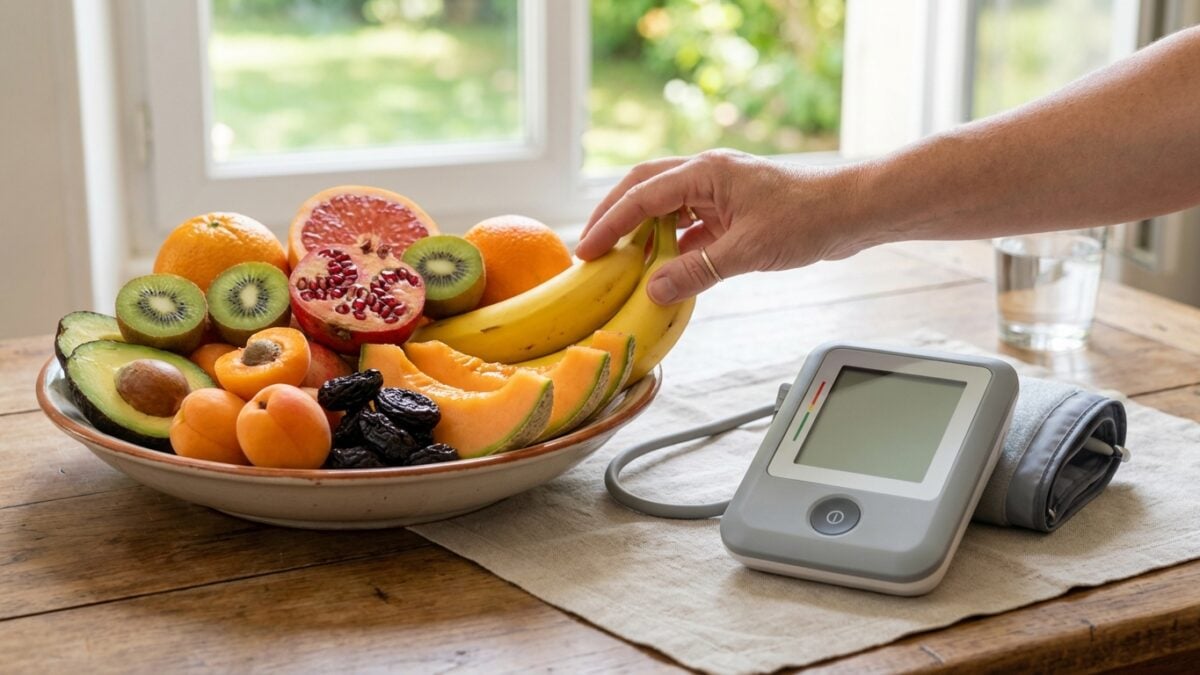
High blood pressure, palpitations, risk of stroke: behind these words often hides the same imbalance, too much salt for not enough potassium. This mineral nevertheless plays a discreet role in the body, from the functioning of the muscles to the rhythm of the heart, but it remains largely under-consumed in the daily diet.
However, the World Health Organization and the EFSA recommend at least 3,500 mg of potassium per day for adults, while the French are around only 2.3 g. The National Nutrition and Health Program also recalls the benefit of consuming at least five servings of fruits and vegetables per day. Among them, certain fruits rich in potassium really stand out.
Why Potassium-Rich Fruits Help Your Blood Pressure
Potassium is an electrolyte that participates in hydration and the distribution of fluids in the body. “Potassium also plays a role in blood pressure, and studies show that eating more potassium can help lower blood pressure numbers.”explains dietitian Natalie Rizzo for
TODAY.com.
Thus, according to studies cited by the French Society of Arterial Hypertension, 3.5 to 4.7 g of potassium per day causes an average drop of around 7 mm Hg in systolic pressure, and fewer cardiovascular accidents. Concretely, the mineral promotes the elimination of sodium by the kidneys, relaxes the walls of the vessels and supports the proper functioning of the heart. However, people with kidney failure or those taking certain treatments should discuss their intake with their doctor.
Nine potassium-rich fruits to pamper your heart
Among the stars, the banana provides around 360 mg of potassium per 100 g. “A banana provides about 15% of your daily potassium needs. Not to mention that bananas naturally add sugar to any dish, and they also contain fiber and vitamin C“, indicates Natalie Rizzo. But the banana is not the only fruit to offer its dose of potassium.
- The lawyera very rich fruit, offers almost 485 mg/100:
- Fresh apricot in offer 260 mg/100 g. Dried apricots exceed 1,000 mg/100g;
- Prunes close to 650 mg/100 g concentrates a lot of potassium in small portions;
- Melons cantaloupe or honeydew type provide around 270 to 300 mg/100 g, with lots of water and few calories, interesting in summer;
- The kiwi is around 310 mg/100 g;
- The orange
around 180 mg/100 g; - Grapefruit 140 to 150 mg/100 g
- The pomegranate approximately 240 mg/100 g, with numerous polyphenols beneficial for the arteries.
Other exotic fruits exist: jackfruit, for example, with “its stringy texture” goes particularly well with sweet and savory dishes. Finally, “Soluble fiber found in guavas can help improve heart health, reduce blood pressure and bad cholesterol,”
Shelly Wegman, another nutritionist, tells TODAY.com.
How to enjoy these fruits without overdoing your blood pressure
To stock up on potassium, experts are unanimous: choose whole fruits rather than juice. “It is best to get the potassium from a whole fruit and supplement with a little juice”advises Natalie Rizzo. However, in the event of kidney failure or cardiac treatment, medical advice is still necessary.