
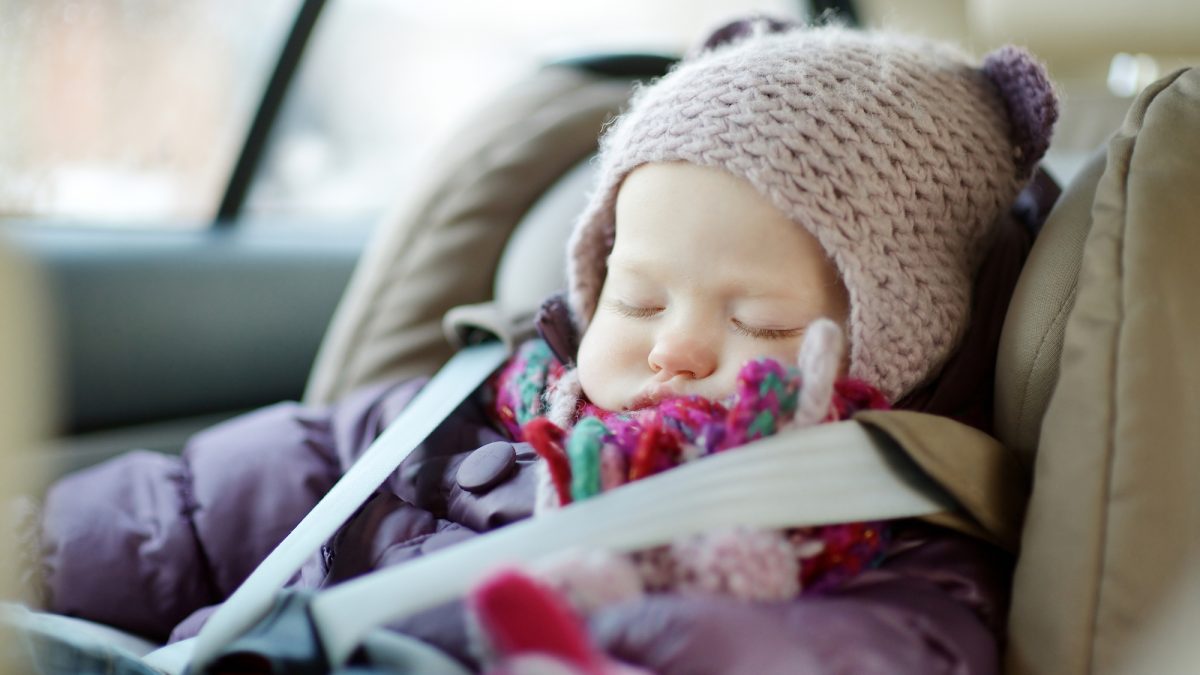
Thick coats, down jackets, big hooded sweatshirts… When winter arrives, you take out the whole range to be able to dress your child warmly. Outside, at school, or even in the car: you never take off his coat. However, it can be dangerous to leave him with his big padded coat in his car seat. Graham Conway, managing director of Select Car Leasing, warns of this practice which can prove to be dangerous.
An unsuspected danger
It seems trivial, and yet it is a choice that can have consequences: do not take off your child’s coat before putting him in his car seat. Graham Conway states that “such clothing adds bulk between the child and the seat harness, creating a false sense of tightness.”.
“If you have an accident, the padding compresses, leaving the straps too loose to effectively restrain your child.”he specifies.
The same goes for headwear, especially hats, which can come down and cover your child’s face. This could panic your child, and even interfere with their breathing.
How to cover your child safely?
You can dress your children in long-sleeved tops as well as a fleece or a thin sweater. This way, the straps will be in direct contact with your child’s torso and will hold them well in the event of intense braking, or even an accident.
If you are afraid that your child will be cold, you can add an extra blanket, but make sure that it is placed on top of the seat and harness, and not underneath.
Reminder of car safety rules for a young child
1. Car seat adapted to age and weight
- The choice of seat must comply with current standards (R129/i-Size in France).
- Group 0+ (birth to 13 kg): rear-facing car seat.
- Group 1 (9 to 18 kg): harness car seat, often installed facing the road.
- Group 2/3 (15 to 36 kg): booster seat with backrest until the child measures 135 cm or weighs 36 kg.
- Follow the manufacturer’s instructions regarding maximum weights and sizes.
2. Orientation: favor rearward facing
- Babies and young children should be seated rear-facing for as long as possible, at least up to 15 months. This significantly reduces injuries in the event of a frontal impact.
3. Positioning the car seat
- Secure the seat correctly using the seat belt or the Isofix system, if the vehicle allows it.
- Check that the seat is securely attached: no excessive movement is permitted.
4. Well-fitted harness
- Make sure the harness or car seat belt is adjusted as close as possible to the child’s body, without leaving any slack.
- The straps should pass at the levels indicated by the car seat, usually at shoulder level.
- Avoid heavy clothing (like coats) that prevents a tight fit.
5. Seat location
- The rear seat is the safest for a child.
- If the seat must be placed in the front, always deactivate the passenger airbag when the child is facing backwards.
6. Limited duration and regular breaks
- Do not leave a child in a car seat for too long (maximum 2 hours at a time for an infant).
- Take regular breaks during long journeys to allow the child to stretch out.
7. Never leave a child alone
- Never leave a young child alone in a car, even for a short time.
8. Equipment maintenance
- Regularly check the good condition of the car seat (straps, padding, fixing mechanisms).
- Do not use a seat that has already been involved in an accident.
Following these instructions helps ensure your child’s safety in the event of an incident on the road.