
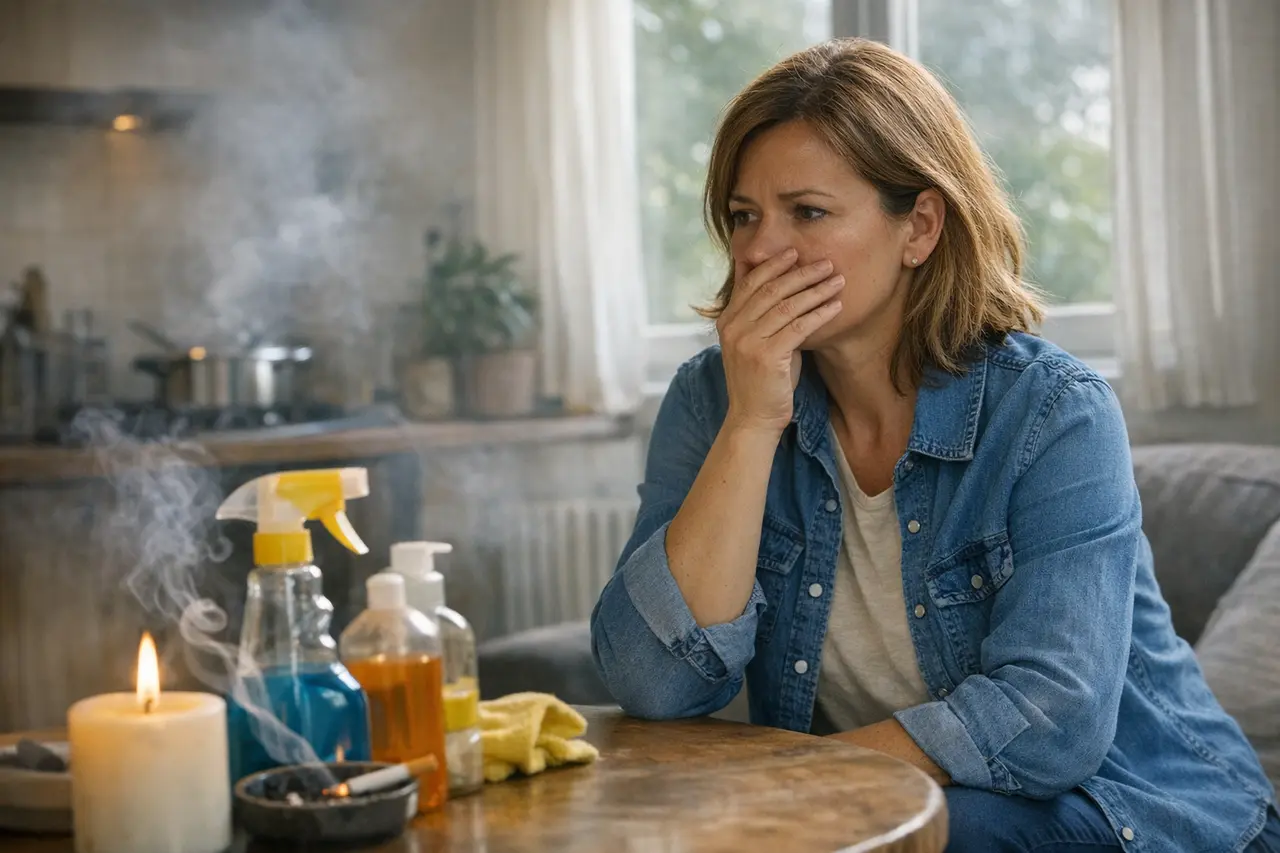
Can your home be more polluted than the street? Yes, in certain situations. In the show “The advice of Doctor Kierzek”, the emergency doctor and medical director of True Medical especially reminds one thing: reduce sources and renew the air daily.
Why indoor air can concentrate pollutants
Dr Kierzek starts from a simple observation: pollution cannot always be seen, but it can be breathed for a long time. According to him, the peaks do not sum up the problem: repeated exposure, day after day, weighs more than the single spectacular episode. The health authorities are in the same direction: the peaks can aggravate certain situations, but long-term exposure remains the major issue.
At home, the doctor cites several common sources: tobacco, wood heating in an open fireplace, scented candles, incense, household products, glue, mold. His formula sums up the idea well, provided you don’t understand it as inevitable:
“Our living room is perhaps a little cloud of pollution.”
Nuance matters: indoor air can be more polluted than outdoor air depending on housing, ventilation, habits and products used. It is therefore not a question of worrying about every odor or banning everything, but of identifying what emits pollutants in a closed space. Public authorities also point out that cooking, cleaning and DIY activities can temporarily degrade indoor air, hence the importance of reducing indoor pollutants at home with regular actions.
Ventilate for 10 minutes and limit emissions at source
The first advice given by Dr. Kierzek is very concrete: open the windows. He recommends airing for 10 minutes morning and evening, even in winter and even in the city. Its justification is direct:
“Renewed air is better than confined air.”
This reflex is confirmed by the recommendations of the Ministry of Ecological Transition on good actions for air quality, which advise opening windows wide at least 10 minutes per day, preferably morning and evening, and more during certain activities.
Things to remember at home:
- Ventilate for at least 10 minutes a dayideally morning and evening;
- Open more after cooking, cleaning or DIY;
- No smoking indoors or in the carin order to avoid impregnating the air and surfaces;
- Limit candles, incense and air freshenersespecially in a poorly ventilated room;
- Use simple household products with caution, without presenting them as a universal solution.
The doctor cites black soap, white vinegar and baking soda as simpler options for routine maintenance. This does not mean that you have to mix products or multiply uses: a household product remains a product to be used correctly. Concerning scented environments, limiting scented candles to preserve indoor air is part of the same reasoning.
Heating, pollution peaks and plants: the right adjustments
As the heating season approaches, Dr. Kierzek adds a seasonal tip: have your boiler serviced and your chimney swept. He mentions the risk of CO poisoning, that is to say carbon monoxide. Without detailing here what to do, this point justifies having your heating devices checked before winter, especially when the equipment restarts after several months of shutdown.
For outdoors, the doctor advises consulting the air quality index of your region. In the event of a peak, it is not a question of stopping all physical activity for everyone. Vulnerable or sensitive people must especially adapt intense efforts. The health recommendations of the Ministry of Health in the event of a peak in air pollution call in particular to avoid major roads and to choose the least exposed times when activity is maintained.
Last point mentioned in the column: so-called depolluting plants. They can have a decorative or well-being interest, but they should not be considered as a reliable solution for cleaning up a home. An ANSES expert report on emerging indoor air purification techniques highlights that their real effectiveness in everyday living conditions has not been demonstrated.