
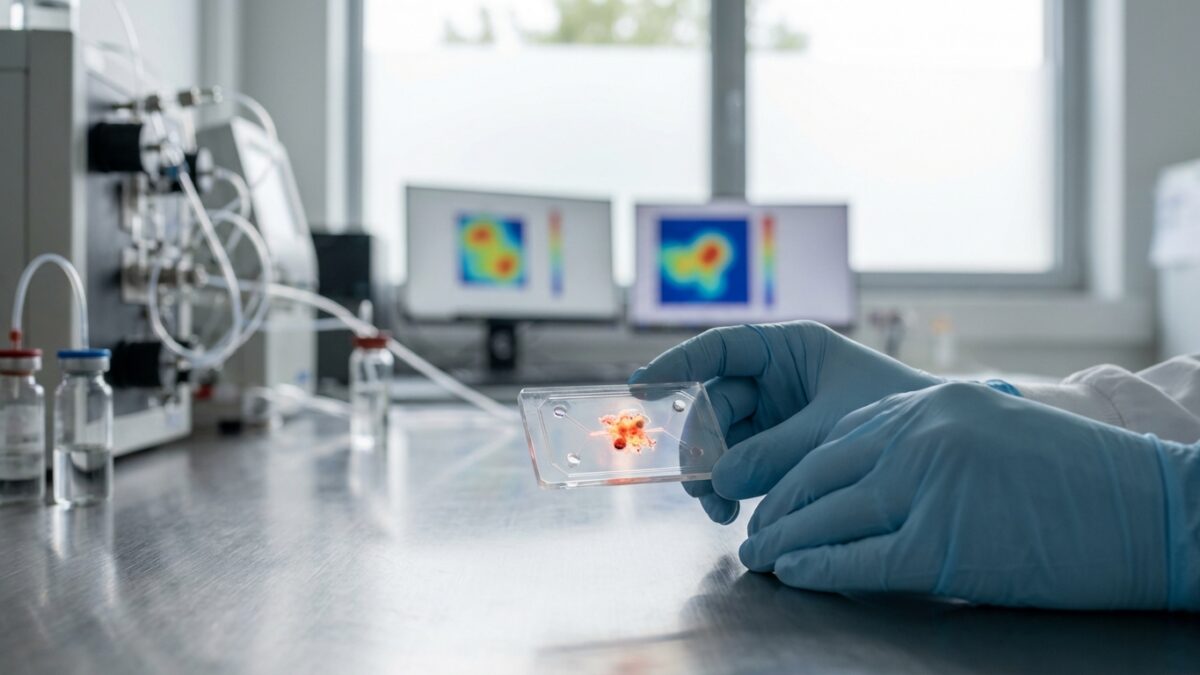
Seeing a human embryo attach to a uterine wall and then form the first buds of a future placenta resembles the beginning of a pregnancy. Here, however, the scene takes place on a silicone chip, in a laboratory in Beijing.
Researchers from the Chinese Academy of Sciences have developed a miniature uterus on a chipdescribed in the journal cellwhich imitates in 3D the tissue lining the uterine cavity. Their ambition is to replay implantation in the laboratory, five to seven days after fertilization, to understand why certain embryos do not attach, despite repeated pregnancy attempts.
When implantation blocks despite IVF
In France, infertility is mentioned when a pregnancy is not achieved after 12 to 24 months of regular intercourse without contraception. “In the event of failure of medical or surgical treatments undertaken or immediately in certain infertility situations, medically assisted procreation (or medically assisted procreation) is offered.“, reminds Health Insurance. Hormonal stimulation, IVF, ICSI, embryo transfer… and implantation, this moment when the embryo must anchor itself in the endometrium. This stage remains the most fragile link.
In some couples, everything seems aligned: morphologically normal embryos, reassuring hormonal assessments, uterus without visible anomaly. Yet transfers repeatedly fail. Specialists speak ofRecurrent Implantation Failures (RIF)difficult to analyze because we cannot see what is happening in the uterus and laboratory models do not reproduce its three-dimensional structure.
How the chip recreates a functional mini-uterus
To overcome these limitations, the Chinese team integrated human uterine cells into a special gel to form structures called “endometrioids”, resembling uterine tissue. This tissue was then placed in a microfluidic chip with fine channels through which nutrients and hormonal signals circulate, thus imitating the flow of blood and hormones in the uterus.
To observe how this environment would promote embryo implantation, scientists created blastoids, derived from stem cells mimicking blastocysts (early stage embryos forming a few days after fertilization). They also used donated human blastocysts. Inside the chip, these two cell types have completed all the major stages of implantation and very early post-implantation development. “This system successfully replicates key stages of human implantation and early post-implantation development“, underline the authors in cell.
How this mini uterus on a chip can help women
The same “wombs on a chip” were then created from endometrial cells from patients suffering from repeated implantation failures (RIF): in these models, the blastoids stuck much less. On these tissues, the team tested 1,119 already approved drugs and identified compounds, including avobenzone, capable of increasing implantation success from about 5% to 25%. “Our 3D implantation model not only replicates key events in human embryo implantation, it also provides a powerful tool for personalized drug discovery in patients with recurrent implantation failures“, summarizes Dr Leqian Yu, specialist in regenerative medicine and lead author of the study.
This mini-uterus remains a research tool, but it could help in the future to design personalized treatments for women suffering from RIF and thus make the PMA journey less trying.