
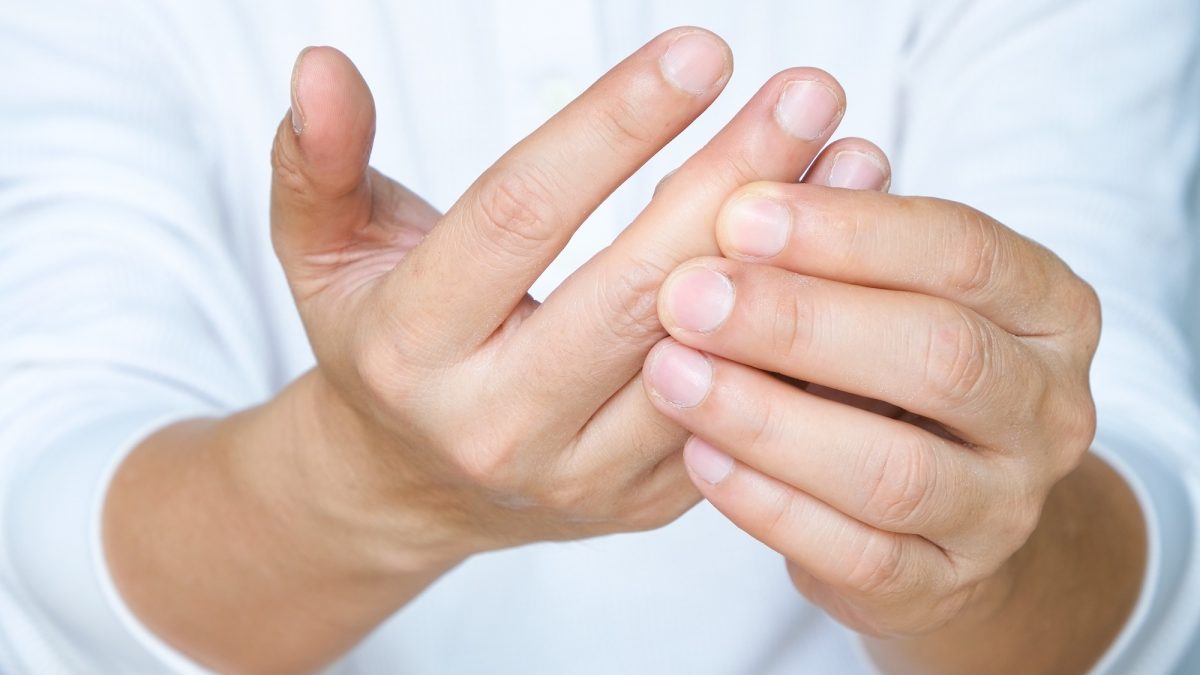
A slipping knife, a garden tool, an accident at work: when the tip of the finger is cut, the question is immediate. Is it necessary to operate? A French study suggests thatan occlusive dressing placed and medically monitored can sometimes promote repair of the pulpin very selected cases.
What the French study really shows
The study published in JPRAS Open by Paul Zaoui and his colleagues focuses on 26 patients and 28 fingers treated at Besançon University Hospital for a distal amputation of the tip of the finger. These are not all finger amputations, but lesions located in specific distal areas, classified 1 to 3.
The protocol was not an improvised home dressing. Treatment was initiated urgently, with cleaning with physiological serum and local anesthesia if necessary. The wound was then covered with semi-permeable dressings, changed approximately once a week during consultation, until complete healing.
The reported results are striking: complete healing occurred on average in 4.2 weekswith stable and painless skin coverage. The trophicity of the pulp was judged excellent or good in
96.4% of casesfinger mobility completely preserved in 89.3% of fingersand the fingerprints partially or completely reappeared in all cases.
But these figures should be read with caution. The study is
retrospective, single-center and without randomized control group. It therefore does not prove that this strategy replaces surgery in all situations, nor that it is superior to a skin flap. Rather, it suggests an interesting option for certain distal amputations, especially the less complex areas, when a specialist deems this approach suitable.
Why a moist environment can help the pulp repair itself
The principle of the occlusive dressing is to protect the wound while maintaining a controlled humid environment. In this context, the pulp of the finger can heal without being immediately closed by surgery. The interest is counter-intuitive: it is not a question of leaving the wound exposed to the air, nor of manipulating it often, but of creating a monitored micro-environment which promotes tissue repair.
In Top Santé, Gwenaël Rolin, Inserm researcher specializing in tissue regeneration, highlighted the interest in understanding ”
which, in the particular micro-environment of the occlusive dressings used, triggers this capacity.
The exact biological mechanisms therefore remain to be clarified. And results don’t mean a perfect return for everyone. The study also reports annoying consequences: persistent dysesthesias in 42.9% of patients, intolerance to cold in 35.7%, nail dystrophies in 60.4% of fingers, especially in lesions closer to the nail. In other words, the pulp can be repaired without all the sensations or the nail necessarily returning to the way it was before.
What you should definitely not do in the event of an accident
The practical conclusion is clear: a fingertip amputation must be assessed quickly by a professional. Even if the idea of the occlusive dressing is promising, it concerns structured medical care, with selection of the lesion, monitoring and adaptation if healing progresses poorly.
This point is all the more important as a cut to the hand should not be trivialized: the fingers concentrate fine structures, and hand wounds can affect tendons, nerves or vessels. A limited appearance is not always enough to assess severity.
After an injury to the tip of the finger, certain signs or contexts require you to seek medical advice quickly:
- Bleeding that does not stop or deep wound;
- Severe pain, loss of sensation or difficulty moving your finger;
- Dirty wound, bite, crush or suspected bone damage;
- Nail damage or visible deformation of the fingertip;
- Injured child, diabetes, immunosuppression or anticoagulant treatment.
The Health Insurance recommendations on the signs that should lead to consultation after a wound are in this direction: a wound on the fingers, painful, deep, soiled or difficult to assess cannot be managed like a simple scratch.
The occlusive dressing therefore opens a less invasive approach for certain pulp losses, with encouraging functional results. But the good reflex remains to have the injury examined: it is this assessment which allows us to know whether specialized monitoring with a dressing is possible, or whether other treatment is necessary.