
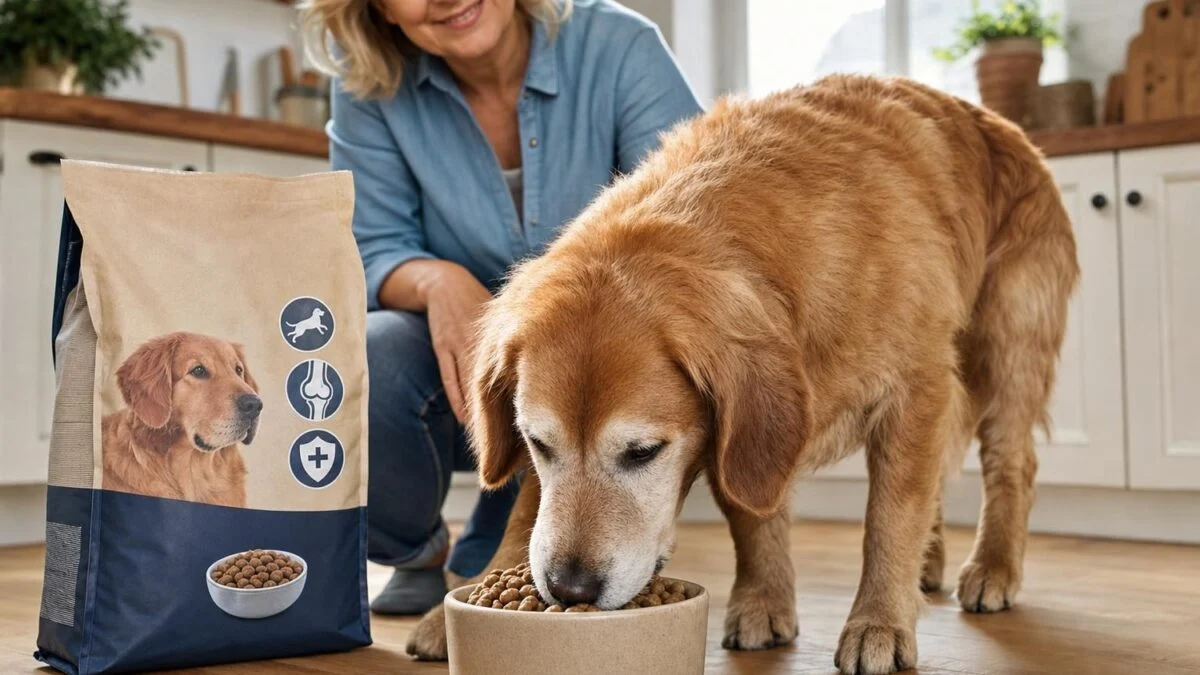
When a dog starts to turn gray, sleeps more and hesitates when taking stairs, his bowl becomes a real issue. As we age, our metabolism slows down, we move less and burn fewer calories, while joint pain appears. According to veterinarian Dr Pierre Fabing, invited by France Bleu, adapting an elderly dog’s diet prevents diseases and can extend its healthy life by up to two years. It remains to be seen what the real best kibble for senior dogs.
These senior dog kibble are lower in calories, more digestible and richer in quality proteins than adult recipes, with added ingredients for the heart, kidneys, brain and joints. Le Mag des Animaux places entry into senior age around 5-6 years for very large breeds, 7 years for large breeds, 8 years for medium-sized dogs and 10 years for small dogs. Dr Fabing recommends adjusting the ration from the age of 7 for a medium-sized dog: age, size and health therefore guide the choice.
Choose your senior dog kibble wisely: age, size, overweight
The first signs described by Le Mag des Animaux are telling: graying muzzle, dull coat, less alert gait, stiffness when getting up, faster shortness of breath, weight variations. Transit disorders, dental problems or a dog suddenly more nervous or more clingy should also alert you. As soon as these changes appear or the threshold age approaches, it is advisable to talk to the veterinarian and prepare for a transition to a
adapted diet.
Certain signs of a poorly adapted ration should alert you: loss of muscle mass, more frequent or soft stools, increasing thirst, difficult digestion… A simple change in the quantity is not enough, because an old dog expends less energy but needs more well-assimilated proteins. Senior kibble limits calories while maintaining a high protein profile, and two veterinary consultations per year help to regularly adjust ration and type of food.
The key nutrients of the best kibble for senior dogs
Dr Fabing reminds us that senior kibble should be lower in calories but rich in quality protein. More suitable, the Ultra Premium Direct, Edgard and Cooper Senior Chicken and Salmon, Ultra Premium Direct Senior Joint or Franklin Senior formulas often add chondroprotectors such as
glucosamineEPA and DHA omega-3s and antioxidants to support joints, brain and vision.
To find a good recipe, check that the first line of the label mentions clearly identified meat, and not cereals or animal by-products. There are also therapeutic foods, reserved for dogs already suffering from heart disease, kidney disease or diabetes. But in this case, your veterinarian will be your best advisor.