
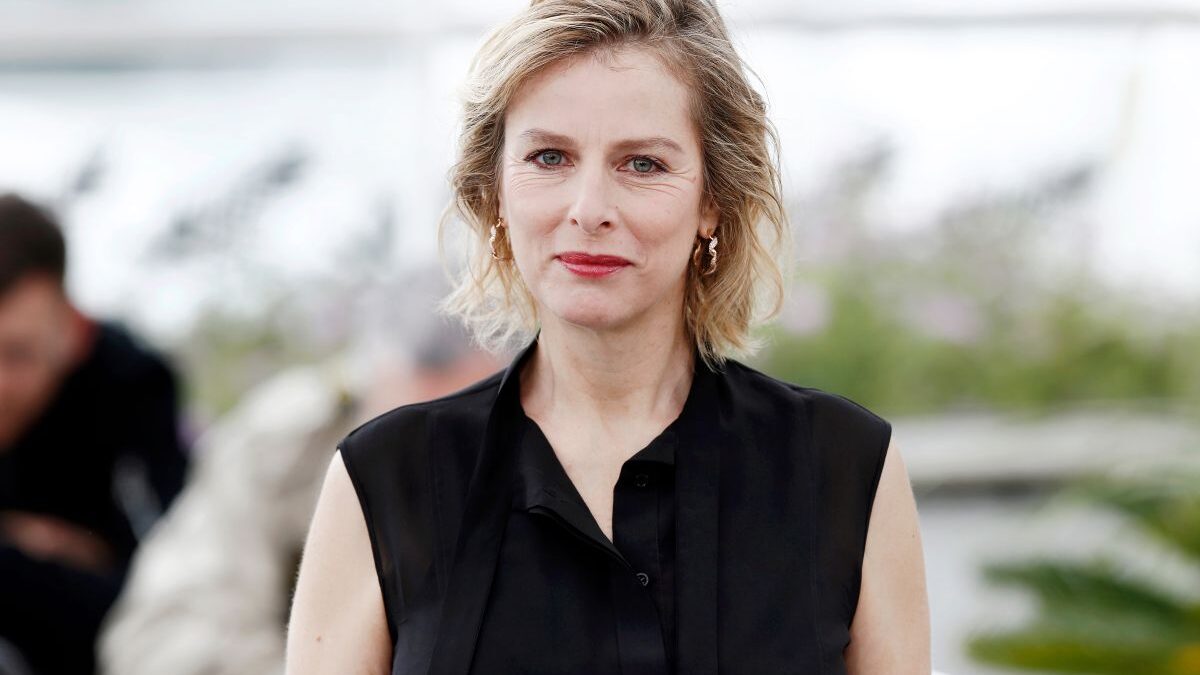
Starring in the film “La maison des femmes” on March 4, Karin Viard hides deep cracks. Abandoned by her parents at the age of 5 and entrusted to her grandparents, she grew up in an atmosphere of toxic female competition.
A past marked by “abandonment and female versus female rivalry”
She describes an intimate environment where her own mother posed as a rival.
“I have experienced fierce female rivalries where it was female against female, with the idea that there would not be enough men for all the women.”
This hostility, rooted in an era of assumed patriarchy, pushed the actress to examine her conscience about the misogyny that she herself had internalized. “I was a woman who had integrated submission“, she admits, specifying that she has long accepted that her “usefulness” is defined by her potential for seduction in the eyes of men.
Why do some mothers become rivals?
Mother-daughter jealousy remains one of the last great taboos in our society. For clinical psychology professor Yves Morhain, who responded to True Medical for a previous article on the subject, this feeling is more common than one might think.
“It is unbearable for these mothers to admit their jealousy. To agree to see it would be to recognize that they are partly refusing their maternal function,” he explains.
According to the expert, this rivalry often worsens during the young girl’s adolescence. The mother can then engage in destructive behavior: physically abusive comments, systematic denigration or clothing competition. “The mother herself experienced a special relationship with her own mother, we are also in the transgenerational”analyzes Yves Morhain.
Breaking the chain: the challenge of transmission
Karin Viard is now engaged in “very important transgenerational work”. Aware of the “mean” and “failing” mothers in her family tree, she did everything not to reproduce this pattern with her two daughters. Although she admits to having made mistakes, she is proud to have passed on to them her taste for freedom and not to interfere in their life choices.
The psychoanalyst Catherine Audibert also emphasized
True Medical that the birth of a daughter places the mother face to face with the “same”, which activates a powerful mirror effect.
“All mother-daughter relationships are transgenerational. Complicity must find its way with this heritage”, she says. To avoid pitfalls (the “friend” mother or the “projection” mother), she advises letting the girl’s femininity express itself without feeling threatened in her own place as a woman.
Rebuild yourself and find your “safe place”
Karin Viard’s path to appeasement went through a redefinition of the couple and motherhood. Long guilty of not being an “ultra-available mother” because of her job, she now advocates a vision of the relationship based on mutual support and protection.
For women suffering from this complex maternal bond, Yves Morhain suggests analytical work rather than a sudden breakup, which could reactivate the anxiety of abandonment. “This hatred can be balanced and transformed into love, expressed as pride in the girl. Because that’s what all children need: recognition.” he concludes.