
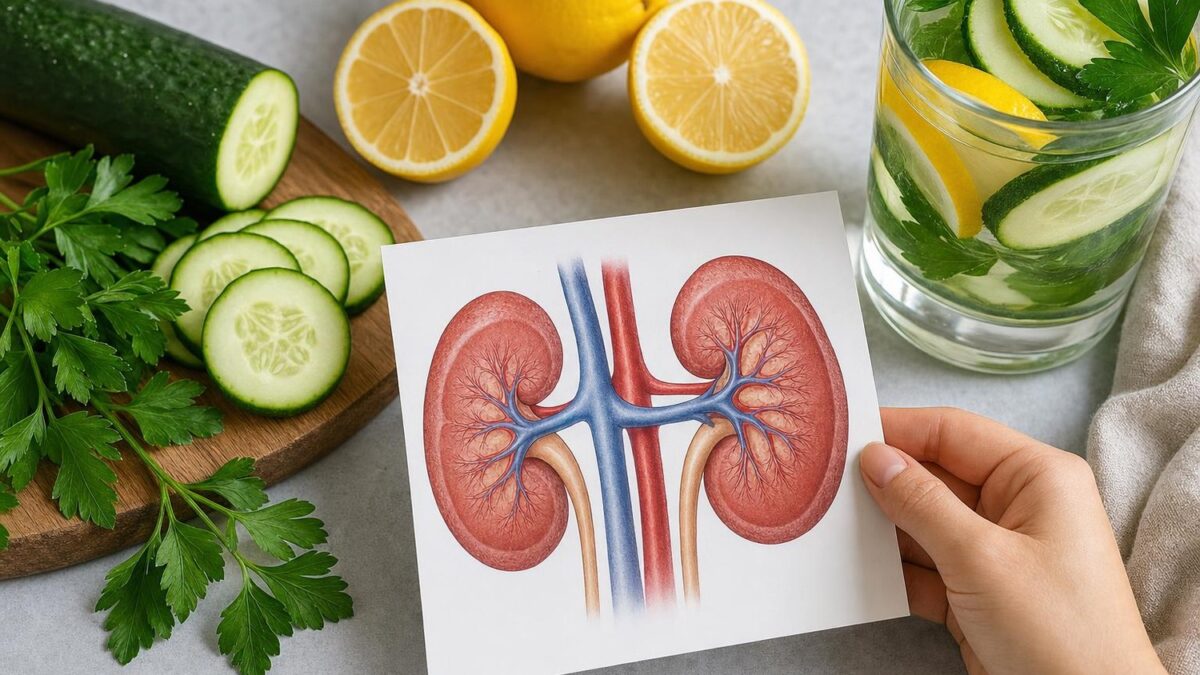
Discreet but essential, the kidneys work tirelessly to filter waste present in the blood, eliminate excess water and help balance blood pressure. And contrary to popular belief, their health does not only depend on the quantity of water we drink: diet also plays a key role.
According to Dr. Eric Berg, a chiropractor specializing in nutrition cited by The Times of India, certain everyday foods could help the kidneys function better and eliminate certain wastes like creatinine or uric acid more effectively. Three foods in particular are attracting attention today: cucumber, lemon and parsley.
Hydration, antioxidants, prevention of stones… these foods combine several interesting effects to support kidney function, even if they obviously do not replace medical treatment.
Why do cucumbers, lemons and parsley interest experts?
The kidneys need good hydration to properly filter the blood and eliminate waste through urine. Certain foods rich in water can therefore give them a little boost.
- This is the case for cucumbers, which are approximately 95% water. Low in calories, it contributes to the overall hydration of the body and promotes the elimination of certain metabolic waste.
- Lemon acts differently. Rich in vitamin C and citrate, it could modify the composition of urine and limit the formation of kidney stones. Several studies have shown that regular consumption of diluted lemon juice increases urinary citrate levels, an element known to reduce the risk of certain stones.
- Parsley stands out above all for its richness in antioxidant and anti-inflammatory compounds, such as apigenin, luteolin and quercetin. These substances could help protect kidney cells from oxidative stress.
What studies show about kidney health
Dr. Eric Berg recommends cucumber in particular to support hydration and promote the natural “flushing effect” of the kidneys.
Regarding lemon, some research suggests that daily consumption—for example, the juice of two lemons diluted in water—may increase citrate in urine and help prevent certain kidney stones.
Parsley is also the subject of several studies. Work published in 2024 showed a potential effect on oxidative stress, certain metabolic markers and the protection of kidney function. Researchers have also observed an action against certain bacteria and fungi.
Another study, conducted in 2017 in rats with kidney stones, found that parsley supplementation was associated with a decrease in urinary excretion of calcium and protein, as well as an increase in urine volume.
How to simply integrate them into your diet?
No need for complicated cures to benefit from their potential benefits.
A few slices of cucumber in a salad, a glass of lemon water when you wake up or fresh parsley added to dishes are already enough to integrate these foods into your daily life.
The objective above all remains to adopt a diet generally favorable to the kidneys: sufficiently hydrating, rich in plants and limited in excess salt and ultra-processed foods.
In what cases should you be careful?
Although these foods can support kidney health, they never replace medical monitoring.
In case of kidney failure, frequent kidney stones, diabetes or hypertension, certain dietary recommendations must be adapted by a doctor or specialist. In particular, water, potassium or protein intake may require special monitoring.