
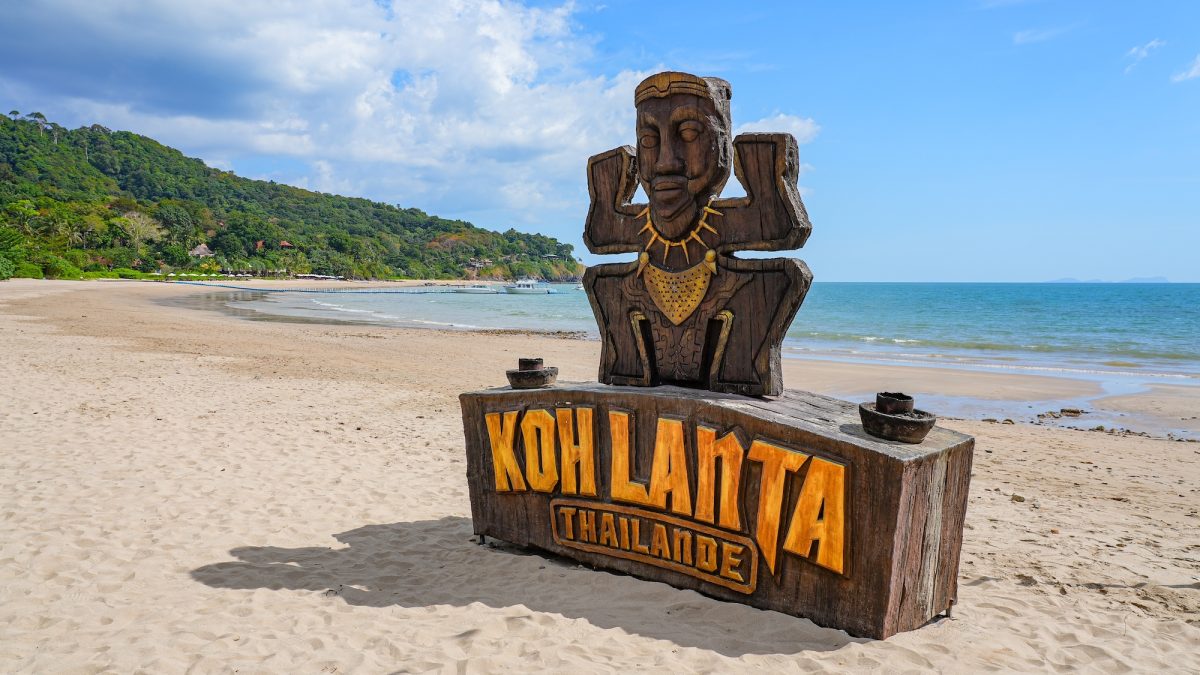
Tuesday March 3 marked the long-awaited return of Koh-Lanta: the relics of destiny, on TF1. An edition which promises new features, such as pottery carrying powers, but which is still based on a survivalist framework. And among the details that do not change: to gain strength, the candidates must deal with what the places offer, in particular cassava roots… and fresh coconuts. We know that over the course of the tests they will eventually be able to use fishing equipment, or other “meals”. But for now, the basis of their menus comes down to these foods. What can this bring them?
Cassava, an essential source of energy to survive the tests
In the camp, cassava is one of the few solid foods that is easy to find. According to data from the Anses Ciqual table, 100 g of cooked cassava provides approximately 131 kcal and nearly 30 g of carbohydrates, which makes it an interesting fuel for the body.
“Cassava mainly provides complex carbohydrates, which allows them to have energy throughout the day”specifies Pauline Pied, dietitian nutritionist. These sugars are gradually assimilated by the body, which helps maintain a minimum of endurance for daily activities and physical events.
On the other hand, the food also has nutritional limits. “In terms of protein, it’s negligible.”underlines Pauline Pied. However, these nutrients are essential for maintaining muscle mass and promoting recovery after exercise. Cassava also contains some water and some micronutrients, but overall remains a high-energy, rather than complete, food.
In other words, although it helps prevent a sudden drop in energy, it is not enough on its own to cover all the nutritional needs of adventurers subjected to intense physical conditions.
Coconut, lipids and precious minerals on the island
Next to cassava, coconut provides another type of nutrients: lipids, that is to say fats. A fresh coconut provides approximately 283 kcal and 27 g of fat, which is an important source of energy in a survival context.
“The advantage of coconut is that it provides lipids, so once again energy”explains Pauline Pied. It also contains fiber, useful for supporting digestive transit, as well as several minerals such as potassium and magnesium, essential for the proper functioning of muscles and the heart.
Coconut also provides some vitamin C and vitamin E, as well as water, which can help maintain hydration when resources are limited. “It provides them with fiber, vitamins and minerals such as potassium and magnesium which are necessary for the heart“, specifies the nutritionist.
However, the specialist recalls that coconut is rich in saturated fatty acids. In a traditional diet and over the long term, excessive consumption can increase cardiovascular risk. But in the context of Koh-Lanta, this food remains punctual and linked to a survival situation.
A diet that is necessarily unbalanced over time
Even though these two foods provide energy, they of course do not cover all nutritional needs.
“Overall, we can say that it is an unbalanced diet”summarizes Pauline Pied. Adventurers have carbohydrates, a little fiber, some vitamins and lipids, but the proportions remain far from a classic nutritional balance.
The main lack concerns proteins, essential for preserving muscles and supporting the body during exercise. This is why comfort trials are so important: they sometimes allow you to win rice, fishing equipment or other foods. Fish and shellfish then become valuable sources of protein.
“It’s really survivalism.”recalls the nutritionist. Cassava and coconut provide fat, fiber and minerals to last a few weeks, but remain insufficient to constitute a balanced diet.
But an adventure supervised on a health level
However, there is no need to worry about the health of the candidates from your sofa. While it is well known that adventurers must find their own food (and lose a few kilos), production monitors them closely.
Thus, depending on the production, a medical team is permanently present with the participants. “An examination takes place before the tests and before the advice if the doctor deems it necessary or if the adventurer wishes it. There is no question of letting our participants starve” reacted Julien Magne, director of ALP programs in 2019.
Candidates also have a drinking water tank replenished every day. They are advised to drink around two liters of water per day and to use the bottle provided by production in order to avoid any contamination of the reservoir.
A reminder that, behind the image of extreme adventure, the safety of the participants remains closely supervised throughout the filming.