
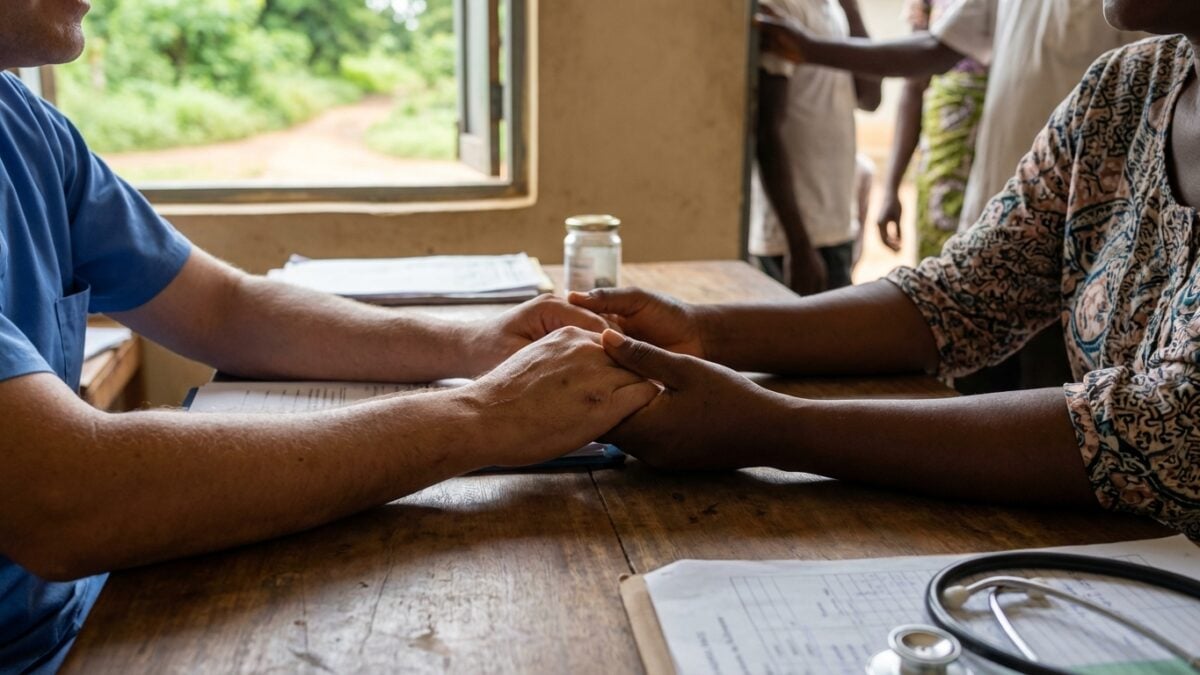
In a village in Ivory Coast, a child hides his insensible hand under his shirt. We talk about a curse, we keep silent about the word leprosy. For many, the disease is a thing of the past. Yet, out of sight, it continues to deform bodies and disrupt lives.
On January 23, 24 and 25, 2026, the World Leprosy Day 2026 wants to recall this reality and the hidden face of the disease: stigma. There Raoul Follereau Foundationat the origin of this day since 1954, speaks of a real double punishment for the sick, physical and mental.
A disease of today: leprosy, figures and mixed suffering
Leprosy remains a chronic infectious disease, mainly present in Asia, Latin America and Africa. Each year, more than 180,000 new cases are reported, or 1 person affected every 3 minutes. “Early diagnosis is crucial to stop the progression of the disease and avoid stigmatization of patients“, explains Oleg Ouss, chairman of the board and director of projects at the Foundation.
Behind the wounds and mutilations, suffering sets in: rejection, shame, lasting isolation. Millions of people live with visible after-effects, but also with these invisible injuries. For 70 years, more than 16 million patients have been treated, without the weight of the gaze of others disappearing.
Ivory Coast: treating leprosy and repairing the person
In Ivory Coastleprosy remains endemic: cases are still detected every week, including in children. A quarter of patients already have irreversible after-effects at the time of diagnosis, hampered by fear of rejection and distance from care. To respond to this situation, the Foundation is taking action against Neglected tropical diseases with cutaneous manifestations around seven pillars: screening, disability management, care, training, access to water, social support and research and support for strengthening health systems.
In the Gagnoa district, 173,000 people were examined in 2024: 170 cases of leprosy, 136 of yaws and more than 4,000 of scabies were identified thanks to the 360 project carried out with the ANESVAD Foundation, which aims to achieve the objective Zero leprosy 2030. Teledermatology, reconstructive surgery and disability prevention complete this system. “Our innovative programs prove that it is possible not only to treat, but also to restore the confidence and autonomy of those affected“, specifies Oleg Ouss.
From stigma to rebirth: faces and mobilization
On the ground, this struggle takes on faces. In Manikro, Dr Pierre-Joseph Kaba practices reconstructive surgery to restore shape and dignity to damaged hands, feet and faces. Alongside the sick, Sister Tano Akoua supports families towards reintegration. A former patient, Aimé sums up his fight: “I have physical after-effects, but I refuse to keep them in my head“.
In France, volunteers will mobilize on January 23, 24 and 25 to inform, collect donations and finance these journeys, from surgery to reintegration. The photo exhibition Perspectives on leprosy
recounts this fight, carried by a conviction: “Leprosy is not inevitable, but an injustice to be repaired“.
3 misconceptions about leprosy
Leprosy causes fingers to fall off
- Fake. In reality, leprosy attacks the nerves, causing loss of sensitivity. Unfelt injuries can then become infected and lead to deformities or amputations if poorly treated.
There is a vaccine
- Fake. No vaccine exists to date. The Raoul Follereau Foundation co-finances the “LepVax” research project, which aims to develop one.
Leprosy only affects developing countries.
- Fake. In 2023, 369 cases were recorded in the United States and around ten in New Caledonia. Leprosy is everywhere, even in developed countries.