
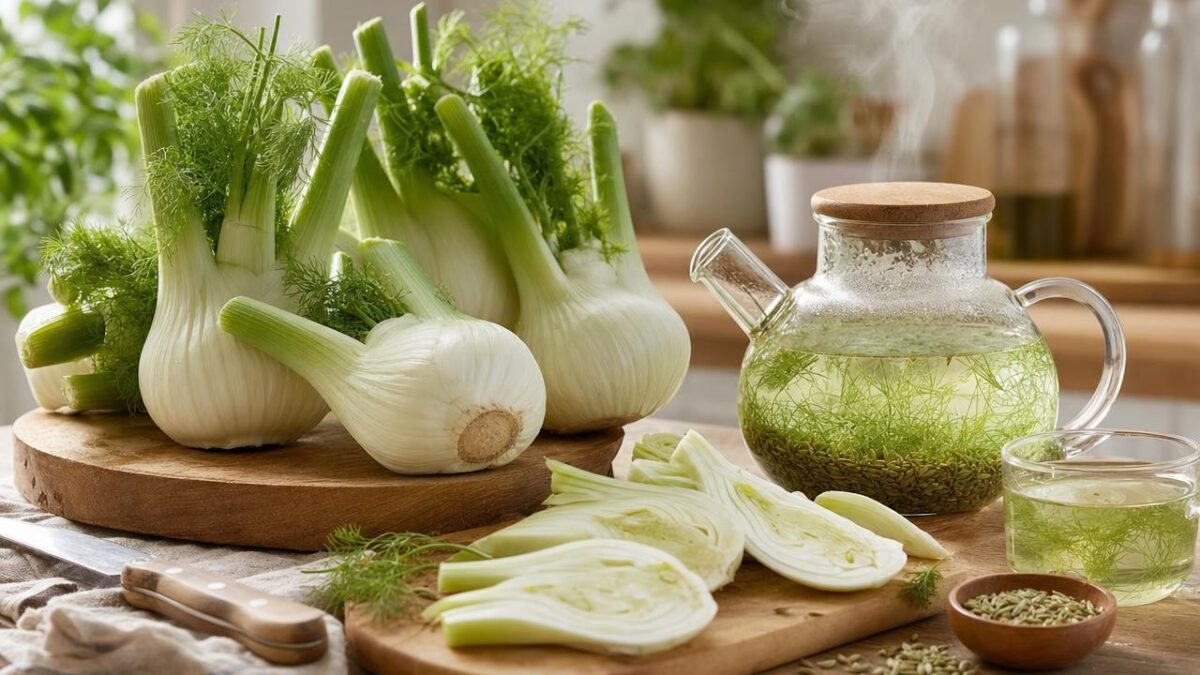
After a slightly rich meal, what bothers you the most is often a tense stomach, gas, this feeling of liver crisis. Many turn to herbal teas or medications, while a simple vegetable can be a game-changer: fennel. Liver, digestion, bloating, it acts on several links of the digestive system without upsetting the plate.
Digestion and bloating: what fennel actually does in the intestine
Fennel, or Foeniculum vulgare Mill., belongs to the Apiaceae family. According to MyPersonalTrainerit has been used for centuries in food, herbal medicine and cosmetics for its depurative, carminative and antispasmodic properties.
On the plate, the fennel bulb is light: according to
MyPersonalTrainer100 g provide 31 kcal, 3.1 g of fiber, 7.3 g of carbohydrates and 0.2 g of lipids, with 414 mg of potassium, 49 mg of calcium, 50 mg of phosphorus and 17 mg of magnesium. This cocktail helps intestinal transit, promotes contraction of the digestive muscles and limits constipation, therefore the pressure and gases responsible for a swollen stomach.
Fennel seeds concentrate essential oil rich in anethole, but also in fenchone, estragole, d-limonene and β-myrcene. Fennel is traditionally used in cases of difficult digestion, bloating and flatulence. The action is carminative, by helping gases to evacuate, and antispasmodic, by soothing intestinal spasms which occur after a meal.
Liver, bile and fats: how fennel alleviates the feeling of liver crisis
The liver manages the detoxification and metabolism of fats.
MyPersonalTrainer explains that fennel’s phenolic compounds and the volatile molecules d-limonene and β-myrcene help protect liver cells from oxidative stress and stimulate enzymatic activity. Fennel also promotes the secretion of bile, which emulsifies lipids and makes the digestion of fatty dishes less burdensome.
Another interesting point, fennel provides vitamins A, C, E and group B, which help protect cells against free radicals. At the same time, its fibers nourish the intestinal flora, or microbiota. A better nourished microbiota produces fewer annoying fermentations, which reduces gas and indirectly supports the liver, which is very stressed by sugary and alcoholic excesses.
Plate, fennel herbal tea, precautions: how to use it daily
For everyday digestive comfort, the simplest option is bulb fennel on the plate: raw in strips with citrus fruits and olive oil, or steamed or roasted, as an accompaniment to fish. The stems and leaves flavor soups and broths. The seeds, lightly chewed after a meal, prolong this action on gas and intestinal spasms.
For a targeted effect, it is recommended to take fennel herbal tea with 1.5 to 2.5 g of crushed fruit in 150 ml of simmering water, up to three doses daily, without exceeding 7 g or two weeks of treatment. These limits concern therapeutic use, not the vegetable in cooking.
Caution in case of allergy to Apiaceae, during pregnancy or with essential oil very rich in anethole, to be reserved for medical monitoring.