
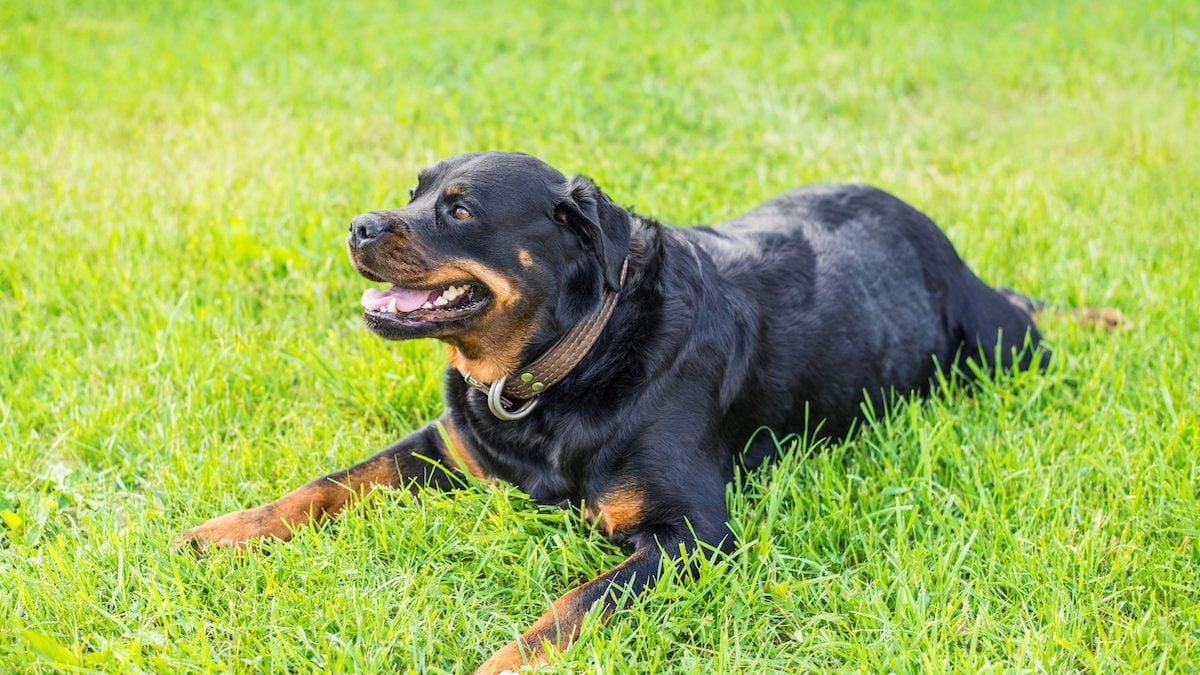
Saturday August 2, 2025, a terrible drama occurred in Escrennes, near Pithiviers (Loiret): a 9 -year -old child was fatally attacked by the family dog, a rottweiler. The child had been left alone at home while his father and his older brother had gone shopping, said the Orleans prosecutor’s office.
The prosecution, by the voice of Emmanuel Delorme, deputy prosecutor, detailed the circumstances: the child was bitten on the head and neck, and despite the rapid intervention of the father alerted by a neighbor who heard howls, the emergency services could not resuscitate the boy. The father brought two stabs to the animal, whose behavior remained extremely aggressive when help. The Rottweiler, weighing sixty kilos, has been euthanized and will be the subject of analyzes, in particular to verify the absence of rage. An investigation into manslaughter has been opened.
A vigilance of every moment with pets
This drama recalls that even familiar dogs can represent a danger if certain safety and socialization rules are not rigorously respected.
Dr. Gérald Kierzek insisted in a previous article:
“Never leave a child under 10 alone with a dog, even familiar; teaching children to recognize the signs of discomfort of a dog and his body language; Avoid sudden or inadequate games with the animal; Socialize the dog well from an early age, especially with children. “
He also recalls that:
“”The animals adopted late may have undergone trauma in their past and react in an unpredictable way to certain gestures.“”
How to react to an unknown dog?
Dr. Kierzek recommends staying motionless and adopting the posture of “the tree”: well anchored feet on the ground, without sudden movement. Avoid shouting, running, fixing the dog in the eyes, and in the event of a fall, getting into ball protecting your neck with your arms.
What to do in the event of a bite?
Here are the gestures to adopt in the event of a bite, according to Dr. Kierzek:
- Immediately clean the wound with water and soap.
- Disinfect it with an unwelcome antiseptic.
- Consult a doctor quickly.
- Check antitatine vaccination.
- Identify the dog and its owner to check the anti -rabic vaccination.
Children and bites: Understand the causes to better prevent
Veterinarians identify three main categories of bites in the dominant dog:
- The hierarchical bite (affirmation of dominance);
- The territorial bite (defense of the territory);
- The bite by irritation (reaction to a constraint).
Many situations must be avoided:
- Never leave a child alone with a dog;
- Do not disturb a dog who eats or sleeps;
- Do not approach a female who keeps her little ones;
- Do not fix a dog in the eyes;
- Avoid abrupt gestures;
- Teach the child to recognize the aggressiveness signals of a dog.
The owners have a direct responsibility: calling on professional breeders, socializing the animal from an early age, consulting a veterinarian in the event of abnormal behavior.
Child bites: often avoidable behaviors
In children, especially 1 to 4 years old, bites are often linked to an unconsciousness of danger: they do not identify threat signals, such as grunts or intimidation postures.
Professor Guy Quinnec, of the Toulouse veterinary school, explained in a previous article:
“The bite is an oral response to environmental stress. The dog’s mouth corresponds to the hand of man in the organization of their responses to a stimulus.”
A badly socialized or educated puppy in fear will more easily develop aggressive behavior. Anxiety disorders or dysthymies can be involved. In these cases, a veterinarian can consider drug treatment to reduce animal’s anxiety.
Space, territory, hierarchy: sensitive issues for the dog
Certain attacks take place when the dog protects its territory or its young, as during a maternal assault or by frustration of freedom (dog attached or locked up). Others are a hierarchical aggression when the animal believes that its place in the family is threatened.
The behaviorist veterinarian Patrick Pageat describes this type of assault:
“If the attacker is in a dominance situation, he inflicts a brief bite immediately followed by a new intimidation phase. (…) In healthy dogs, the bite stops when the opponent submits.”
Finally, irritation assault, the most frequent in children, can be triggered by pain, frustration or persistent physical contact despite stop signals. The dog can bite a child who insists to cuddle him, especially if he suffers or is uncomfortable.
This drama, deeply overwhelming, underlines the absolute need for rigorous canine education, continuous surveillance, and early teaching of good behavior to children. A dog, even well known, is never 100 % predictable – which is why prevention remains the only real weapon against accidents.