
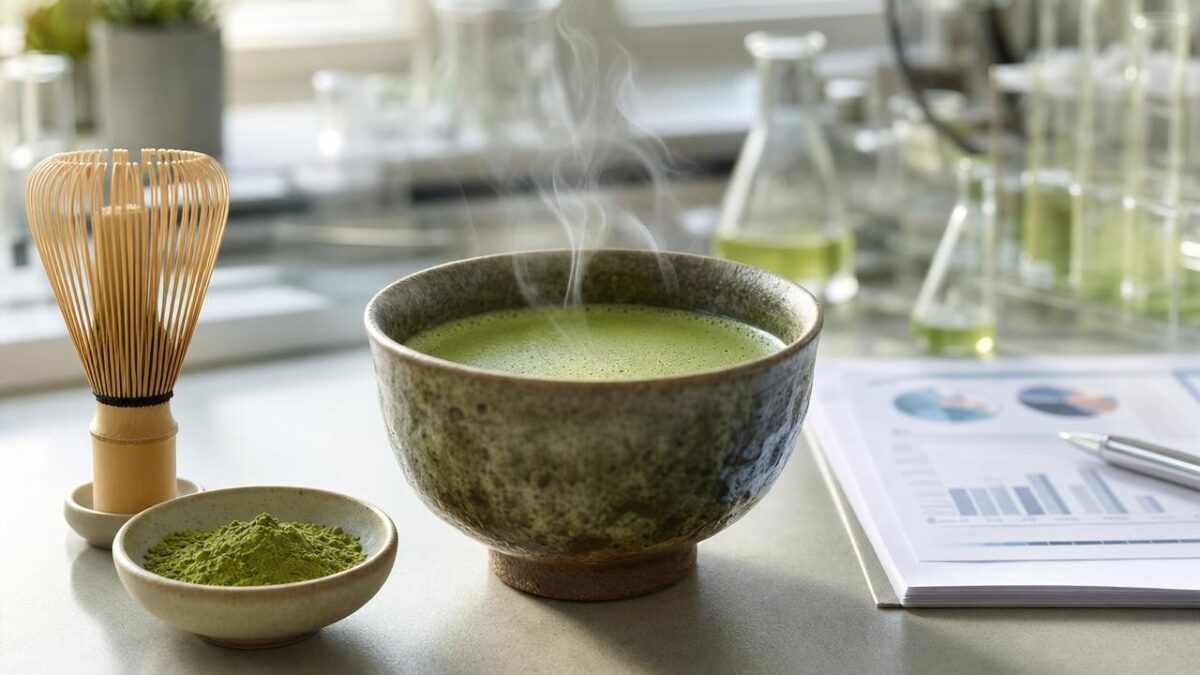
A star drink on social networks, praised for its “detox” benefits and its neon green color, a very fashionable tea is today at the heart of a health alert. On September 24, 2026, a study showed that it can provide a significant dose ofaluminuma metal classified as neurotoxic at high exposure. All while its consumption is exploding in coffee shops and home kitchens.
This tea is the matchaand the study comes from the consumer association UFC Que Choisir. The investigation covers seven references, at various prices and qualities, and reveals that all contain aluminum, four even exceeding the toxicological reference value of the National Health Safety Agency (ANSES) of 40 micrograms per kilo of body weight per day. In a context where matcha sales have increased fivefold between summer 2023 and summer 2024, this alert clearly changes the situation.
What the Que Choisir study says about the aluminum in matcha
UFC Que Choisir published its results on September 24, 2026: out of seven matchas tested, all are contaminated and four exceed the ANSES value of 40 micrograms per kilo of body weight per day. The European Food Safety Authority (EFSA) had set a much higher benchmark, 143 micrograms per kilo per day. “Our results are therefore worrying“, alerts Que Choisir. ANSES speaks of “a risk linked to this exposure“and calls for”continue efforts to reduce aluminum concentrations“.
According to the Total Diet Study (EAT) published in 2026, 39% of adults already exceed the ANSES reference value through diet. Matcha is therefore added to an existing exhibition fund. Further irony, none of the products contravene the law, as the European Union has not set any regulatory maximum levels of aluminum in foods and drinks, which can continue to promise a “resistance to physical and mental fatigue” legally.
Why matcha is more charged than brewed green tea
UFC Que Choisir points out that aluminum is naturally present in terrestrial rocks and that it is particularly abundant in the volcanic soils of Japan and China, where tea plants grow. “But why, while the consumption of green tea does not pose any particular problem, that of matcha can prove problematic?“, asks the association. The key lies in the way it is prepared and how the body receives this metal.
Classic green tea is brewed, and the aluminum dissolves very little in hot water. Matcha is obtained by completely grinding tencha leaves, which are then completely ingested. “And it’s a double-edged sword: if the antioxidants and stimulants contained in the leaves are absorbed in full, the contaminants, in particular aluminum, are also absorbed.“, points out Que Choisir. A daily cup can therefore weigh in the balance, especially for heavy consumers of other sources of aluminum.
How to continue drinking matcha while limiting exposure
UFC Que Choisir clearly advises to “take it easy on matcha” by avoiding daily consumption. The association also recommends favoring so-called “ceremonial” matchas, generally made from young, better-processed leaves, which have proven to be less contaminated than certain entry-level products. Experts also point out matcha-based products, such as cookies, plant-based milks, iced teas or sodas, which add to the cumulative exposure.
For amateurs, the challenge is therefore not to abandon this tea, but to reserve it for chosen times, varying the drinks and remaining attentive to quality and frequency.