
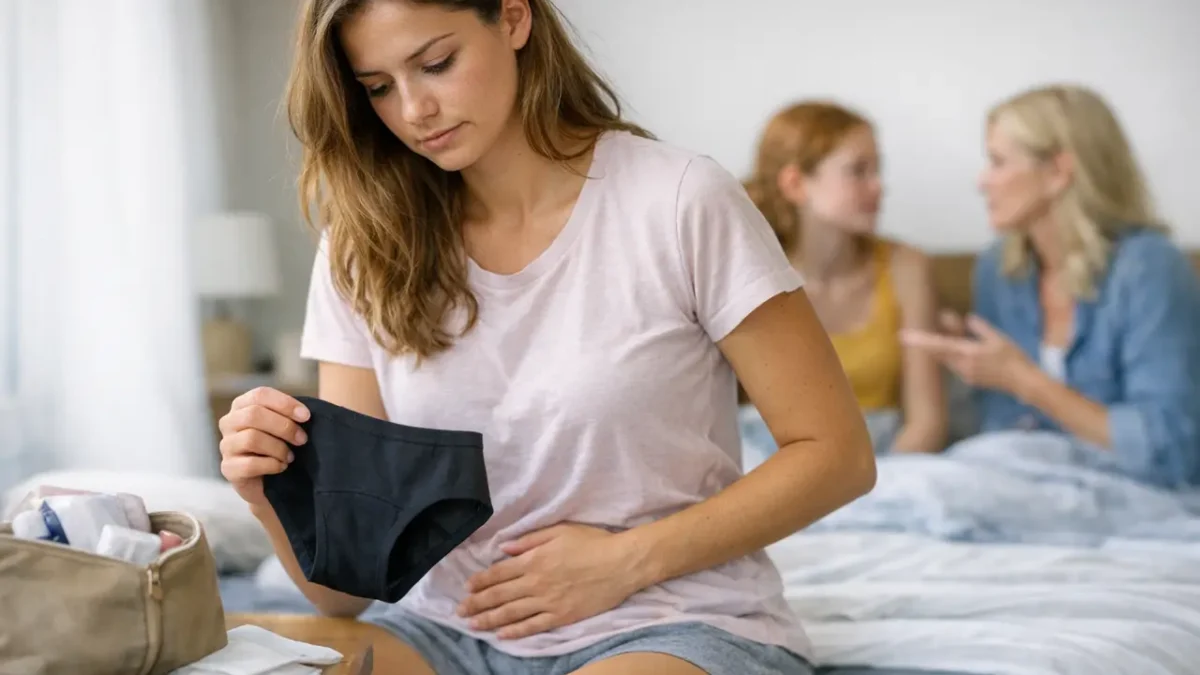
In a video posted on Instagram, Dr Olivier Marpeau aka @mon.gyneco recalls the practical benefit of menstrual panties. Good news confirmed: from October 1, 2026, certain reusable panties and cups will be reimbursed, but only for those under 26 and beneficiaries of the Solidarity Health Supplement, with eligible models delivered in pharmacies.
Who will be eligible for reimbursement?
The announced reimbursement does not concern all paid people, nor all protection purchased freely. According to official information, some reusable menstrual panties and menstrual cups may be covered by Health Insurance from October 1, 2026, under conditions.
Two audiences are concerned: insured persons under 26 years oldwithout conditions of resources, and the beneficiaries of the Supplementary solidarity healthregardless of their age. The system is also regulated: it is limited to two products per yeardelivered in pharmacies, among references meeting the planned specifications.
In other words, menstrual panties purchased online, in a supermarket or in a traditional store will not be automatically refunded. You will need to verify that it is indeed a model eligible for the system. To explore this administrative point in more detail, our article on reimbursed menstrual panties and cups details the conditions provided.
In the Instagram video, reported as a commercial collaboration with Saforelle, Dr Olivier Marpeau highlights the practical side of these protections: they can in particular allow you to spend the night with suitable external protection, if the model and instructions allow it. The expert also mentions the benefit, in the event of heavy flow during the day, of supplementing internal protection with menstrual panties. In this case, the safety point remains the same: a tampon or cup must be changed regularly, and Health Insurance recommends favoring external protection at night.
How to choose eligible and comfortable menstrual panties?
To be refundable, menstrual panties must meet technical and safety criteria. Among them: one
Oeko-Tex Standard 100 class I or II certification
and a minimum absorption capacity provided for in the specifications. These criteria do not mean that all panties on the market are equal, nor that a label eliminates all risk of discomfort, allergy or irritation.
Before purchasing, the most useful points to check are simple:
- The mention of a model eligible for reimbursementto ask at the pharmacy;
- The textile composition, especially in case of sensitive skin or a history of irritation;
- The indicated absorption level, to be adapted to its flow and the time of the cycle;
- Washing, drying and duration of use instructions specified by the manufacturer;
- Comfort: cut, size, thickness, support and possible feeling of humidity.
Dr Olivier Marpeau insists on maintenance: rinse the panties in cold water after use, wash them in the machine at 40°C then let them dry in the open air, without tumble drying. Health Insurance, for its part, reminds that washable protection must be washed before first use, then maintained according to the manufacturer’s instructions.
Menstrual panties can be an interesting alternative for those who have difficulty coping with internal protection. But you have to be careful: they do not prevent or treat mycoses, vaginosis or irritations. In the event of repeated, bothersome or unusual symptoms, medical advice is necessary. Our file on recurrent vulvovaginal mycoses can help to better understand the factors at play, without replacing a consultation.
Finally, the right choice is not necessarily the same for everyone. Some will prefer panties alone for the night, others a more absorbent model for the start of their period, or additional protection during the day. To compare practical criteria without being limited to reimbursement, you can consult our guide to choosing the right menstrual panties.